Your colon plays a crucial role in your overall health, from nutrient absorption to immune function. When your colon is happy, you often feel healthier and happier too. The good news? You don’t need complicated remedies to support its well-being. Simple, mindful food choices can dramatically improve your gut health and boost digestion naturally.
This article dives into 7 foods your colon is begging for, empowering you to make easy dietary upgrades that fuel your digestive system and promote a thriving gut microbiome. Incorporating fiber-rich vegetables, fruits, and beneficial compounds daily can lead to a happier colon and significantly better digestion.
The Core Connection: Why Your Diet Fuels Your Colon
Your colon, the longest part of your large intestine, is home to trillions of bacteria, collectively known as your gut microbiome. A balanced and diverse microbiome is essential for breaking down food, absorbing nutrients, and even influencing mood and immunity. What you eat directly impacts the health and balance of these microbial communities.
Foods rich in fiber, prebiotics, and probiotics are particularly vital. Fiber acts as a scrub brush, moving waste through your system, while prebiotics are non-digestible fibers that feed beneficial gut bacteria. Probiotics, found in fermented foods, introduce live, beneficial bacteria directly into your gut.
7 Essential Foods Your Colon Will Thank You For
Ready to give your colon the love it deserves? Here are seven powerful foods to integrate into your daily diet:
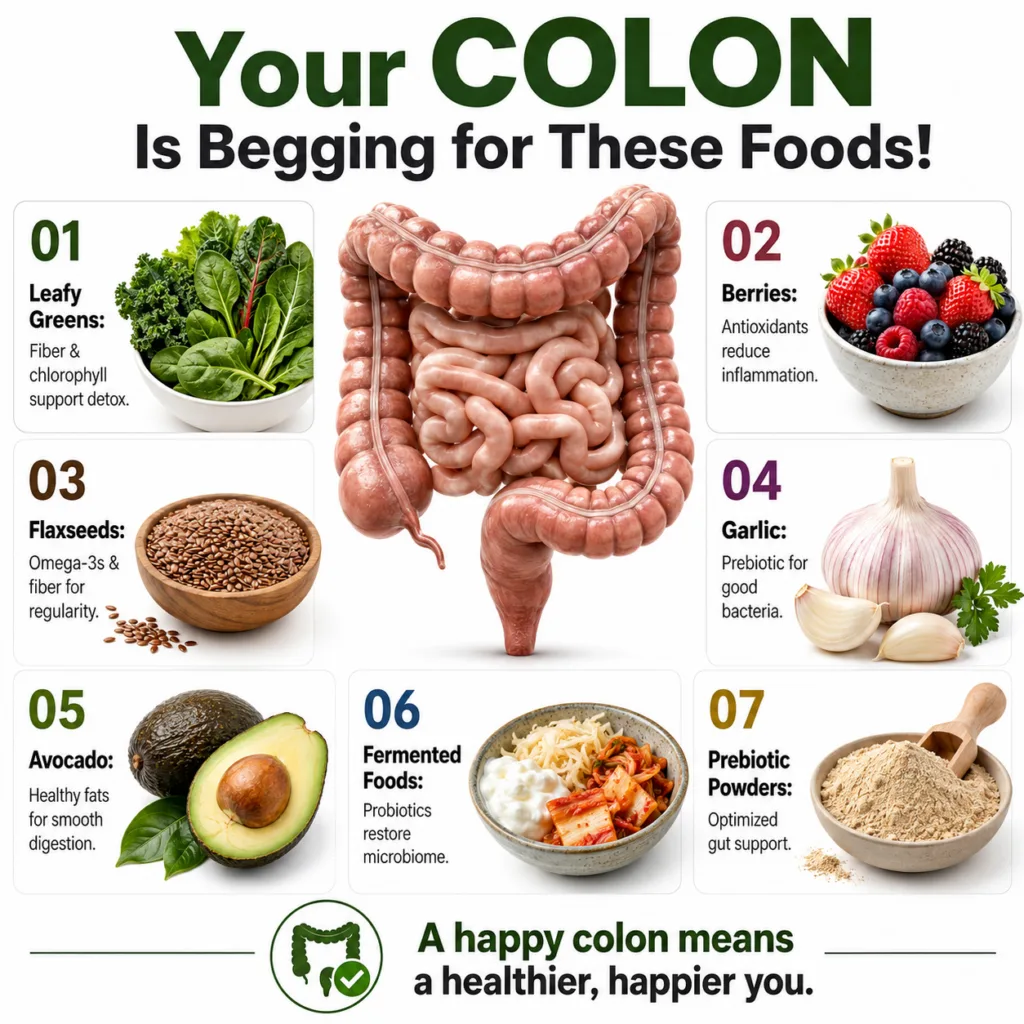
01. Leafy Greens
Kale, spinach, collard greens, and other leafy vegetables are superstars for gut health. They are packed with insoluble fiber, which adds bulk to stool and helps prevent constipation, promoting regular bowel movements. Beyond fiber, leafy greens provide essential vitamins, minerals, and antioxidants that support overall digestive function and reduce inflammation in the gut.
- How to enjoy: Add a handful to your morning smoothie, use them as a base for salads, sauté them as a side dish, or sneak them into soups and stews.
02. Berries
From blueberries to raspberries, blackberries, and strawberries, these colorful fruits are loaded with antioxidants and a generous amount of fiber, both soluble and insoluble. The fiber helps regulate digestion, while the antioxidants combat oxidative stress, which can positively impact gut lining health. Berries also contain prebiotics, feeding the good bacteria in your colon.
- How to enjoy: Enjoy a handful as a snack, add to yogurt or oatmeal, blend into smoothies, or top your whole-grain toast.
03. Flaxseeds
Small but mighty, flaxseeds are an excellent source of both soluble and insoluble fiber, as well as omega-3 fatty acids. When consumed, flaxseeds form a gel-like consistency in the digestive tract, which can help soothe the gut lining and promote regularity. The omega-3s (alpha-linolenic acid or ALA) also offer anti-inflammatory benefits.
- How to enjoy: For optimal absorption, grind flaxseeds before consuming. Sprinkle 1-2 tablespoons of ground flaxseeds over oatmeal, yogurt, smoothies, or incorporate into baked goods.
04. Garlic
More than just a flavor enhancer, garlic is a powerful prebiotic. It contains fructans, a type of fiber that serves as fuel for beneficial gut bacteria, particularly Bifidobacteria. By nurturing these good bacteria, garlic helps maintain a balanced gut microbiome, which can improve digestion and boost immune function.
- How to enjoy: Add fresh minced garlic to almost any savory dish, including stir-fries, pasta sauces, soups, and roasted vegetables.
05. Avocado
Creamy and delicious, avocados are a fantastic source of healthy monounsaturated fats and dietary fiber. The fiber in avocados supports digestive regularity, while the healthy fats can help with nutrient absorption and provide a feeling of satiety. They also contain potassium, an important electrolyte for digestive health.
- How to enjoy: Slice onto salads, smash for avocado toast, blend into smoothies for creaminess, or make a simple guacamole.
06. Fermented Foods
Fermented foods like kimchi, sauerkraut, kefir, and yogurt are teeming with beneficial probiotics. These live microorganisms, when consumed, can help replenish and diversify your gut microbiome. A robust gut flora is crucial for efficient digestion, nutrient synthesis, and protection against harmful pathogens.
- How to enjoy: Incorporate a small serving daily. Add kimchi or sauerkraut as a side to meals, enjoy plain yogurt or kefir for breakfast, or use them in dressings and dips. Look for varieties labeled ‘live and active cultures.’
07. Prebiotic Powders
For a convenient boost, prebiotic powders offer a concentrated source of non-digestible fibers that feed your gut’s good bacteria. Common types include inulin, FOS (fructooligosaccharides), and GOS (galactooligosaccharides). These powders are designed to specifically nourish the beneficial microbes, promoting their growth and activity.
- How to enjoy: Easily mix into water, smoothies, yogurt, or oatmeal. Always start with a small dose and gradually increase to assess tolerance, as some may experience temporary bloating. When choosing, look for reputable brands and quality ingredients.
Simple Ways to Integrate These Gut-Boosting Foods Daily
Making these foods a regular part of your diet doesn’t have to be complicated. Here are a few ideas to get started:
- Breakfast Boost: Combine berries, ground flaxseeds, and a spoonful of prebiotic powder into your morning oatmeal or yogurt.
- Smoothie Power-Up: Blend leafy greens, berries, avocado, and a scoop of prebiotic powder for a nutrient-dense drink.
- Lunch & Dinner Staples: Always include a generous serving of leafy greens with your meals. Use garlic as a base for cooking and add fermented foods as a vibrant side.
- Snack Smarter: Enjoy a handful of berries or a slice of avocado on whole-grain toast.
Your Gut Health FAQs
Can these foods help with bloating and gas?
Yes, many of these foods, particularly those rich in fiber and probiotics, can help regulate digestion and may reduce issues like bloating and gas when consumed regularly as part of a balanced diet. However, if you’re new to high-fiber foods, introduce them gradually to allow your digestive system to adjust.
How quickly will I notice a difference in my digestion?
Individual results vary, but many people begin to notice improvements in digestion, regularity, and energy levels within a few weeks of consistently incorporating gut-healthy foods. Consistency is key.
Should I take a probiotic supplement in addition to eating fermented foods?
While fermented foods provide natural probiotics, some individuals may benefit from a targeted probiotic supplement, especially after antibiotic use or for specific digestive concerns. Consult with a healthcare professional to determine if a supplement is right for you.
Final Thoughts
Nourishing your colon with the right foods is a powerful step towards achieving better digestion and overall wellness. By embracing these seven essential foods—leafy greens, berries, flaxseeds, garlic, avocado, fermented foods, and prebiotic powders—you’re providing your gut with the fiber, prebiotics, and probiotics it needs to thrive. Make these simple, delicious choices a regular part of your routine, and your colon will surely thank you with a healthier, happier you.
Always consult with a qualified healthcare professional before making any significant changes to your diet or health regimen.