Mulching is one of the simplest yet most transformative practices in gardening. It’s more than just a decorative top layer; it’s a vital tool for soil health, moisture retention, weed suppression, and even plant nutrition. Choosing the right mulch for the right plant, however, can feel a bit like pairing fine wine with food – there’s an art to it, but also clear principles that lead to success. Applying the wrong mulch can inadvertently starve your plants of nutrients, alter soil pH in undesirable ways, or even create a habitat for pests.
This guide will demystify the world of mulch, helping you select the perfect ground cover for everything from your towering trees to your delicate annuals. By understanding the unique properties of different mulches and aligning them with your plants’ specific needs, you’ll cultivate a healthier, more vibrant, and much easier-to-maintain garden. Let’s dig in and discover how strategic mulching can elevate your gardening game!
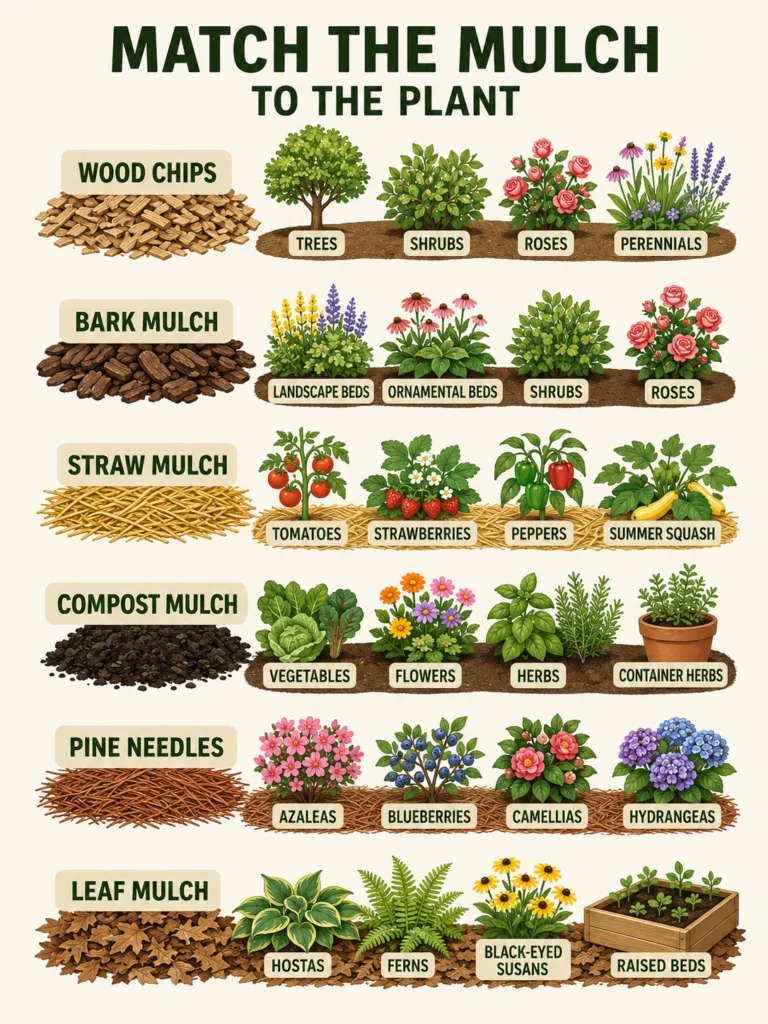 Choosing the right mulch can make a significant difference in your garden’s health and appearance.
The Core Principle of Mulching
At its heart, mulching mimics nature. In forests, leaves, fallen branches, and other organic matter naturally cover the soil, protecting it from erosion, moderating temperature, and slowly releasing nutrients. When we apply mulch in our gardens, we’re essentially replicating this beneficial ecosystem. The key is to consider what your plants need and what each mulch type offers in terms of decomposition rate, nutrient contribution, pH influence, and aesthetic.
Always apply mulch to moist soil, ideally after a good rain or watering, and keep it a few inches away from plant stems or tree trunks to prevent moisture buildup, which can lead to rot and pest issues.
Choosing Your Mulch: A Plant-by-Plant Guide
1. Wood Chips: The Long-Lasting Protector
Wood chips, often sourced from chipped tree branches, are a robust and long-lasting mulch. They break down slowly, offering extended benefits and an attractive, natural aesthetic, particularly in larger landscapes.
- Best for: Trees, shrubs, pathways, and large perennial beds.
- Benefits: Excellent weed suppression, superior moisture retention, and significant temperature moderation for soil. Their slow decomposition makes them ideal for established woody plants that don’t require frequent nutrient boosts. On pathways, they provide a firm, pleasant walking surface.
- Application: Apply a layer 3-4 inches thick. Ensure you pull the mulch back 4-6 inches from tree trunks and shrub stems to create a “donut hole” effect, preventing moisture and disease problems.
- Practical Tip: If using fresh wood chips, be mindful of their high carbon-to-nitrogen ratio. As they decompose, they can temporarily draw nitrogen from the surface soil, potentially impacting nearby annuals or young plants. This effect is minimal when applied as a surface mulch, but avoid mixing fresh wood chips directly into your planting soil.
2. Bark Mulch: The Ornamental Favorite
Bark mulches come in various forms, from shredded bark to larger nuggets. They are a popular choice for their appealing appearance and effectiveness, often preferred in ornamental settings.
- Best for: Ornamental perennial beds, shrubs, and trees. Its decorative nature makes it perfect for front yards or visible garden areas.
- Benefits: Provides excellent weed control, helps retain soil moisture, and moderates soil temperature. Shredded bark tends to stay in place better on slopes than larger nuggets, which can wash away.
- Application: Apply a 2-3 inch layer around plants, maintaining a 2-3 inch clearance from stems and trunks to prevent rot and pest issues.
- Practical Tip: For sloped areas or high-traffic ornamental beds, opt for shredded bark, as its interlocking pieces are less likely to displace. Large bark nuggets are excellent for large, open areas where appearance is key and displacement isn’t a major concern.
3. Straw Mulch: The Gardener’s Workhorse for Edibles
Straw mulch consists of dried stalks from grain crops like wheat, oats, or barley. It’s lightweight, easy to spread, and an excellent choice for vegetable gardens due to its clean nature and insulating properties.
- Best for: Vegetable gardens (tomatoes, squash, beans), strawberry patches, blueberry bushes, new seedbeds, and insulating tender perennials for winter.
- Benefits: Keeps fruits and vegetables clean by preventing contact with soil, effectively suppresses weeds, moderates soil temperature, and conserves moisture. It also breaks down to enrich the soil with organic matter.
- Application: Apply a loose layer 3-6 inches thick around plants. For seedbeds, a thinner layer (1-2 inches) can help retain moisture until germination. Keep it away from plant stems to ensure good air circulation.
- Practical Tip: Always choose straw, not hay. Hay contains seeds, which will lead to a new weed problem. Look for ‘weed-free’ straw from local garden centers or farm suppliers. It’s also fantastic for winterizing garden beds.
4. Compost Mulch: The Soil Builder’s Best Friend
Compost mulch is made from decomposed organic materials, rich in nutrients and beneficial microorganisms. It’s often referred to as ‘black gold’ because it not only mulches but also actively feeds your soil and plants. It’s an all-around superstar for improving soil structure, drainage, and nutrient availability.
- Best for: Virtually all garden plants, especially annuals, perennials, vegetable beds, and containers where regular nutrient boosts are beneficial. It’s particularly useful for improving poor or depleted soils.
- Benefits: Significantly enriches soil with a slow-release supply of nutrients, improves soil structure (aeration, water retention), increases microbial activity, and helps buffer soil pH. It also provides effective weed suppression and moisture conservation.
- Application: Apply a 1-2 inch layer around plants, ensuring it’s fully finished (dark brown, crumbly, earthy smell) to avoid issues with nitrogen draw. You can gently work a thin layer into the top inch of soil in vegetable beds for an extra boost.
- Practical Tip: Regularly replenish compost mulch, especially in annual and vegetable beds, as it breaks down quickly and its nutrients are readily absorbed. Avoid using ‘hot’ or unfinished compost, which can burn plants or introduce pathogens.
5. Pine Needles: The Acid-Loving Ally
Pine needles (also called pine straw) are a distinctive mulch known for their appearance and their ability to slowly acidify soil as they decompose. They interlock, making them resistant to wind and water displacement.
- Best for: Acid-loving plants such as rhododendrons, azaleas, camellias, blueberries, hydrangeas, and conifers. They are also excellent for slopes due to their interlocking nature.
- Benefits: Slowly lowers soil pH, excellent moisture retention, good weed suppression, and allows for good air and water penetration without compacting. They provide a tidy, natural look and are often readily available in pine-dominated regions.
- Application: Apply a 2-4 inch layer. While they break down slowly, they will need refreshing every year or two to maintain adequate depth.
- Practical Tip: If you’re unsure of your soil’s pH, conduct a soil test before applying pine needles to a wide area. While beneficial for acid-lovers, excessive use can negatively impact plants that prefer neutral or alkaline soil.
6. Leaf Mulch: Nature’s Own Soil Enhancer
Leaf mulch is simply fallen leaves, ideally shredded. It’s an incredibly sustainable and free resource that mimics the natural forest floor, returning organic matter and nutrients directly to your garden soil.
- Best for: General garden beds, beneath trees and shrubs, perennial borders, and enriching vegetable gardens over winter.
- Benefits: Fantastic for building healthy soil structure, attracting beneficial earthworms, conserving moisture, and suppressing weeds. It provides a rich source of organic matter and a slow release of nutrients as it decomposes. It’s also completely free!
- Application: Apply a 2-4 inch layer. If using whole leaves, shredding them first (with a mower or leaf shredder) is highly recommended to prevent matting, which can block water and air, and to speed up decomposition.
- Practical Tip: Collect leaves in the fall and shred them directly onto garden beds or compost them for a rich, crumbly leaf mold that can be used next season. Avoid diseased leaves or leaves from black walnut trees, which produce juglone, a compound toxic to many plants.
Common Mulching Mistakes to Avoid
Even with the best intentions, some mulching practices can hinder rather than help your garden. Here are a few common pitfalls and how to steer clear of them:
- Volcano Mulching: Piling mulch high against the trunk of trees or stems of shrubs is a common mistake. This creates a moist environment that encourages rot, provides shelter for rodents that can girdle the plant, and can cause plants to root into the mulch instead of the soil. Always keep mulch 4-6 inches away from woody stems and trunks.
- Too Thick a Layer: While mulch is good, more isn’t always better. An excessively thick layer (over 4-6 inches) can suffocate soil, prevent water from reaching roots, and create an anaerobic environment, especially for fine-textured mulches. Stick to recommended depths for optimal benefits.
- Applying to Dry Soil: Mulch is designed to retain moisture, not create it. If applied over dry soil, it can actually prevent subsequent watering from reaching the roots effectively. Always water thoroughly before mulching.
- Using Unaged Materials: As mentioned with fresh wood chips or unfinished compost, unaged organic materials can draw nitrogen from the soil as they decompose, temporarily starving your plants. Ensure organic mulches are well-aged or fully composted.
- Wrong Mulch for the Plant: Using a pH-altering mulch like pine needles around plants that prefer alkaline conditions, or a heavy, water-retentive mulch around succulents, can lead to plant stress or decline. Match the mulch to the plant’s specific needs.
Regional and Seasonal Considerations for Mulching
While the principles of mulching remain consistent, the best timing and depth can vary depending on your specific climate and the season:
- Spring (Post-Frost): This is an ideal time to apply or refresh mulch. The soil has begun to warm, and a fresh layer will suppress emerging weeds, conserve moisture as temperatures rise, and help stabilize soil temperature for new growth.
- Summer (Hot Climates – USDA Zones 8-11): In regions with intense summer heat, a good layer of mulch is crucial for keeping soil temperatures down and preventing rapid evaporation. Consider lighter-colored mulches if you find dark mulches absorb too much heat.
- Fall (Before First Hard Frost – USDA Zones 3-7): Applying mulch in fall is vital for insulating tender perennials, bulbs, and young woody plants. It helps protect roots from harsh freezing and thawing cycles that can heave plants out of the ground. Apply after the ground has started to cool but before a deep freeze.
- Humid Climates: In areas with high humidity, ensure good air circulation around plants, especially when using moisture-retentive mulches. Consider slightly thinner layers or mulches that don’t compact easily to prevent fungal issues.
Cultivating Success with Smart Mulching
Strategic mulching is a cornerstone of sustainable and successful gardening. By understanding the unique characteristics of wood chips, bark, straw, compost, pine needles, and leaf mulch, you gain a powerful tool to nurture your garden from the ground up. You’ll spend less time weeding, conserve precious water, and provide a healthier, more stable environment for your plants to thrive.
Take a walk through your garden, observe your plants, and consider their individual needs. Then, choose your mulch wisely, apply it correctly, and watch your garden flourish. A well-mulched garden isn’t just a healthy garden; it’s a testament to thoughtful, nature-inspired care. Happy mulching!