Unlock the Secret to Perfect Potting Mix for Healthier Plants!
Are you dreaming of lush, vibrant plants that thrive both indoors and out? The secret often lies right beneath their roots: the potting mix! While store-bought options are convenient, creating your own homemade potting mix can transform your gardening game, leading to healthier, happier greenery. Not only is it cost-effective, but it also allows you to customize the blend to meet your plants’ exact needs. Say goodbye to struggling plants and hello to a flourishing garden with this simple guide!
Why Go Homemade with Your Potting Mix?
Choosing to mix your own potting soil comes with a host of benefits that can significantly impact the success of your gardening endeavors:
- Cost-Effective: Buying individual components is often cheaper in the long run than purchasing pre-made bags, especially if you garden frequently.
- Customization: Different plants have different needs. A homemade mix allows you to tailor the aeration, drainage, and nutrient content for specific plant types, from succulents to leafy vegetables.
- Quality Control: You know exactly what goes into your mix, avoiding fillers or unknown chemicals that might be present in some commercial products.
- Improved Plant Health: A well-balanced homemade mix provides optimal growing conditions, reducing common issues like root rot, nutrient deficiencies, and pest problems.
- Sustainable Choice: Many ingredients, like compost, are sustainable and eco-friendly, supporting organic gardening practices.
Key Ingredients for a Balanced Potting Mix
A great potting mix is a balance of ingredients that provide drainage, aeration, water retention, and nutrients. Here are the essential components:
1. Base Material for Structure and Water Retention
- Peat Moss: Excellent for water retention and providing an acidic pH, which many plants prefer. However, harvesting peat moss can be environmentally contentious.
- Coco Coir: A sustainable alternative to peat moss, made from coconut husks. It also retains water well, provides good aeration, and has a neutral pH.
- Compost or Aged Manure: This is your nutrient powerhouse! Well-rotted compost or aged manure enriches the soil with essential nutrients, improves soil structure, and introduces beneficial microorganisms.
2. Aeration and Drainage Boosters
- Perlite: Lightweight, volcanic rock that improves drainage and aeration, preventing compaction and allowing roots to breathe.
- Vermiculite: Similar to perlite but has a higher water retention capacity. It also releases nutrients slowly.
- Coarse Sand or Grit: Ideal for succulents and cacti, coarse sand (not play sand) significantly improves drainage and adds weight for stability.
3. pH Adjusters (Optional but Recommended)
- Agricultural Lime: If your base is peat moss, a small amount of lime can help raise the pH, making it more suitable for a wider range of plants.
Our Simple Homemade Potting Mix Recipe
This basic recipe is a fantastic starting point for most houseplants, flowers, and general container gardening. Remember, these are proportions, not exact measurements, allowing you to scale up or down as needed.
Ingredients:
- 2 parts Coco Coir or Peat Moss (for water retention and structure)
- 1 part Perlite or Vermiculite (for aeration and drainage)
- 1 part High-Quality Compost or Aged Manure (for nutrients)
- Optional: A sprinkle of agricultural lime if using peat moss, or a slow-release organic fertilizer
Step-by-Step Mixing Instructions
- Gather Your Tools: You’ll need a large tub, wheelbarrow, or tarp for mixing, a trowel or shovel, and gardening gloves.
- Combine Base Materials: Start by adding the coco coir (or peat moss) and compost to your mixing container. Break up any large clumps.
- Add Aeration: Incorporate the perlite or vermiculite.
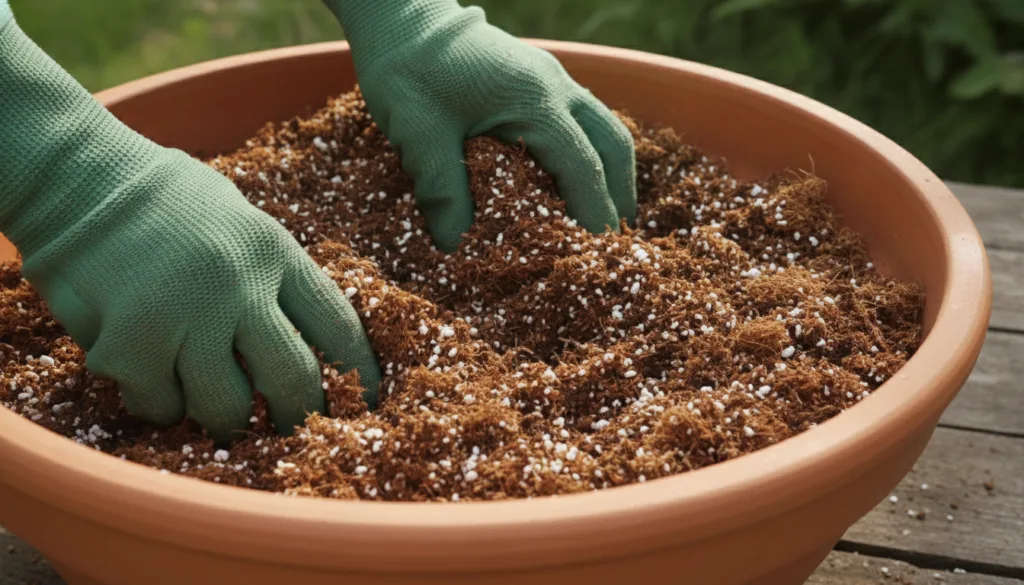
- Mix Thoroughly: Using your gloved hands or a trowel, mix all ingredients together until uniformly combined. You want to ensure even distribution of all components.
- Moisten Lightly: Add a small amount of water to the mix and blend again. The goal is for the mix to be damp, not soggy, similar to a wrung-out sponge. This makes it easier to work with and ensures good initial moisture for your plants.
- Ready to Use: Your homemade potting mix is now ready to give your plants the best start!
Customizing Your Mix for Specific Plants
The beauty of homemade mix is its adaptability!
- For Succulents & Cacti: Increase the drainage. Use 1 part Coco Coir, 1 part Perlite/Vermiculite, 1 part Coarse Sand/Grit, and 0.5 part Compost.
- For Seed Starting: Opt for a finer, lighter mix. Use 2 parts Coco Coir, 1 part Vermiculite, and 0.5 part finely sieved Compost.
- For Heavy Feeders (e.g., Vegetables): Boost the nutrients. Use 2 parts Coco Coir, 1 part Perlite, and 2 parts Compost/Aged Manure. You might also add a balanced organic fertilizer.
Storing Leftover Potting Mix
If you have leftover mix, store it in an airtight container or a sealed bag in a cool, dry place. This prevents it from drying out, losing nutrients, or attracting pests. While it can last for a long time, fresh mix is always best for optimal plant health.
Troubleshooting Common Potting Mix Issues
- Too Much Water Retention: If your mix stays soggy, add more perlite or coarse sand to improve drainage.
- Drying Out Too Quickly: Increase the proportion of coco coir or compost for better water retention.
- Nutrient Deficiency: Ensure you are using high-quality compost. You can also amend the mix with a slow-release organic fertilizer at planting time.
Start Mixing for Greener Results!
Creating your own potting mix is a simple yet powerful way to elevate your gardening. It puts you in control of what your plants are growing in, allowing you to provide them with the optimal environment for vibrant growth. Experiment with different ratios, observe how your plants respond, and enjoy the satisfaction of nurturing your green friends with a mix made with your own hands. Happy gardening!