In our busy lives, finding time to consistently eat healthily, especially following a low-carb lifestyle, can feel like a challenge. That’s where low carb meal prep tips come in handy, transforming your week from frantic to fantastic. Imagine saving precious hours, staying perfectly on track with your nutritional goals, and enjoying delicious, wholesome meals without the daily fuss. It’s not just a dream — it’s a perfectly achievable reality.
Meal prepping is the secret weapon for anyone committed to a low-carb diet. It minimizes decision fatigue, reduces the temptation for unhealthy grab-and-go options, and ensures you always have nourishing food ready to eat. This guide will walk you through nine essential strategies that will help you simplify your week and embrace a healthier, more organized lifestyle.
9 Low Carb Meal Prep Tips to Simplify Your Week
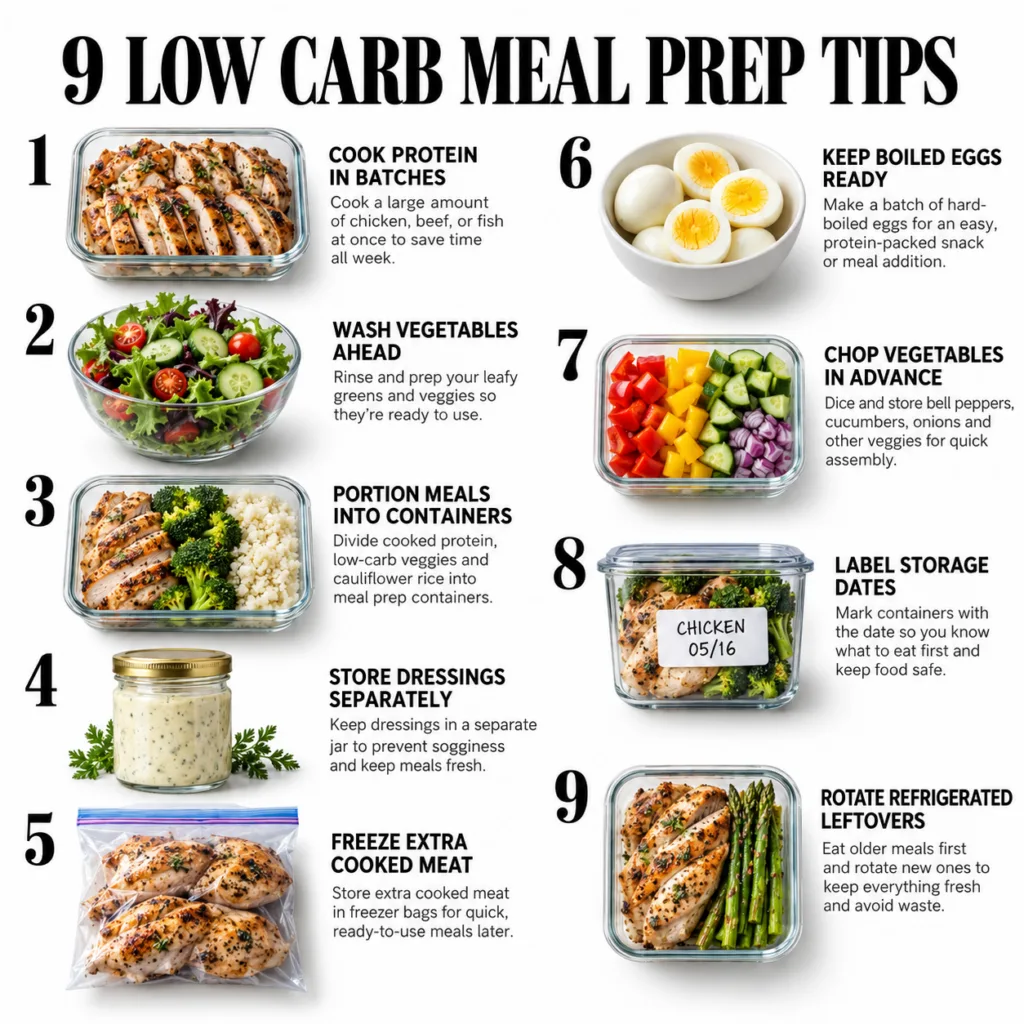
From maximizing freshness to streamlining your cooking process, these tips — inspired by smart meal prep visuals — will empower you to become a low-carb meal prep pro.
Tip 1: Batch Cook Lean Proteins
Proteins are the cornerstone of any satisfying low-carb meal, keeping you full and supporting muscle health. Dedicate a block of time — perhaps on a Sunday — to cook a large quantity of your favorite lean proteins. Grilling a batch of chicken breasts, like the perfectly cooked chicken shown in organized meal prep, is a fantastic starting point. You can also bake salmon, roast turkey, or prepare lean ground beef.
- Why it works: Having pre-cooked protein means you’re just minutes away from a complete meal.
- How to do it: Grill, bake, or pan-fry large portions. Cool completely before storing to prevent condensation.
- Storage: Portion into individual servings and store in airtight containers in the refrigerator for 3-4 days, or freeze for longer.
Tip 2: Prepare Non-Starchy Vegetables in Bulk
Non-starchy vegetables like broccoli and asparagus are packed with nutrients and fiber, making them perfect for low-carb eating. Just like the vibrant veggies seen in expert meal preps, steam, roast, or sauté a large quantity that you can easily add to any meal.
- Why it works: Ensures you meet your daily vegetable intake without extra cooking during the week.
- How to do it: Wash, chop, and cook your chosen vegetables. Keep them slightly al dente to retain texture when reheating.
- Storage: Store cooked vegetables in airtight containers in the fridge for up to 3-5 days.
Tip 3: Master Low-Carb Rice Alternatives
Cauliflower rice is a versatile and popular low-carb substitute for traditional grains, and the infographic shows it smartly stored in freezer bags. You can buy it pre-riced or make it yourself by pulsing cauliflower florets in a food processor.
- Why it works: Offers a satisfying base for curries, stir-fries, and bowls, helping you stay low-carb without feeling deprived.
- How to do it: Sauté riced cauliflower until tender, or simply steam it.
- Storage: Portion cooked cauliflower rice into freezer bags once cooled. This is an excellent way to extend its shelf life for several weeks, ready to be thawed and reheated quickly.
Tip 4: Pre-Chop Salad Toppings and Raw Veggies
Having fresh, crunchy raw vegetables ready to go is a game-changer for quick salads and snacks. Following the example of pre-chopped bell peppers and cucumbers, spend a few minutes washing and chopping a variety of your favorite low-carb veggies.
- Why it works: Instantly upgrades salads, provides easy snack options, and adds crunch to any meal without last-minute prep.
- How to do it: Wash and chop hardier vegetables like bell peppers, cucumbers, celery, and radishes. Store them in separate airtight containers.
- Storage: Keep refrigerated. For extra crispness, you can place a damp paper towel in the container.
Tip 5: Wash and Store Leafy Greens Properly
Fresh green salads are a staple of low-carb diets. To keep your greens vibrant and crisp all week, proper washing and storage are key. The visually appealing fresh green salads in meal prep photos highlight how essential this step is.
- Why it works: Prevents greens from wilting quickly, making it easy to grab a handful for a quick salad base.
- How to do it: Wash your chosen greens (spinach, romaine, mixed greens) thoroughly. Use a salad spinner to remove excess water.
- Storage: Line an airtight container with paper towels, add the dry greens, and place another paper towel on top before sealing. This absorbs moisture and prolongs freshness.
Tip 6: Hard-Boil Eggs for Quick Bites
Hard-boiled eggs are a perfect low-carb, high-protein snack or a versatile addition to any meal. The presence of hard-boiled eggs in the meal prep layout emphasizes their role as a convenient protein source.
- Why it works: Provides an instant protein boost, great for hunger pangs, or as a topping for salads and bowls.
- How to do it: Hard-boil a dozen eggs at the beginning of the week. Cool them quickly in an ice bath to prevent a green ring around the yolk.
- Storage: Store unpeeled hard-boiled eggs in their carton in the refrigerator for up to one week. Peel just before eating.
Tip 7: Portion Meals into Individual Containers
One of the most effective strategies for staying on track with a low-carb diet is pre-portioning your meals. The clear glass meal prep containers visible in the infographic demonstrate how to make this visually appealing and practical.
- Why it works: Controls portion sizes, prevents overeating, and makes grabbing a healthy meal as simple as opening the fridge. This is crucial for managing calorie deficit meal plan goals.
- How to do it: Assemble full meals (protein, veggies, low-carb base) into individual containers.
- Storage: Stack neatly in the refrigerator. Consider best overnight oats containers and similar options for different meal types.
Tip 8: Label Everything for Freshness & Organization
A visible date label on a meal prep container, as highlighted in the visuals, is more than just a detail — it’s a vital part of food safety and organization. Knowing exactly when you prepped your food helps you consume it at its peak freshness.
- Why it works: Prevents food waste, ensures food safety, and simplifies meal rotation throughout the week.
- How to do it: Use sticky labels, a marker, or even masking tape to clearly write the date of preparation and the contents on each container.
- Storage: Arrange labeled containers so that older meals are at the front, encouraging you to eat them first.
Tip 9: Harness the Power of Freezer-Friendly Storage
While some items are best fresh, others — like the cauliflower rice stored in freezer bags — are perfect candidates for freezing. Strategic freezing can significantly extend the life of your prepped ingredients and meals.
- Why it works: Reduces food waste, provides backup meals for busy days, and allows for even longer-term meal planning.
- How to do it: Ensure foods are completely cooled before freezing. Use freezer-safe bags or containers, pressing out as much air as possible to prevent freezer burn.
- Storage: Label clearly with the date and contents. Most frozen prepped meals are good for 1-3 months.
Why Low Carb Meal Prep Works for You
Embracing these low carb meal prep tips isn’t just about saving time; it’s about investing in your health and peace of mind. By preparing your meals in advance, you eliminate the stress of daily cooking decisions, reduce the temptation to choose unhealthy options, and maintain consistent control over your nutritional intake. This organized approach is particularly effective for those aiming for weight management, stable blood sugar levels, or simply a more disciplined eating routine. It transforms the often-daunting task of healthy eating into an effortless and enjoyable part of your week.
Common Questions About Low Carb Meal Prep
What are the best containers for low-carb meal prep?
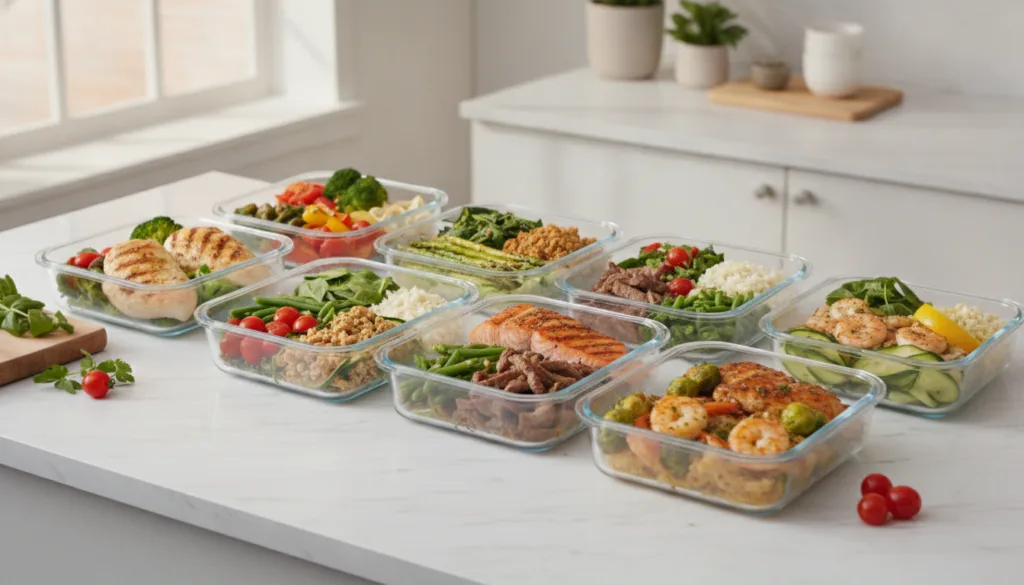
For low-carb meal prep, glass containers are often recommended. They are non-porous, don’t retain odors or stains, and are microwave, oven (without lid), and dishwasher safe. Look for containers with airtight, leak-proof lids to keep your food fresh. Silicone bags are also excellent for freezing and storing specific ingredients like cauliflower rice.
How long do low-carb prepped meals last?
Most refrigerated low-carb prepped meals will last safely for 3-4 days when stored in airtight containers. Cooked proteins and vegetables typically fall within this timeframe. Raw chopped vegetables might last a bit longer, up to 5-7 days, if stored correctly. Always refer to your labeling and use your best judgment.
Can you freeze all low-carb meals?
While many low-carb meals are freezer-friendly, not all ingredients hold up equally well. Cooked meats, most cooked vegetables (like broccoli and asparagus), and cauliflower rice freeze beautifully. However, leafy greens, high-water content vegetables (like cucumber and bell peppers, if you want them crisp), and dishes with creamy sauces may become watery or mushy upon thawing. Always consider the texture and integrity of the ingredients when choosing to freeze.
Final Thoughts
Adopting these 9 low carb meal prep tips is more than just a culinary hack; it’s a lifestyle upgrade. By taking a little time to prepare on the front end, you unlock a week filled with stress-free, delicious, and healthy eating that aligns perfectly with your low-carb goals. So, stock your fridge, label your containers, and enjoy the effortless journey towards a healthier you!
Medical Disclaimer
This article provides general information and discussions about health and related subjects. The information and other content provided in this article, and in any linked materials, are not intended and should not be construed as medical advice, nor is the information a substitute for professional medical expertise or treatment. Always consult with a qualified healthcare professional for medical advice, diagnosis, and treatment.