Is your garden fence just a boundary, or could it be a vibrant canvas? Many of us look at our fences and see only wood or vinyl, but with a little vision and the right plants, you can transform a plain barrier into a stunning living wall that enhances your outdoor space, provides privacy, and bursts with color. Imagine a fence draped in beautiful blooms and lush foliage, creating a dynamic backdrop to your garden.
This kind of garden makeover is not just about aesthetics; it’s about maximizing your growing space, attracting pollinators, and creating a more immersive, tranquil environment. If you’ve been dreaming of turning that stark fence into a verdant paradise, you’re in the right place. We’ll guide you through selecting the perfect climbing plants and complementary underplantings to achieve a breathtaking transformation, just like in the inspiring example you might have seen.
Ready to unlock your yard’s full potential and create a truly secret garden feel? Let’s dig in!
The Magic of Vertical and Layered Gardening
Transforming a fence involves two key gardening principles: vertical gardening and layered planting. Vertical gardening allows you to grow plants upwards, making use of unused space and adding height and drama to your garden. Layered planting, on the other hand, involves arranging plants of different heights and textures in front of each other, creating depth and year-round interest.
By combining these approaches, you can create a dynamic display that softens harsh fence lines, provides natural privacy, and offers a continuous show of color and foliage throughout the growing season. The fence acts as a structural element for climbing plants, while the ground below offers space for complementary shrubs, perennials, and annuals.
Choosing Your Climbing Stars: The Beauty of Clematis
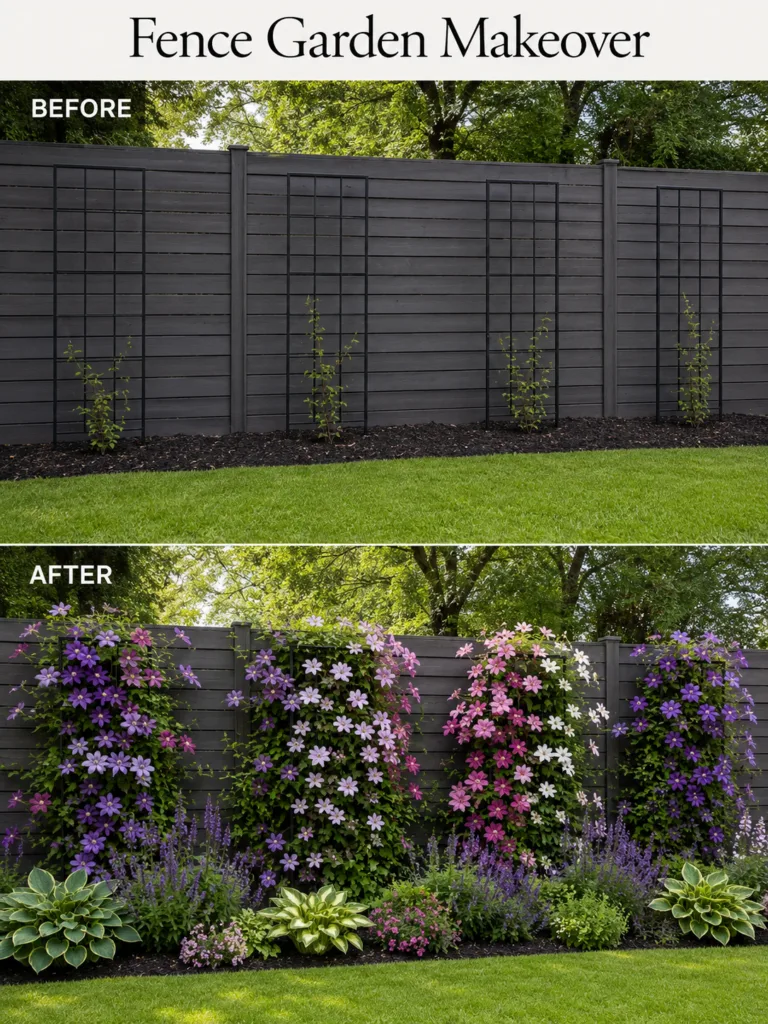
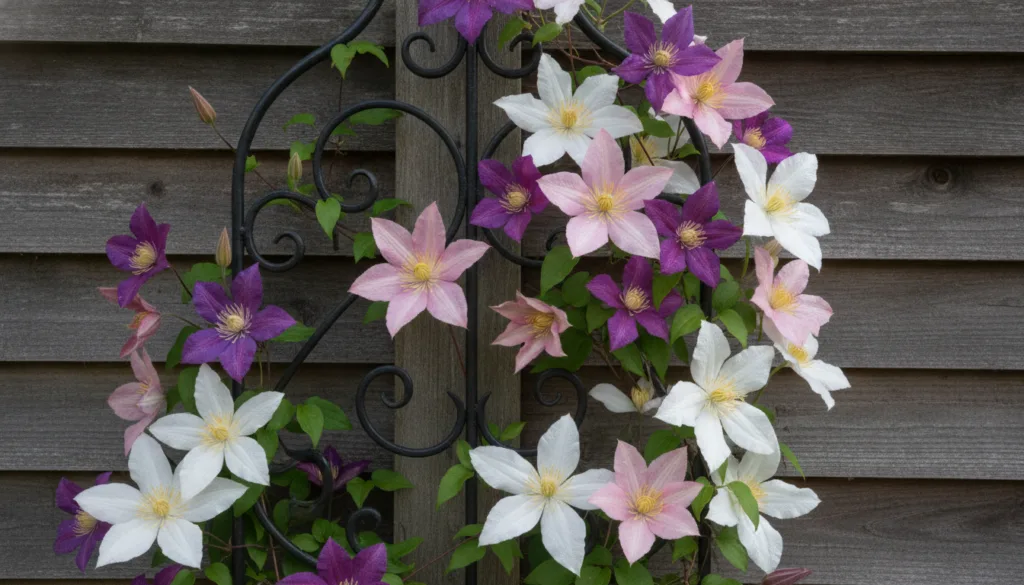
For a stunning fence transformation, climbing plants are your primary performers. The image showcases the incredible potential of Clematis, a genus celebrated for its spectacular blooms and versatile growth habits. With hundreds of species and cultivars, Clematis offers a wide range of colors, bloom times, and sizes.
Clematis (Clematis spp.)
Clematis are deciduous or evergreen perennial vines, mostly known for their showy flowers. They thrive when their ‘heads’ are in the sun and their ‘feet’ are cool and shaded – a perfect scenario when growing against a fence with underplantings!
- Hardiness: USDA Zones 4–9, depending on the species and cultivar. Some varieties are more cold-hardy, while others prefer milder climates.
- Plant type: Deciduous or evergreen perennial vine.
- Exposure: Full sun (at least 6 hours of direct sunlight per day) for the foliage and flowers, with shade for the roots.
- Height: Varies greatly, from 6-8 feet for smaller types to 20-30 feet for vigorous growers.
- Spread: Can cover several feet horizontally along a trellis or fence.
- Soil & Drainage: Prefers rich, well-draining soil with a neutral to slightly alkaline pH. Amend heavy clay or sandy soils with compost to improve structure.
- Watering Needs: Consistent moisture, especially during dry spells and flowering. Avoid letting the soil dry out completely or become waterlogged. A good layer of mulch helps retain soil moisture.
- Main Value: Abundant, vibrant flowers that provide continuous interest from spring through fall, depending on the type. Excellent for vertical coverage and attracting pollinators.
- Propagation: Typically propagated by softwood cuttings in spring or semi-hardwood cuttings in summer, or by layering.
- Spacing & Support: Plant 2-3 feet apart for dense coverage. Provide a sturdy trellis, wire, or netting for their twining petioles (leaf stalks) to grasp. Ensure the support is strong enough to bear the mature plant’s weight.
- Pruning: This is critical and depends on the Clematis type (Groups 1, 2, or 3).
- Group 1 (Early-flowering, on old wood): Prune lightly after flowering, if needed.
- Group 2 (Large-flowered, repeat bloomers): Light prune in late winter/early spring, removing dead or weak stems.
- Group 3 (Late-flowering, on new wood): Hard prune in late winter/early spring, cutting back to 12-18 inches from the ground.
- Practical Tip: Plant Clematis about 4-6 inches away from the fence to allow for good air circulation and root development. Bury the crown of the plant 2-4 inches below the soil surface to encourage more shoots and protect against wilt.
- Common Mistake: Improper pruning can lead to fewer blooms. Identify your Clematis group to prune correctly. Also, neglecting to shade the roots can stress the plant.
Underplanting for Depth and Continuous Interest
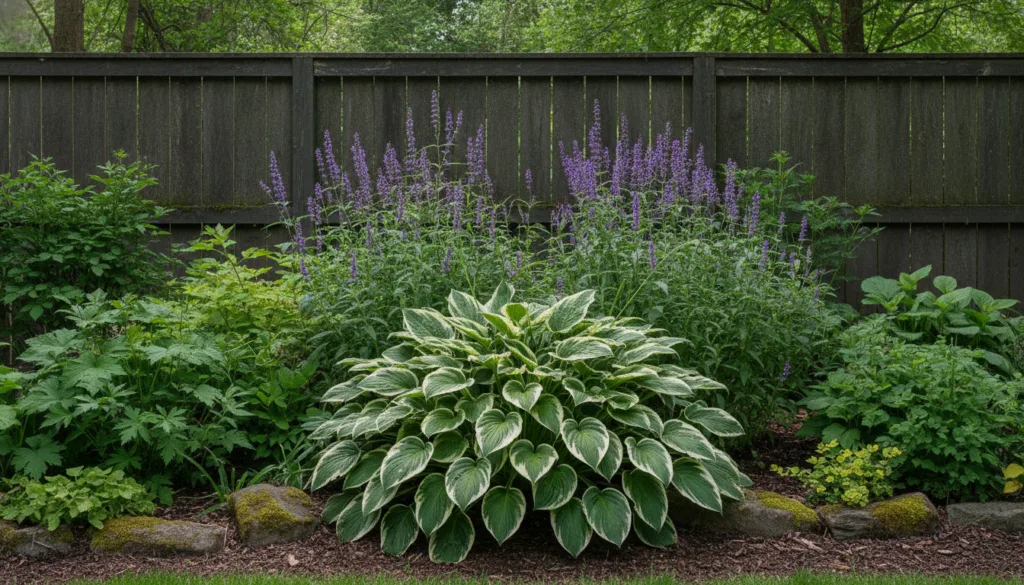
While climbers adorn the fence, the space at the base is prime real estate for creating a layered garden bed. The image shows a beautiful combination of Hostas and tall, spiky purple flowers, likely Salvia or Lavender, along with other green foliage and small pink blooms. These underplantings serve multiple purposes: they shade the roots of your climbers, add contrasting textures and colors, and provide ground-level beauty.
Hosta (Hosta spp.)
Hostas are renowned for their incredible foliage, offering a vast array of leaf shapes, sizes, colors, and textures. They are primarily grown for their leaves but also produce attractive flower spikes.
- Hardiness: USDA Zones 3–9.
- Plant type: Perennial.
- Exposure: Partial to full shade is generally preferred, especially in warmer climates, though some varieties tolerate more sun if kept well-watered.
- Height: 6 inches to over 3 feet, depending on cultivar.
- Spread: 1-5 feet.
- Soil & Drainage: Rich, well-draining soil with consistent moisture. Amend with organic matter for best results.
- Watering Needs: Regular watering, especially during dry periods. They dislike drying out.
- Main Value: Diverse and striking foliage that provides texture, color, and form to shaded garden areas. Effective for ground cover and shading climber roots.
- Propagation: Division in spring or early fall.
- Spacing: Plant 1-3 feet apart, depending on mature size, to allow for full development.
- Practical Tip: Protect Hostas from slugs and snails, which can cause significant damage to their leaves. Consider organic baits or barriers.
- Common Mistake: Planting sun-sensitive varieties in too much direct sun, leading to scorched leaves.
Salvia (Salvia spp.) or Lavender (Lavandula spp.)
The tall, spiky purple flowers in the image could be either Salvia or Lavender, both excellent choices for adding vertical accents, color, and attracting pollinators to the base of your fence garden. They thrive in sunnier spots, complementing sun-loving Clematis.
Salvia (Salvia spp.)
- Hardiness: Highly variable, from annuals to perennials hardy in USDA Zones 3–11. Many ornamental Salvias are hardy in Zones 5–9.
- Plant type: Annual, biennial, or perennial herb/flower.
- Exposure: Full sun (6+ hours).
- Height: 1-5 feet, depending on species.
- Spread: 1-3 feet.
- Soil & Drainage: Well-draining soil is crucial. Tolerates average to poor soil.
- Watering Needs: Drought-tolerant once established, but regular watering benefits flowering.
- Main Value: Long-lasting flower spikes in various colors (many purples, blues, pinks, reds) and attracts hummingbirds and butterflies. Many varieties are deer and rabbit resistant.
- Propagation: Cuttings or seeds.
- Spacing: 1-3 feet apart, depending on mature size, for good air circulation.
- Practical Tip: Deadhead spent flower spikes to encourage reblooming throughout the season.
Lavender (Lavandula spp.)
- Hardiness: USDA Zones 5–9, depending on the species (e.g., English Lavender is hardier than French or Spanish).
- Plant type: Perennial evergreen sub-shrub.
- Exposure: Full sun (6+ hours).
- Height: 1-3 feet.
- Spread: 1-4 feet.
- Soil & Drainage: Absolutely requires very well-draining soil. Does not tolerate wet feet. Prefers lean, alkaline soil.
- Watering Needs: Drought-tolerant once established. Water sparingly.
- Main Value: Fragrant flowers and foliage, attractive to pollinators, and provides a beautiful purple hue.
- Propagation: Cuttings.
- Spacing: 1-3 feet apart.
- Practical Tip: Prune after the first flush of flowers to maintain a compact shape and encourage a second bloom. Avoid cutting into old wood to prevent dieback.
Step-by-Step Fence Garden Transformation
1. Assess Your Site and Sunlight
Before planting, observe your fence. How much sun does it receive throughout the day? This will dictate your plant choices. Most climbing flowers, like Clematis, prefer full sun. For underplantings, consider sun-loving Salvias or Lavenders in sunny spots, and Hostas for shadier areas.
2. Prepare the Soil
A successful garden starts with good soil. Dig a trench or individual planting holes along the base of your fence. Amend the existing soil generously with organic matter like compost, well-rotted manure, or leaf mold. This improves drainage, fertility, and soil structure, giving your plants a healthy foundation. Ensure the soil is well-draining to prevent root rot.
3. Install Trellises or Supports
For climbing plants, adequate support is crucial from day one. Install sturdy trellises, wires, or netting directly onto your fence before planting. For Clematis, a grid or wire mesh provides the best structure for their twining petioles to grasp.
4. Plant Your Climbers
Plant your Clematis or other chosen climbers 4-6 inches away from the fence and support structure. This space ensures good air circulation and prevents competition with the fence itself. Bury the crown of Clematis a few inches deeper than it was in its nursery pot to encourage a stronger root system and multiple stems. Gently guide the young shoots onto the trellis.
5. Introduce Underplantings
Once your climbers are in place, arrange your underplantings in front of them. Consider their mature size and sunlight needs. Place taller plants like Salvia or Lavender behind shorter ones like Hostas or other groundcovers. Stagger plants for a natural, flowing look, and ensure enough space for air circulation between each plant. Remember to shade the roots of your Clematis with these plants or with a layer of mulch.
6. Water and Mulch
Water thoroughly after planting. Apply a 2-3 inch layer of organic mulch (like wood chips, shredded bark, or compost) over the entire garden bed. Mulch helps retain soil moisture, suppress weeds, regulate soil temperature, and slowly releases nutrients as it breaks down.
Regional and Seasonal Considerations for U.S. Gardeners
Gardening advice always benefits from a local lens. The vast climates across the United States mean that planting times and plant choices can vary significantly.
- Zones 3-5 (Cold Climates): Focus on cold-hardy Clematis varieties like ‘Jackmanii’ or species Clematis. Plant in spring after the last frost. Ensure winter protection for less hardy perennials by mulching heavily.
- Zones 6-8 (Temperate Climates): This broad range offers great flexibility. Most Clematis varieties thrive here. Plant in spring or early fall. Many underplantings will be true perennials.
- Zones 9-11 (Warm Climates): While Clematis can grow here, some may struggle with intense summer heat. Provide afternoon shade for their foliage and roots. Consider heat-tolerant underplantings. Many ‘perennials’ in colder zones might be evergreen here or even short-lived due to heat stress.
Always check your local frost dates before planting tender annuals or starting seeds. For perennial climbers and underplantings, consider soil temperature; planting when the soil is warm enough for root establishment, typically in spring or early fall, is ideal.
Common Mistakes and How to Avoid Them
- Inadequate Support for Climbers: Many gardeners underestimate the mature size and weight of climbing plants. A flimsy trellis won’t hold up. Install a strong, well-anchored support system from the start.
- Planting Too Close to the Fence: Roots need space, and plants need airflow. Give your climbers at least 4-6 inches away from the fence itself.
- Ignoring Soil Preparation: Poor soil leads to struggling plants. Investing time in amending your soil with compost will pay dividends in plant health and vigor.
- Incorrect Pruning of Climbers: As mentioned with Clematis, knowing your plant’s pruning group is essential for abundant blooms. Research the specific needs of your chosen climber.
- Overlooking Watering Needs: Especially for newly planted gardens, consistent moisture is key for establishment. Don’t let plants dry out, but also avoid waterlogging the soil.
- Skipping Mulch: Mulch is a gardener’s best friend. It saves water, suppresses weeds, and enriches the soil.
A Living Canvas Awaits
Transforming a plain fence into a living garden is one of the most rewarding projects you can undertake in your outdoor space. It’s a journey of layering textures, colors, and life, turning a utilitarian structure into a focal point of beauty and tranquility. By carefully selecting your climbing plants and complementary underplantings, preparing your soil, and providing consistent care, you’ll create a vibrant, ever-changing tapestry that you’ll enjoy for years to come.
Remember, gardening is an ongoing conversation with nature. Observe how your plants grow, adjust your care as needed, and delight in the transformation. Your fence garden will not only become a stunning visual asset but also a thriving mini-ecosystem attracting beneficial insects and birds. Get started today, and watch your garden dreams unfold!