Feeling a little puffy, uncomfortable, or just not quite yourself? That familiar sensation of bloat can be frustrating, affecting how you feel and even how your clothes fit. While occasional bloating is common, persistent discomfort can signal that your digestive system needs a little extra love. The good news? Nature offers a powerful pantry of foods and remedies that can help ease digestion and reduce that bloated feeling.
At Wellness Daily, we believe in empowering you with natural, science-informed ways to feel your best. Let’s explore how simple additions to your daily routine can help you feel lighter and more comfortable, naturally.
What Causes Bloating? Understanding the Basics
Bloating is typically caused by excess gas production or disturbances in the movement of muscles in the digestive tract. Common culprits include:
- Dietary Choices: Eating too quickly, consuming certain gas-producing foods (like beans, lentils, broccoli), high-sodium intake leading to water retention, or an intolerance to certain ingredients (like lactose or gluten).
- Swallowing Air: Habits like chewing gum, drinking through a straw, or talking while eating can lead to swallowing excess air.
- Digestive Issues: Conditions like Irritable Bowel Syndrome (IBS), constipation, or an imbalance in gut bacteria can significantly contribute to bloating.
- Hormonal Fluctuations: Many women experience bloating around their menstrual cycle due to hormonal changes.
Understanding the potential causes is the first step toward finding relief. Now, let’s dive into the natural helpers!
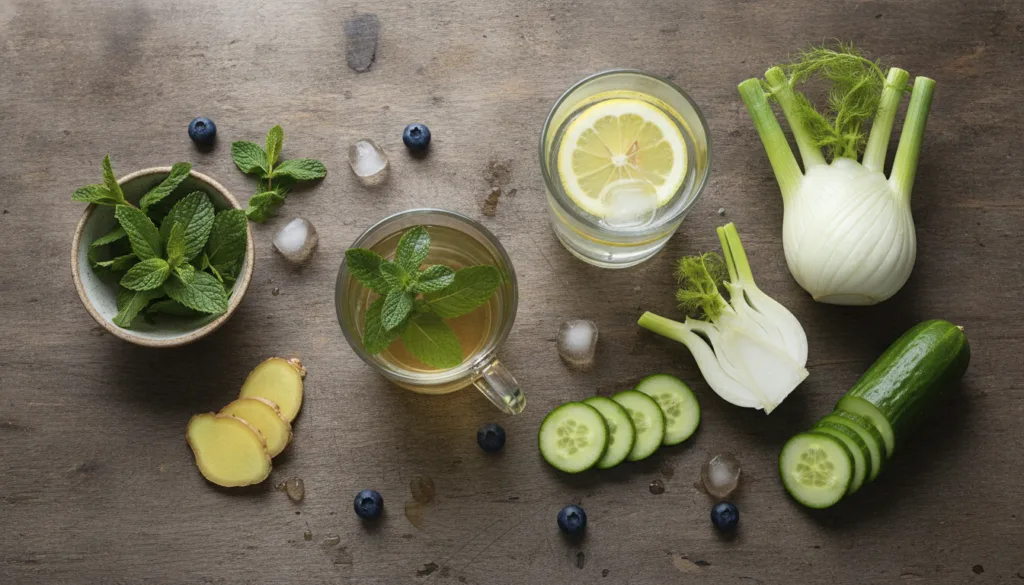
Natural Foods and Drinks to Combat Bloating
Many everyday foods possess properties that can aid digestion, reduce gas, and help flush out excess fluids. Here are some of our favorites:
1. Refreshing Cucumber
Known for its high water content, cucumber is a natural diuretic. It can help reduce water retention and flush out toxins, which may contribute to a lighter feeling. Cucumbers also contain compounds like quercetin, which is an antioxidant that may help reduce inflammation.
2. Soothing Peppermint Tea
Peppermint has long been cherished for its digestive benefits. The menthol in peppermint can help relax the muscles of the gastrointestinal tract, easing spasms that can lead to gas and bloating. A warm cup of peppermint tea after meals can be wonderfully soothing.
3. Zesty Ginger
This potent root is a powerhouse for digestion. Ginger contains gingerols, compounds that may help speed up gastric emptying and reduce intestinal cramping and gas. Adding fresh ginger to your water, tea, or meals can offer significant relief.
4. Fennel Seeds
Fennel seeds are traditional remedies for digestive upset, including bloating and gas. They contain compounds like anethole, which may help relax smooth muscles in the digestive tract, thereby reducing discomfort. You can chew on a small spoonful of fennel seeds after a meal or brew them into a tea.
5. Nutrient-Rich Bananas
Bloating can sometimes be linked to an imbalance of electrolytes. Bananas are an excellent source of potassium, which can help regulate fluid balance and counteract sodium-induced water retention. They also provide fiber, supporting healthy bowel movements.
6. Asparagus
Beyond being delicious, asparagus is another natural diuretic that may help reduce water retention and bloating. It also contains prebiotics, which feed beneficial gut bacteria, supporting a healthy microbiome.
7. Pineapple
This tropical fruit contains bromelain, an enzyme that aids in protein digestion. By helping to break down food more efficiently, pineapple may reduce the likelihood of gas and bloating caused by undigested proteins.
8. Probiotic-Rich Foods
A healthy gut microbiome is crucial for digestion. Incorporating foods rich in probiotics like yogurt, kefir, sauerkraut, and kimchi can introduce beneficial bacteria that help balance your gut flora, potentially reducing gas and bloating.
Beyond Food: Lifestyle Tips for a Lighter You
While food plays a significant role, your lifestyle habits also greatly influence your digestive comfort.
1. Stay Hydrated
It might seem counterintuitive, but drinking enough water helps prevent water retention and keeps your digestive system moving smoothly, preventing constipation which can lead to bloating.
2. Eat Mindfully
Slow down, chew your food thoroughly, and avoid distractions while eating. This allows your digestive system to work more effectively and reduces the amount of air you swallow.
3. Regular Movement
Physical activity can help move gas through your digestive system and reduce constipation. Even a gentle walk after a meal can make a difference.
4. Manage Stress
Stress can wreak havoc on your digestive system. Practices like meditation, yoga, or deep breathing can help calm your body and mind, which in turn can positively impact your gut health.
Important Considerations: When to See a Doctor
While these natural remedies can be very effective for occasional bloating, it’s important to remember that persistent or severe bloating, especially when accompanied by other symptoms like severe pain, weight loss, changes in bowel habits, or blood in your stool, warrants a visit to your doctor. This article is for informational purposes only and is not a substitute for professional medical advice.
Embrace a Lighter, More Comfortable You
Incorporating these natural foods and lifestyle practices can significantly improve your digestive comfort and help you say goodbye to bloat. Listen to your body, make gradual changes, and discover what works best for you on your wellness journey. Here’s to feeling lighter, more energetic, and more comfortable every day!