Embracing a low-carb lifestyle doesn’t have to mean endless cooking and last-minute scrambling. With smart planning and a few key habits, you can save time, stay on track, and simplify your week. Low-carb meal prep is the secret weapon for many who want to enjoy delicious, healthy meals without the daily stress. It ensures you always have nourishing options ready, making it easier to stick to your dietary goals and resist less healthy temptations.
This guide dives into nine essential low-carb meal prep tips that will transform your kitchen routine. From batch cooking proteins to smart storage solutions, these practical strategies will help you streamline your healthy eating journey.
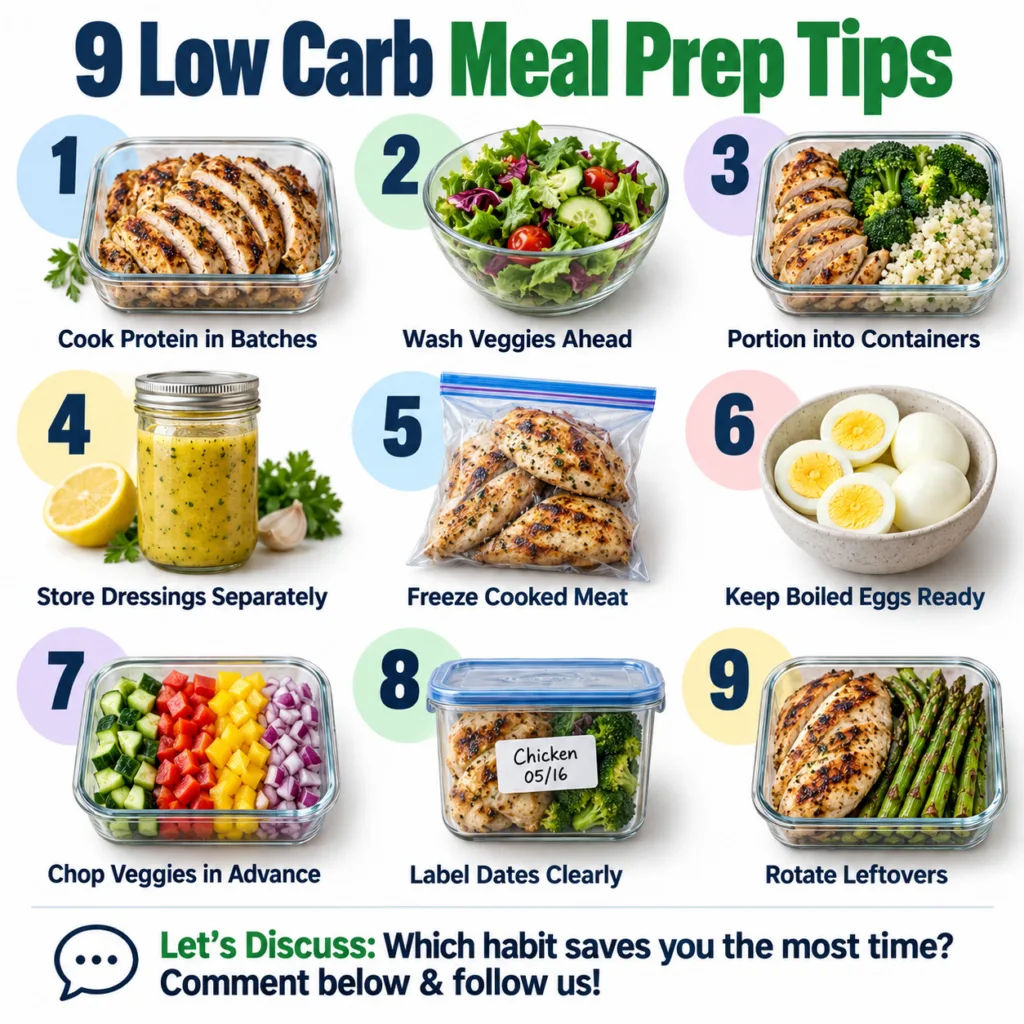
Mastering Your Low Carb Meal Prep: 9 Essential Tips
Here are our top nine habits to help you streamline your low-carb meal preparation and ensure a week of healthy, stress-free eating:
1. Cook Protein in Batches
Protein is the cornerstone of any low-carb diet, keeping you full and satisfied. Cooking a large batch of your favorite protein at the beginning of the week is a game-changer. Think grilled chicken breasts, baked salmon, ground beef, or shredded pork. This single step provides a versatile base for numerous meals.
- Why it helps: Saves significant cooking time throughout the week. Provides ready-to-eat protein for salads, stir-fries, and wraps.
- How to do it: Dedicate an hour to cooking a few pounds of chicken, turkey, or beef. Season simply so it can be adapted to different flavor profiles later. Store cooked protein in airtight containers in the refrigerator for up to 3-4 days.
- Recipe Idea: Basic Batch Baked Chicken Breast
- Servings: 4-6
- Ingredients:
- 2 lbs boneless, skinless chicken breasts
- 1 tbsp olive oil
- 1 tsp salt
- 1/2 tsp black pepper
- 1/2 tsp garlic powder
- 1/2 tsp paprika
- Instructions:
- Preheat oven to 400°F (200°C).
- Pat chicken breasts dry with paper towels.
- In a bowl, toss chicken with olive oil, salt, pepper, garlic powder, and paprika until evenly coated.
- Arrange chicken in a single layer on a baking sheet.
- Bake for 20-25 minutes, or until internal temperature reaches 165°F (74°C).
- Let cool completely before dicing, slicing, or shredding for meal prep.
2. Chop Veggies Ahead
Washing and chopping vegetables can be the most time-consuming part of meal preparation. By doing this once, you create a supply of ready-to-use ingredients for quick snacks and meals.
- Why it helps: Reduces daily cooking time. Encourages you to add more vegetables to every meal.
- How to do it: Chop bell peppers, onions, celery, broccoli florets, and zucchini into desired sizes. Store them in airtight containers or bags, often with a paper towel to absorb excess moisture, in the refrigerator. Harder vegetables like carrots and celery last longer.
- Pro Tip: Store leafy greens like spinach and kale unwashed and dry, only washing right before use, or use a salad spinner to ensure they are completely dry before storing in a container with a paper towel.
3. Use Cauliflower Rice
Cauliflower rice is an incredibly versatile low-carb alternative to traditional rice, perfect for stir-fries, burrito bowls, or as a simple side dish. Preparing it in advance makes it even easier to incorporate into your meals.
- Why it helps: Offers a quick, low-carb base for many dishes.
- How to do it: You can buy pre-riced cauliflower or make your own by pulsing cauliflower florets in a food processor. Store raw riced cauliflower in the fridge for 3-4 days, or cook a large batch by sautéing or steaming it, then cooling and storing it for up to 5 days.
4. Hard Boil Eggs
Hard-boiled eggs are a powerhouse of protein and healthy fats, making them an ideal low-carb snack or a quick addition to salads and meal bowls. They are incredibly easy to prepare in bulk.
- Why it helps: Excellent for healthy breakfast ideas or quick, portable snacks. Provides a significant protein boost.
- How to do it: Cook a dozen eggs at once. Once cooled, store them unpeeled in the refrigerator for up to a week. Peel them as needed to maintain freshness.
- Easy Hard-Boiled Eggs Method: Place eggs in a single layer in a pot. Cover with about an inch of cold water. Bring to a rolling boil, then turn off the heat, cover, and let sit for 10-12 minutes. Transfer to an ice bath for 5 minutes before storing.
5. Make Dressings in Jars
Many store-bought dressings are loaded with hidden sugars and unhealthy oils, which can quickly derail a low-carb diet. Preparing your own homemade dressings ensures you control the ingredients.
- Why it helps: Healthier alternative, allows for customization, and saves money.
- How to do it: Whisk together olive oil, vinegar (apple cider or red wine), Dijon mustard, herbs, and seasonings. Store in a glass jar in the refrigerator. Shake well before each use.
- Simple Low-Carb Vinaigrette:
- Servings: 4-6
- Ingredients:
- 1/2 cup extra virgin olive oil
- 1/4 cup apple cider vinegar
- 1 tbsp Dijon mustard
- 1 clove garlic, minced (optional)
- 1/2 tsp salt
- 1/4 tsp black pepper
- Pinch of erythritol or stevia (optional, for sweetness)
- Instructions:
- Combine all ingredients in a small glass jar with a tight-fitting lid.
- Shake vigorously until well combined.
- Refrigerate for up to 1 week. Shake before serving.
6. Freeze Cooked Meat
For even longer-term meal prep solutions, freezing cooked meat is an excellent strategy. This prevents food waste and ensures you have protein readily available for busy weeks.
- Why it helps: Extends the shelf life of your prepped protein. Great for healthy meal prep ideas when you need options far in advance.
- How to do it: Once cooked meat has cooled completely, portion it into individual servings or family-sized amounts. Store in freezer-safe bags or containers. Label clearly with the contents and date. It can last for 2-3 months in the freezer. Thaw in the refrigerator overnight before reheating.
7. Prep Big Salads
Big, satisfying salads are fantastic for low-carb lunches and dinners. By prepping the components, you can assemble a fresh salad in minutes.
- Why it helps: Ensures you have nutritious, filling meals ready to go. Great for packed lunches.
- How to do it: Use tall glass jars or individual containers. Start with your dressing at the bottom, then add hardier vegetables (like bell peppers, cucumbers), followed by cooked protein, and finally, your leafy greens on top. This layering prevents sogginess.
- Consider: Look for best overnight oats containers that are also suitable for layered salads.
8. Label Dates Clearly
Organization is key to successful meal prep and food safety. Clearly labeling your containers with the contents and preparation date ensures you consume food within its optimal freshness window.
- Why it helps: Prevents food waste, ensures food safety, and helps you prioritize what to eat first.
- How to do it: Use masking tape and a permanent marker, or invest in reusable labels. Include the item (e.g.,