Most people eagerly await the harvest of mature walnuts, focusing on their rich flavor and nutritional benefits. Yet, they often overlook a potent stage of the walnut’s life cycle: the green, unripe walnut. This is the period when the nut is soft enough to be easily sliced, long before the hard shell forms, and it holds a unique set of compounds that many herbalists value for traditional remedies. However, one small preparation mistake can diminish its effectiveness, turning a potentially powerful remedy into a weak solution.
Understanding how to properly harvest, prepare, and use green walnuts is key to unlocking their traditional potential. This guide focuses on creating a simple yet effective green walnut tincture, a versatile preparation that can be used for various common ailments. We’ll walk you through the precise steps, from selecting the perfect green walnuts to proper storage, ensuring you harness their full traditional properties.
What It Is: The Green Walnut Tincture
A green walnut tincture is an herbal extract made by soaking unripe walnuts in alcohol. This process draws out the plant’s beneficial compounds, creating a concentrated liquid remedy. Traditionally, green walnuts are prized for their high levels of tannins, vitamin C, and juglone — a compound found specifically in walnuts that has been studied for its unique properties. The tincture form allows for easy dosing and a long shelf life, making it a convenient addition to your home remedy cabinet.
Why Green Walnuts?
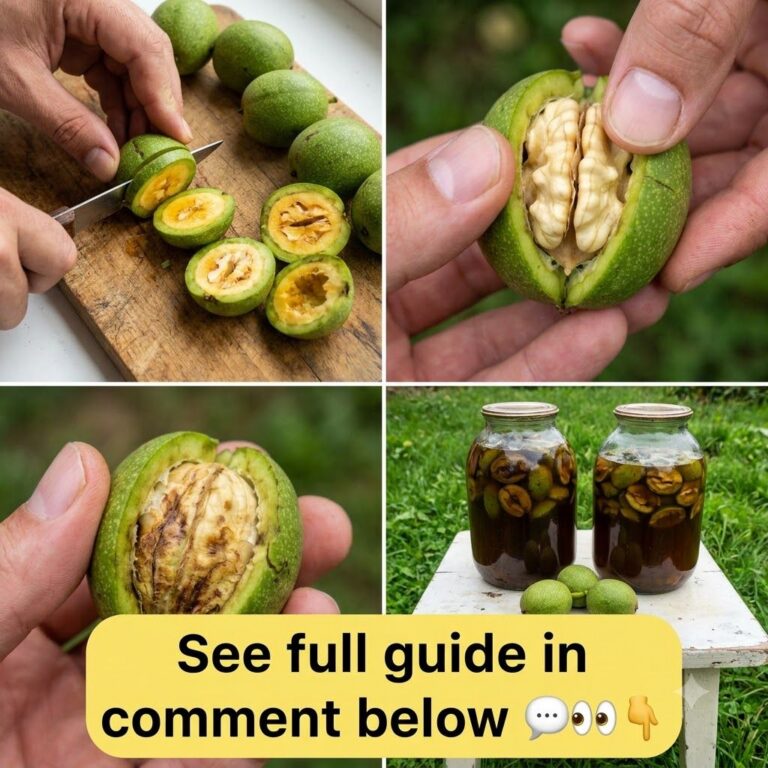
Unlike mature walnuts, green walnuts contain a wealth of chlorophyll and other compounds that are altered or diminished as the nut ripens. Harvesting them at this specific, unripe stage ensures these unique properties are retained in your remedy. The ideal time to harvest is typically late spring to early summer, when the walnuts can still be easily pierced with a needle, indicating their green, soft state.
Ingredients for Your Green Walnut Tincture
- Green Walnuts: Approximately 1 cup, finely chopped (about 8-10 medium-sized walnuts). Ensure they are fresh, firm, and free from blemishes.
- Alcohol: 2 cups of 80-100 proof (40-50% alcohol by volume) clear spirit like vodka or grain alcohol.
- Glass Jar: A clean, sterilized pint-sized (500ml) glass jar with a tight-fitting lid.
Formula / Recipe: Making Your Tincture
Step-by-Step Method
- Harvest & Clean: Gather green walnuts from a clean source, free from pesticides. Rinse them thoroughly under cold water and pat dry.
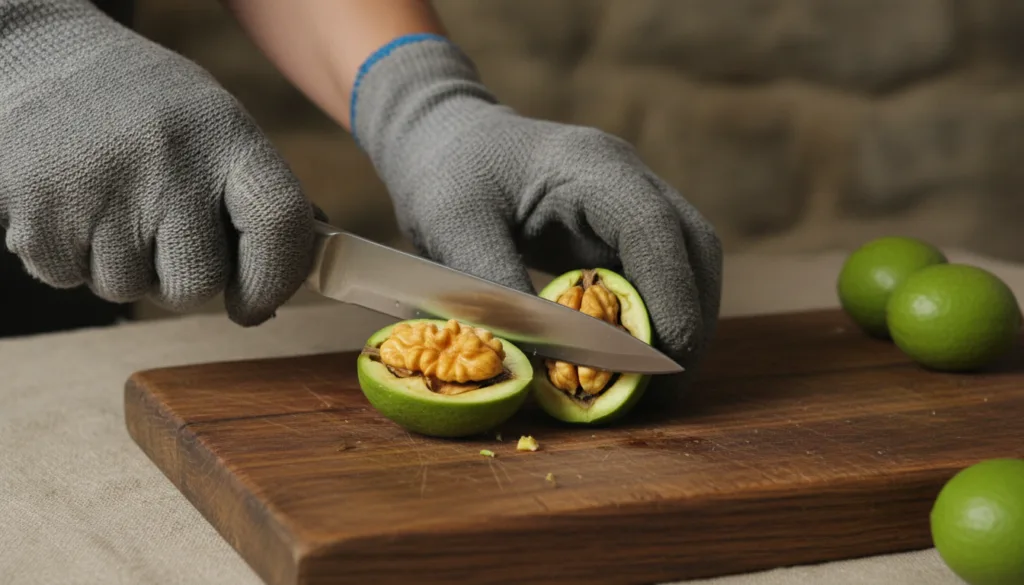
- Chop: Using a sharp knife and a sturdy cutting board, carefully chop the green walnuts into small pieces. The smaller the pieces, the more surface area for extraction. Be aware that green walnuts will stain your hands and surfaces a dark brown — consider wearing gloves and protecting your workspace.
- Fill the Jar: Place the chopped green walnuts into your clean glass jar. Fill the jar about halfway with the plant material.
- Add Alcohol: Pour the alcohol over the walnuts, ensuring they are completely submerged. Fill the jar almost to the top, leaving about an inch of headspace.
- Seal & Shake: Seal the jar tightly with its lid. Shake the jar vigorously for a minute or two to ensure everything is well mixed.
- Infuse: Store the jar in a cool, dark place, away from direct sunlight. Shake the jar daily for the first week, then a few times a week for the remainder of the infusion period.
- Strain: After 4-6 weeks, strain the liquid using a fine-mesh sieve lined with cheesecloth. Squeeze out as much liquid as possible from the walnut material.
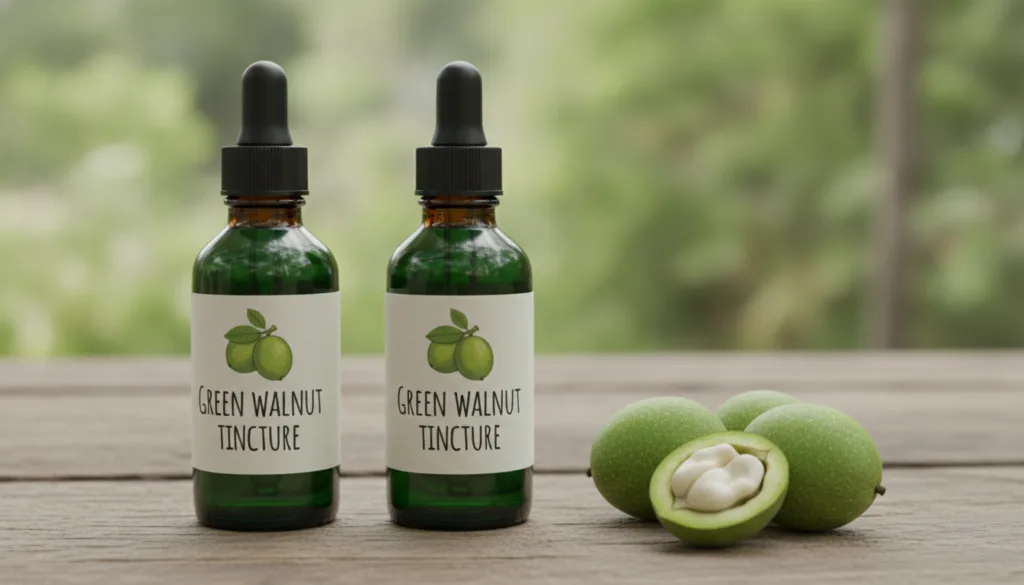
- Bottle: Transfer the finished tincture into dark glass dropper bottles for long-term storage. Label clearly with the date of preparation.
How to Use Your Green Walnut Tincture
Green walnut tincture can be used both internally and externally. For internal use, it is traditionally taken to support digestive health or as a general tonic. For external use, it can be applied topically to support skin health.
- Internal Use: Start with a small dose, typically 5-10 drops, diluted in a small amount of water, once or twice daily.
- External Use: Dilute the tincture with water (e.g., 1 part tincture to 3 parts water) and apply to the skin using a cotton ball or pad.
How Often to Use
For internal use, a typical course might be once or twice daily for a few weeks, followed by a break. For topical applications, it can be used daily as needed. Always listen to your body and adjust frequency accordingly. Consult a healthcare professional before consistent long-term use.
Quick Tip: When to Harvest
The perfect time to harvest green walnuts is when they are still soft enough to be easily pierced with a skewer or needle, usually from late May to early July, depending on your climate. If you wait too long, the inner shell will begin to harden, making them unsuitable for this type of preparation.
How to Buy / How to Choose Ingredients
Ideally, source green walnuts from your own garden or a trusted local grower who avoids pesticides. If purchasing, ensure they are organic and harvested at the correct “green” stage. They should be firm, unblemished, and bright green. Avoid any with soft spots or signs of rot. For alcohol, choose a high-quality, unflavored vodka or grain alcohol.
Storage
Store your finished green walnut tincture in dark glass dropper bottles in a cool, dark place, away from direct sunlight and heat. Properly stored, it can last for several years (up to 3-5 years). The dark glass protects the tincture from light degradation, preserving its potency.
Practical Tips
- Staining: Green walnuts contain juglone, a powerful dye that will stain skin, clothing, and surfaces. Always wear gloves and protect your workspace with old newspapers or cloths.
- Patience is Key: Tincture making requires time for the compounds to properly extract. Don’t rush the infusion period.
- Labeling: Always label your bottles with the contents and the date of preparation.
Common Mistakes
- Harvesting Too Late: Using walnuts that have begun to form a hard inner shell will result in a less potent tincture and make preparation much harder.
- Insufficient Chopping: Large pieces of walnut mean less surface area for alcohol extraction, leading to a weaker tincture.
- Not Submerging: If the walnuts are not fully covered by alcohol, they can mold or spoil. Always ensure total submersion.
- Improper Storage: Storing in clear bottles or in direct sunlight will degrade the tincture’s potency over time.
- Using Sprayed Walnuts: Never use walnuts that have been treated with pesticides or herbicides.
Cautions / Who Should Avoid It
- Allergies: Individuals with known nut allergies should avoid green walnut preparations.
- Pregnancy & Nursing: Pregnant or nursing individuals should avoid using green walnut tinctures unless specifically advised by a healthcare professional.
- Medication Interactions: If you are taking any medications, particularly blood thinners or diabetes medication, consult your doctor before using green walnut tincture, as it may interact with certain drugs.
- Internal Use: Always start with a small dose and observe your body’s reaction. Do not exceed recommended dosages.
Quick Summary
| Aspect | Detail |
|---|---|
| Best Preparation | Alcohol tincture for maximum extraction and shelf life. |
| Best Use-Case | Internal (digestive support) or external (skin applications). |
| Storage | Dark glass bottles, cool, dark place; lasts 3-5 years. |
| When to Use | Daily, as needed, or in short courses. |
| What to Avoid | Over-ripe walnuts, non-organic sources, direct sunlight, nut allergies. |
FAQ
- Can I use fresh or dried green walnuts? Only fresh green walnuts are suitable for this tincture. Dried walnuts will not yield the same properties or extraction.
- How long does the green walnut tincture last? When stored correctly in dark glass bottles in a cool, dark place, it can last for 3-5 years.
- Can I refrigerate it? Refrigeration is not necessary but can extend shelf life slightly. A cool, dark pantry is generally sufficient.
- How often should I use it? For internal use, 5-10 drops once or twice daily for a few weeks is a common traditional approach. For external use, daily as needed.
- What part of the green walnut is best? The entire green, unripe fruit is used, including the soft outer husk and developing inner nut.
- When should I avoid using it? Avoid if you have nut allergies, are pregnant or nursing, or are on certain medications (consult a doctor).
- What if I don’t have 80-100 proof alcohol? While higher proof is ideal for extraction and preservation, you can use 40-proof alcohol, but the shelf life may be slightly shorter and extraction less potent.
Conclusion
Harnessing the traditional wisdom of green walnuts offers a practical path to creating effective homemade remedies. By carefully following the steps outlined, you can prepare a potent green walnut tincture that stands ready in your home arsenal. Remember that nature’s gifts, when respected and properly utilized, can be powerful allies in your wellness journey.
You may also like: DIY Herbal Oil Infusions for Everyday Wellness
Read more: Making Immune-Boosting Elderberry Syrup at Home