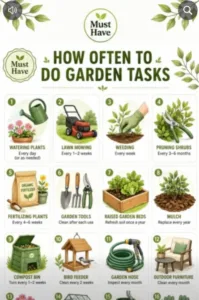
A beautiful garden doesn’t come from doing everything every day. The secret is knowing what needs attention, how often to do it, and which tasks can wait.
From watering plants and mowing the lawn to refreshing raised beds and cleaning garden tools, following a simple garden maintenance schedule can save time, prevent problems, and keep your outdoor space healthy throughout the year.
Use this guide as a practical garden care checklist. Keep in mind that weather, climate, plant type, soil conditions, and the season may affect how often certain tasks need to be done.
1. Watering Plants — Every Day or as Needed
Watering is one of the most important garden tasks, but that doesn’t mean every plant needs water every single day.
Check the soil before watering. If the top layer still feels moist, your plants may not need more water yet. During hot or dry weather, containers and newly planted flowers may need more frequent watering.
For many plants, deep watering is better than giving them a small amount of water several times a day.
Quick tip: Water early in the morning when possible so plants have time to absorb moisture before the hottest part of the day.
2. Lawn Mowing — Every 1–2 Weeks
During the active growing season, most lawns benefit from mowing approximately every one to two weeks.
Grass growth can change depending on rainfall, temperature, fertilizer, and the type of grass in your yard, so use the height of your lawn as your main guide.
Avoid cutting the grass extremely short, as this can stress the lawn and make it more vulnerable to heat and weeds.
Quick tip: Keep your mower blades sharp for cleaner cuts and healthier-looking grass.
3. Weeding — Every Week
A quick weekly weeding session is much easier than waiting until weeds take over the garden.
Removing weeds while they are still small helps prevent them from competing with your flowers, vegetables, and shrubs for water, nutrients, and sunlight.
Try to remove the entire root whenever possible.
Quick tip: Weeds are often easier to pull after rain or watering when the soil is softer.
4. Pruning Shrubs — Every 3–6 Months
Regular pruning helps shrubs stay healthy, attractive, and well-shaped.
Every few months, inspect your shrubs for dead, damaged, diseased, or overgrown branches. However, the ideal pruning time depends on the specific plant.
Some flowering shrubs should be pruned after blooming, while others benefit from pruning during dormancy.
Quick tip: Always use clean, sharp pruning shears to reduce damage to the plant.
5. Fertilizing Plants — Every 4–6 Weeks
Many actively growing garden plants can benefit from feeding every four to six weeks, especially vegetables, flowers, and container plants.
However, fertilizer needs vary greatly by plant type and product.
Always follow the instructions on your fertilizer packaging and avoid overfertilizing, which can damage roots and encourage excessive leafy growth.
Quick tip: Healthy soil is the foundation of healthy plants, so consider adding compost or other organic matter as part of your feeding routine.
6. Garden Tools — Clean After Each Use
Cleaning garden tools after every use helps them last longer and reduces the risk of spreading plant diseases.
Remove soil from trowels, forks, shovels, and pruning tools before storing them.
If you have used pruning tools on diseased plant material, disinfect them before using them on another plant.
Quick tip: Store tools somewhere dry to help prevent rust.
7. Raised Garden Beds — Refresh the Soil Once a Year
Raised bed soil gradually loses nutrients and organic matter throughout the growing season.
Once a year, refresh your beds by adding compost, aged organic matter, or fresh garden soil as needed.
You may not need to replace all of the soil. In many cases, simply topping up and improving the existing soil is enough.
Quick tip: Refreshing raised beds before a new growing season gives plants a nutrient-rich start.
8. Mulch — Refresh or Replace Every Year
Mulch helps suppress weeds, retain soil moisture, regulate soil temperature, and improve the appearance of garden beds.
Organic mulch gradually breaks down, so inspect it each year and add a fresh layer when needed.
You may not always need to remove all of the old mulch before adding more.
Quick tip: Avoid piling mulch directly against plant stems or tree trunks.
9. Compost Bin — Turn Every 1–2 Weeks
Turning compost introduces oxygen into the pile and helps organic material break down more evenly.
For an active compost pile, turning it every one to two weeks is a useful general routine.
If the pile is too dry, add moisture. If it smells unpleasant or feels overly wet, add dry brown materials such as shredded leaves or cardboard.
Quick tip: A healthy compost pile should feel damp, similar to a wrung-out sponge.
10. Bird Feeder — Clean Every 2 Weeks
Bird feeders can collect old food, dirt, droppings, and moisture over time.
Cleaning feeders approximately every two weeks helps maintain a cleaner feeding area for visiting birds.
Cleaning may need to happen more frequently during wet weather or when feeders are heavily used.
Quick tip: Allow the feeder to dry completely before adding fresh seed.
11. Garden Hose — Inspect Every Month
A quick monthly hose inspection can prevent leaks and water waste.
Check the hose for cracks, damaged fittings, weak areas, and leaking connectors.
Also inspect spray nozzles and washers, as small worn parts can often be replaced without buying a new hose.
Quick tip: Store hoses properly instead of leaving them twisted or sharply bent.
12. Outdoor Furniture — Clean Every Month
Outdoor furniture is constantly exposed to dust, pollen, rain, leaves, and other debris.
A light cleaning once a month can keep chairs, tables, and cushions looking fresh.
The cleaning method will depend on whether your furniture is made from wood, metal, plastic, wicker, or fabric.
Quick tip: Use furniture covers when pieces will not be used for long periods.
13. Flower Pots — Deep Clean Every Season
Plant pots can develop mineral deposits, dirt, algae, and residue over time.
At the end or beginning of each growing season, empty unused pots and give them a deeper clean before planting again.
This is especially useful when reusing pots for new plants.
Quick tip: Make sure drainage holes are clear before adding fresh potting mix.
14. Greenhouse — Deep Clean Twice a Year
Greenhouses benefit from a thorough cleaning approximately twice a year.
Clean glass or panels to maximize light, remove dead plant material, wash benches and containers, and inspect the space for pests or damaged equipment.
Spring and fall are often convenient times for this task.
Quick tip: Good greenhouse hygiene can help reduce pest and disease problems.
15. Rain Barrel — Clean Every Season
Rain barrels can collect leaves, sediment, algae, and debris.
Inspect and clean the barrel each season, especially before periods of heavy use.
Check the lid, screen, overflow system, and spigot while cleaning.
Quick tip: Keep the barrel covered with a secure screen to reduce debris and discourage mosquitoes.
16. Garden Gloves — Wash Every Month
Garden gloves collect soil, sweat, plant material, and moisture.
Wash them approximately once a month—or sooner if they become especially dirty.
Always follow the care instructions for the glove material, as leather gloves require different treatment than cotton or synthetic gloves.
Allow gloves to dry completely before storing them.
Simple Garden Maintenance Schedule
Here’s an easy way to remember your routine:
Every day or as needed:
Water plants.
Every week:
Pull weeds and check the overall condition of your garden.
Every 1–2 weeks:
Mow the lawn, turn compost, and clean bird feeders.
Every month:
Inspect the garden hose, clean outdoor furniture, and wash garden gloves.
Every 4–6 weeks:
Fertilize plants when appropriate.
Every 3–6 months:
Inspect shrubs and prune when needed.
Every season:
Deep clean flower pots, clean rain barrels, and complete seasonal garden maintenance.
Once or twice a year:
Refresh raised garden beds, replenish mulch, and deep clean the greenhouse.
Final Thoughts
Garden maintenance becomes much easier when you turn it into a simple routine instead of waiting until everything needs attention at once.
A few minutes of regular care can help prevent weeds from spreading, keep tools in better condition, protect your plants, and make your garden more enjoyable throughout the year.
Use this schedule as a starting point rather than a strict rule. Adjust each task according to your local climate, the season, your garden setup, and the specific needs of your plants.
Save this garden maintenance guide so you always know what needs to be done next.