Most people only hear the warnings about comfrey, but its traditional external use for healing has a long, storied history that deserves a closer look. While often overshadowed by caution, understanding how to safely and effectively harness the power of this remarkable plant can unlock a practical remedy for everyday aches, sprains, and bruises. But before you dismiss it, learn the critical preparation methods and usage guidelines that make all the difference.

What is Comfrey (Symphytum officinale)?
Comfrey, scientifically known as Symphytum officinale, is a perennial herb renowned for its deep roots and healing properties. Often called ‘knitbone’ or ‘boneset,’ comfrey has been utilized in traditional medicine for centuries, primarily for external applications. It’s easily recognizable by its large, hairy leaves and clusters of bell-shaped flowers that range from purple to pink or white. The plant contains allantoin, a compound believed to promote cell growth and tissue repair, making it a popular choice for treating minor injuries.
Understanding Comfrey’s Benefits (External Use Only)
The primary reason comfrey gained its traditional reputation is its efficacy in supporting the healing of various external ailments. When applied topically, comfrey is thought to help reduce inflammation, ease pain from bruises and sprains, and support the knitting of bones and connective tissues. It’s a go-to for many herbalists for closed wounds, muscle soreness, and joint discomfort. Remember, this applies exclusively to external use.
Ingredients for a Basic Comfrey Poultice
- Fresh Comfrey Leaves: 4-6 large leaves (washed and free of pesticides) OR
- Dried Comfrey Leaves: 2-3 tablespoons
- Hot Water: Approximately 1/4 cup (if using dried leaves)
- Mortar and Pestle or Blender: For crushing
- Clean Cloth or Gauze: For application
Approximate Measurements
The exact measurements can vary slightly based on the size of the leaves and the desired consistency. For fresh leaves, you’ll need enough to create a thick paste. If using dried, start with 2-3 tablespoons and add hot water gradually until a workable consistency is achieved.
Formula / Recipe: Comfrey Poultice
The comfrey poultice is a simple yet effective preparation designed for direct topical application. Its aim is to deliver the beneficial compounds of the plant directly to the skin.
Step-by-Step Method
- Preparation of Leaves:
- For Fresh Leaves: Thoroughly wash the fresh comfrey leaves. Coarsely chop them. Using a mortar and pestle, crush the leaves until a moist, pulpy paste forms. Alternatively, you can use a blender with a very small amount of water to achieve a similar consistency.
- For Dried Leaves: Place 2-3 tablespoons of dried comfrey leaves in a heat-proof bowl. Pour just enough hot (not boiling) water over them to rehydrate and soften the leaves, allowing them to sit for 5-10 minutes. The goal is a soft, mushy texture. Drain any excess water.
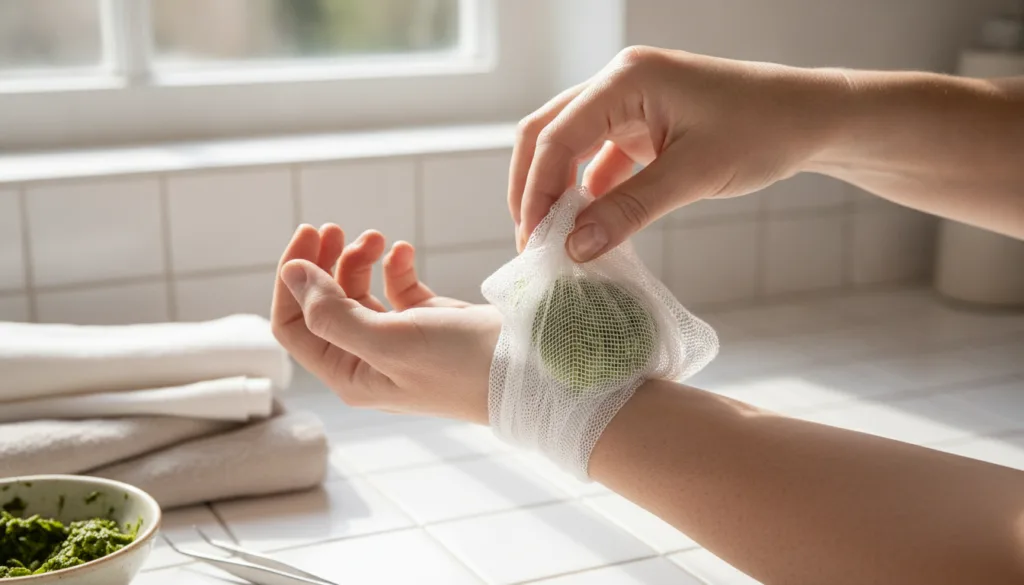
- Forming the Poultice: Spread the prepared comfrey paste directly onto a clean cloth or a piece of gauze. The layer should be thick enough to be effective, about 1/4 to 1/2 inch.
- Application: Gently place the cloth with the comfrey paste onto the affected area of the skin.
- Securing: Use medical tape or another clean cloth to secure the poultice in place, ensuring it makes good contact with the skin.
- Duration: Leave the poultice on for 30 minutes to 2 hours. Some people prefer to leave it on overnight, but it’s best to start with shorter durations to assess skin reaction.
- Removal and Cleaning: Remove the poultice and gently clean the area with lukewarm water.
Quick Tip: For an enhanced effect, slightly warm the comfrey paste (if using fresh leaves) before application, but ensure it’s not too hot to burn the skin. This can help improve absorption.
How to Use Comfrey Poultice
This poultice is best used for closed injuries such as sprains, bruises, muscle strains, or general joint discomfort. It should never be applied to open wounds, cuts, or broken skin due to the risk of accelerating the healing of surface tissue before deeper tissues have mended, potentially trapping infection, and more importantly, the risk of systemic absorption of pyrrolizidine alkaloids (PAs) through compromised skin.
How Often to Use
For acute conditions like a fresh bruise or sprain, you can apply a comfrey poultice 1-2 times daily. For chronic discomfort, 3-4 times a week might be sufficient. Always observe your skin for any irritation or adverse reactions. If discomfort persists or worsens, discontinue use and consult a healthcare professional.
How to Buy / How to Choose Ingredients
When sourcing comfrey, ensure you are getting Symphytum officinale. Misidentification can lead to using the wrong plant. If buying dried leaves, opt for reputable herbal suppliers who can guarantee the plant’s identity and organic cultivation. For fresh leaves, ideally, grow your own or source from a trusted local gardener who doesn’t use pesticides.
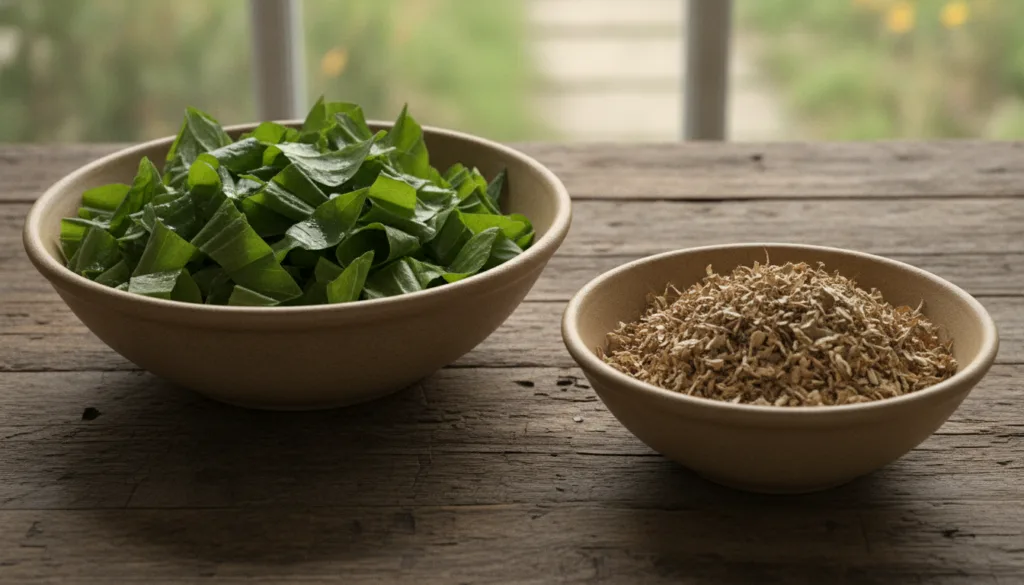
Fresh vs. Dried Comfrey
| Feature | Fresh Comfrey Leaves | Dried Comfrey Leaves |
|---|---|---|
| Potency | Potentially higher in some active compounds, more direct | Slightly less potent, but still effective. Concentrated. |
| Preparation | Requires washing, chopping, and crushing to create a paste. | Requires rehydration with hot water before use. |
| Availability | Seasonal, requires direct access to the plant. | Available year-round from herbal suppliers. |
| Storage | Perishable, best used immediately. | Long shelf life when stored correctly. |
| Ease of Use | More effort for immediate use. | Convenient for quick preparation. |
Storage
Dried Comfrey Leaves: Store dried comfrey leaves in an airtight container in a cool, dark, and dry place. They can last for up to a year or more, retaining their potency. Ensure no moisture gets in to prevent mold.
Prepared Poultice: A prepared poultice should ideally be used immediately. If you need to prepare a small batch in advance, it can be stored in an airtight container in the refrigerator for a maximum of 24 hours. Discard if it shows any signs of discoloration or odor.
Practical Tips
- Patch Test: Always perform a small patch test on an inconspicuous area of your skin before full application to check for any allergic reactions or sensitivities.
- Consistency is Key: For the poultice to be effective, aim for a thick, moist paste-like consistency that adheres well to the skin.
- Gentle Application: While securing the poultice, avoid wrapping it too tightly, which could restrict blood flow.
Common Mistakes
- Internal Use: This is the most critical mistake. Comfrey contains pyrrolizidine alkaloids (PAs) which can be toxic to the liver if ingested. Comfrey should never be taken internally in any form.
- Applying to Open Wounds: As mentioned, applying comfrey to open cuts or broken skin can seal the wound too quickly, trapping bacteria and potentially leading to infection. It also increases the risk of PAs entering the bloodstream.
- Misidentification: Using the wrong plant can be dangerous or ineffective. Always be 100% certain of your plant identification.
- Boiling Comfrey: When rehydrating dried leaves or preparing fresh ones, use hot water, not boiling water. Boiling can degrade some of the beneficial compounds.
- Ignoring Skin Reactions: Discontinue use immediately if you notice redness, itching, or any adverse skin reaction.
Cautions / Who Should Avoid It
Comfrey should be used with extreme caution and only for external applications on unbroken skin. Due to the presence of pyrrolizidine alkaloids, it poses a risk of liver damage if ingested or absorbed systemically. Therefore, it is strongly advised to:
- Avoid internal use entirely.
- Do not apply to broken skin, open wounds, or deep cuts.
- Pregnant or nursing women should avoid comfrey preparations.
- Individuals with liver disease or those taking medications that affect the liver should avoid comfrey.
- Children should use comfrey preparations only under strict guidance from a qualified healthcare practitioner.
Quick Summary
- Best Preparation: Comfrey poultice for direct topical application.
- Best Use-Case: For bruises, sprains, muscle soreness, and joint discomfort on unbroken skin.
- Storage: Dried leaves in airtight container, prepared poultice for max 24 hours in fridge.
- When to Use: 1-2 times daily for acute issues, 3-4 times weekly for chronic.
- What to Avoid: Internal consumption, application to open wounds, misidentification.
FAQ
- Can I use fresh or dried comfrey for a poultice?
Both fresh and dried leaves can be used. Fresh leaves need to be crushed, while dried leaves require rehydration with hot water. - How long does a comfrey poultice last on the skin?
Typically, a poultice is left on for 30 minutes to 2 hours, but some may apply it overnight if tolerated and on unbroken skin. - Can I refrigerate a prepared comfrey poultice?
Yes, for up to 24 hours in an airtight container. It’s best used fresh. - How often should I use a comfrey poultice?
For acute issues, 1-2 times daily. For chronic discomfort, 3-4 times a week. Always observe skin reaction. - What part of the comfrey plant is best for topical use?
The leaves are most commonly used for poultices. The roots also contain beneficial compounds but are more potent and generally reserved for more experienced herbalists or specific preparations. - Can I reuse comfrey leaves from a poultice?
No, for hygiene and efficacy reasons, it’s best to use fresh material for each application. - When should I absolutely avoid using comfrey?
Avoid if pregnant, nursing, have liver conditions, on open wounds, or if you experience allergic reactions. - Is there a difference between comfrey and prickly comfrey?
Yes, while both are related, Symphytum officinale is ‘common comfrey.’ Other species exist, and precise identification is crucial.
Conclusion
Comfrey, with its long history as a traditional remedy, offers a practical approach to managing external discomforts when used correctly and cautiously. By understanding the proper preparation of a comfrey poultice and adhering strictly to guidelines for external use on unbroken skin, you can safely explore the benefits of this remarkable plant. Always prioritize safety and consult a healthcare professional if you have concerns or if your condition persists.
You may also like: DIY Herbal Salves for Skin Care
Read more: Natural Remedies for Muscle Pain Relief