Imagine a cascade of vibrant blooms and lush foliage spilling from your window boxes, transforming your home’s exterior into a welcoming masterpiece. We all dream of those picture-perfect displays, but the secret to truly happy and thriving window boxes isn’t just about beautiful colors; it’s about making smart plant choices based on one fundamental factor: sunlight. Matching plants to the specific light conditions your window boxes receive is the most important step for ensuring a season-long show of health and beauty.
Many gardeners are tempted to choose plants based solely on their visual appeal or what’s available at the garden center. However, just like people, plants have unique preferences, and their need for sunlight is non-negotiable for robust growth and abundant flowering. When you align your plant selections with the sun exposure of your window boxes, you unlock their full potential, creating dynamic and resilient arrangements that truly shine. Let’s dive into how to pick the perfect partners for your window boxes, ensuring every plant gets exactly what it needs to flourish.
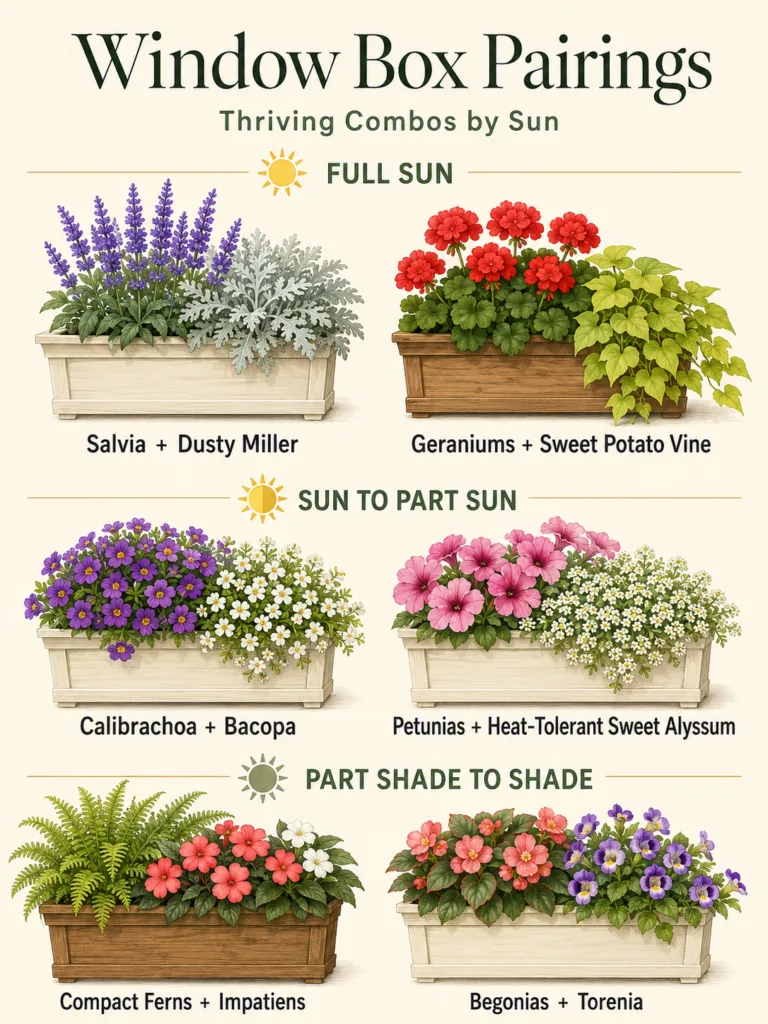
The Core Principle: Light Dictates Life
Before you even think about plant names or flower colors, observe your window boxes throughout the day. How many hours of direct sun do they receive? This crucial observation will guide all your plant choices:
- Full Sun: 6+ hours of direct sunlight daily.
- Sun to Part Sun: 4-6 hours of direct sunlight, often with some afternoon shade.
- Part Shade to Shade: Less than 4 hours of direct sunlight, or dappled light all day, often with no direct sun.
Understanding this simple principle is the foundation for successful container gardening, especially in the often-challenging environment of a window box, where conditions can be more intense than in a garden bed.
Designing for Full Sun Window Boxes
Window boxes bathed in sunlight offer the perfect stage for heat-loving plants that thrive on abundant light. These plants often have a high tolerance for heat and can handle drying out slightly between waterings, though consistent moisture is key in containers.
Combination 1: Purple Powerhouse
- Salvia (Salvia splendens or annual varieties): Tall, spiky blooms in rich purples and reds. Provides vertical interest.
- Calibrachoa (Calibrachoa hybrid ‘Million Bells’): Trailing plants with hundreds of small, petunia-like flowers in various colors, including purple. Excellent for spilling over the edge.
- Dusty Miller (Senecio cineraria): Silvery, velvety foliage that provides striking contrast and texture, a fantastic filler.
Care Tip: Salvia benefits from deadheading spent flower spikes to encourage more blooms. Calibrachoa is generally self-cleaning, but consistent watering in hot weather is a must to prevent wilting and promote continuous flowering.
Combination 2: Classic Charm with a Twist
- Geranium (Pelargonium x hortorum): Upright, classic flowers in reds, pinks, and whites. Adds a bold, traditional element.
- Sweet Potato Vine (Ipomoea batatas): Fast-growing foliage plant with chartreuse, dark purple, or variegated leaves. Creates dramatic trailing interest.
- Bacopa (Sutera cordata): Delicate white or pink flowers that cascade gracefully, softening the edges of the box. Many modern cultivars are bred for improved sun tolerance.
Care Tip: Geraniums perform best with regular deadheading. Pinch back the sweet potato vine if it becomes too vigorous and threatens to overtake other plants. Ensure good drainage for all these plants to prevent root rot.
Designing for Sun to Part Sun Window Boxes
These locations receive a good amount of morning sun or dappled light throughout the day, often protected from the harsh afternoon sun. This versatility allows for a broader range of plant choices, balancing sun-lovers with those that prefer a bit of a break from intense heat.
Combination 3: Sweet and Spilling
- Petunia (Petunia x hybrida): Abundant, trumpet-shaped flowers in a vast array of colors. Trailing varieties are excellent for window boxes.
- Sweet Alyssum (Lobularia maritima): A low-growing, spreading annual covered in tiny, fragrant white, pink, or purple flowers. Excellent for filling in gaps and attracting pollinators.
Care Tip: Petunias benefit from regular feeding and deadheading (or