Do you have a perpetually wet corner in your garden, a low spot that never quite drains, or perhaps you’re dreaming of a backyard pond? Many gardeners see these damp areas as a challenge, but I see them as an incredible opportunity! With the right plants, those soggy spots can become vibrant, teeming ecosystems, attracting a diverse array of wildlife right to your doorstep. Imagine hummingbirds darting among bright red cardinal flowers, butterflies flitting over swamp milkweed, and dragonflies dancing above water lilies. Creating a wetland garden isn’t just about managing moisture; it’s about fostering biodiversity and bringing a new dimension of natural beauty to your landscape. Let’s explore how to turn those overlooked damp zones into stunning wildlife havens.
The Magic of Wetland Gardening
Wetland gardens, sometimes called rain gardens or bog gardens, are designed to mimic natural damp ecosystems. They thrive where other plants might struggle, using excess moisture to their advantage. Beyond their unique beauty, these gardens play a vital ecological role. They filter stormwater runoff, recharge groundwater, and, most importantly, provide essential food, water, and shelter for pollinators, birds, amphibians, and other beneficial creatures. By selecting native or well-adapted wetland plants, you create a resilient garden that supports local ecosystems and requires less intervention once established.
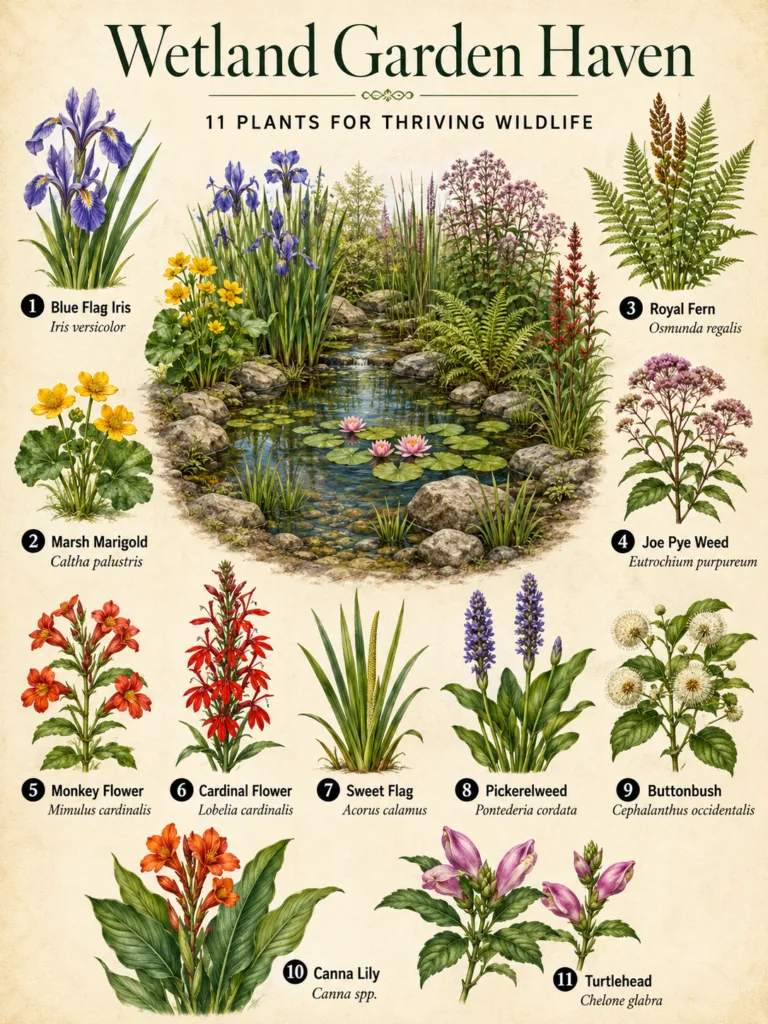
11 Wonderful Wetland Plants for Your Wildlife Haven
Here are some of my top recommendations for transforming your wet areas into flourishing habitats. Remember to consider your specific USDA hardiness zone and local conditions for the best success.
1. Pickerelweed (Pontederia cordata)
A true star for the margins of ponds or consistently wet garden beds, Pickerelweed offers striking violet-blue flower spikes that stand proudly above its heart-shaped leaves. It’s a favorite nectar source for bees, butterflies, and even hummingbirds throughout the summer.
- Hardiness: USDA Zones 3-10
- Plant type: Emergent aquatic perennial
- Exposure: Full sun to partial shade
- Height: 1-3 feet
- Spread: 1-2 feet
- Care Tip: Plant in shallow water (2-10 inches deep) or very wet soil. Deadhead spent flowers to encourage more blooms.
2. Marsh Marigold (Caltha palustris)
Bringing a burst of sunshine to your early spring garden, Marsh Marigold produces brilliant yellow, cup-shaped flowers. It’s one of the first plants to bloom in wet areas, providing a crucial early nectar source for emerging pollinators. Its glossy green foliage adds texture even after blooming.
- Hardiness: USDA Zones 3-7
- Plant type: Herbaceous perennial
- Exposure: Full sun to partial shade
- Height: 1-2 feet
- Spread: 1-2 feet
- Care Tip: Prefers consistently moist to mucky soil; ideal for the wettest parts of your garden or shallow edges of a pond.
3. Cardinal Flower (Lobelia cardinalis)
If you want to attract hummingbirds, look no further than Cardinal Flower. Its dazzling, fiery red flower spikes are an irresistible beacon for these tiny, iridescent visitors. It thrives in rich, consistently moist to wet soil and is often found along stream banks in nature.
- Hardiness: USDA Zones 3-9
- Plant type: Herbaceous perennial
- Exposure: Full sun (with consistent moisture) to partial shade (especially in hot climates)
- Height: 2-4 feet
- Spread: 1-2 feet
- Care Tip: While often short-lived (2-3 years), it readily self-seeds in ideal conditions. Keep the soil consistently moist.
4. Spotted Jewelweed (Impatiens capensis)
This charming annual (though a prolific self-seeder) offers unique orange, trumpet-shaped flowers with red spots. It’s another hummingbird favorite and is also known for its sap, which can soothe the itch of poison ivy. Jewelweed thrives in partial to full shade and very moist soil.
- Hardiness: Annual (Zones 2-11)
- Plant type: Annual (prolific self-seeder)
- Exposure: Partial to full shade
- Height: 3-5 feet
- Spread: 1-3 feet
- Care Tip: Allow it to self-seed for continuous displays. Its explosive seed pods are also a fun curiosity!
5. Monkey Flower (Mimulus ringens)
With its cheerful, two-lipped purple-blue flowers resembling a monkey’s face, this plant adds whimsical beauty to wet areas. It attracts various bees and hummingbirds throughout the summer and thrives in consistently moist to wet soil.
- Hardiness: USDA Zones 3-9
- Plant type: Herbaceous perennial
- Exposure: Full sun to partial shade
- Height: 1-3 feet
- Spread: 1-2 feet
- Care Tip: Great for stream banks, pond edges, or naturally damp depressions. Can spread gently by rhizomes.
6. Arrow Arum (Peltandra virginica)
A dramatic architectural plant, Arrow Arum features large, distinctive arrow-shaped leaves and unique greenish-white flowers followed by green berries. It provides important cover for aquatic wildlife and its seeds are a food source for waterfowl.
- Hardiness: USDA Zones 4-9
- Plant type: Emergent aquatic perennial
- Exposure: Full sun to partial shade
- Height: 1-3 feet (leaves), flowers shorter
- Spread: 1-2 feet
- Care Tip: Plant in moist soil or shallow water, up to a foot deep. The berries are toxic to humans and pets.
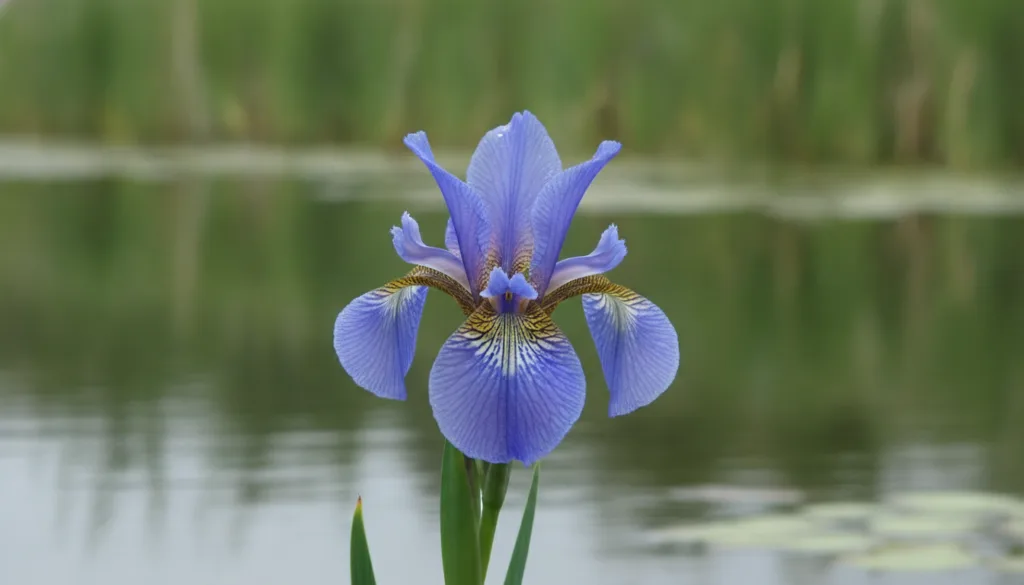
7. Blue Flag Iris (Iris versicolor)
A classic choice for wetland gardens, the Blue Flag Iris produces stunning blue-purple flowers with intricate yellow markings in late spring to early summer. Its upright, sword-like foliage provides a beautiful vertical element and shelter for small creatures.
- Hardiness: USDA Zones 3-9
- Plant type: Herbaceous perennial
- Exposure: Full sun to partial shade
- Height: 2-3 feet
- Spread: 1-2 feet
- Care Tip: Tolerates standing water and heavy clay soils. Divide rhizomes every few years to maintain vigor.
8. Canna Lily (Canna generalis)
For a touch of tropical flair, Canna Lilies are unmatched. Their bold, large leaves and vibrant red, orange, or yellow flowers create a dramatic focal point. They are fantastic for attracting hummingbirds and prefer consistently wet, rich soil or shallow water.
- Hardiness: Perennial in Zones 7-11; grown as annual or tubers lifted in colder zones
- Plant type: Tender perennial (rhizomatous)
- Exposure: Full sun
- Height: 3-8 feet (cultivar dependent)
- Spread: 1-3 feet
- Care Tip: In colder zones, dig up the rhizomes after the first frost, store them indoors in a cool, dry place, and replant in spring after danger of frost has passed.
9. Water Lily (Nymphaea odorata)
The quintessential pond plant, Water Lilies provide iconic floating pads and fragrant, elegant flowers that rest on the water’s surface. They offer shade for aquatic life, act as landing pads for dragonflies, and are simply breathtaking to behold.
- Hardiness: USDA Zones 4-11 (for native fragrant water lily)
- Plant type: Aquatic perennial
- Exposure: Full sun
- Height: Floating leaves and flowers; rhizome anchored below
- Spread: 3-6 feet (spread of pads)
- Care Tip: Plant in containers at the bottom of your pond. Ensure at least 6 hours of direct sun for best blooms.
10. Sweet Flag (Acorus calamus)
Adding elegant vertical texture to your wetland garden, Sweet Flag features grass-like, sword-shaped leaves that release a pleasant fragrance when crushed. It’s an excellent choice for stabilizing pond edges and providing habitat for small critters.
- Hardiness: USDA Zones 4-10
- Plant type: Emergent aquatic perennial
- Exposure: Full sun to partial shade
- Height: 2-6 feet (cultivar dependent)
- Spread: 1-3 feet
- Care Tip: Tolerates a wide range of water depths and soil types, making it very versatile for different wetland conditions.
11. Swamp Milkweed (Asclepias incarnata)
A non-negotiable for any wildlife-focused wetland garden, Swamp Milkweed is a critical host plant for Monarch butterfly caterpillars and a vibrant nectar source for countless other pollinators. Its clusters of pink-purple flowers bloom reliably through summer.
- Hardiness: USDA Zones 3-9
- Plant type: Herbaceous perennial
- Exposure: Full sun
- Height: 3-5 feet
- Spread: 2-3 feet
- Care Tip: Ensure consistent moisture; it will not tolerate dry conditions like its upland milkweed cousins. Avoid pesticides to protect Monarchs.
Common Mistakes to Avoid in Wetland Gardening
Even with the right plants, a few common pitfalls can hinder your wetland garden’s success:
- Ignoring Local Conditions: While USDA zones provide winter hardiness, consider your local rainfall, humidity, and summer temperatures. A plant that thrives in a northern bog might struggle in a hot, humid southern wetland without more attention.
- Overlooking Soil Type: Wetland plants need consistently moist or wet soil, often rich in organic matter. If your