Who doesn’t love the vibrant, cheerful blooms of a Christmas Cactus gracing their home during the festive season? These beautiful plants bring a splash of color and holiday spirit, and the best part is, you can easily multiply them without spending a dime! That’s right – with a little know-how, you can unlock more Christmas Cactus for free and share the joy with friends and family or simply fill your home with more of these stunning plants.

Why Propagate Your Christmas Cactus?
Propagating your Christmas Cactus isn’t just about saving money; it’s a rewarding aspect of gardening that offers several benefits:
- More Plants, More Joy: Easily expand your collection, allowing you to place these beauties in multiple rooms or gift them to loved ones.
- Gift Giving: A homegrown Christmas Cactus makes a thoughtful and personal holiday gift.
- Plant Revival: If your plant is getting leggy or overgrown, propagation can help you prune it back and start fresh with healthy new plants.
- Learning Experience: It’s a fantastic way to deepen your understanding of plant care and growth cycles.
The Best Time for Propagation
While Christmas cacti are quite forgiving, the ideal time for propagation is during their active growing season, typically from spring through late summer. This gives the cuttings ample time to establish roots before their blooming period in late fall and winter.
Easy Christmas Cactus Propagation for More Holiday Blooms
Propagating Christmas Cactus from stem cuttings is incredibly straightforward. Follow these simple steps to grow new plants from your existing one:
Step 1: Taking Cuttings
Choose healthy, plump stem segments from your mature Christmas Cactus. Look for stems with at least two to three segments (the flat, leaf-like sections). Use clean, sharp scissors or pruning shears to make a clean cut between two segments. It’s best to take cuttings that are about 4-6 inches long.
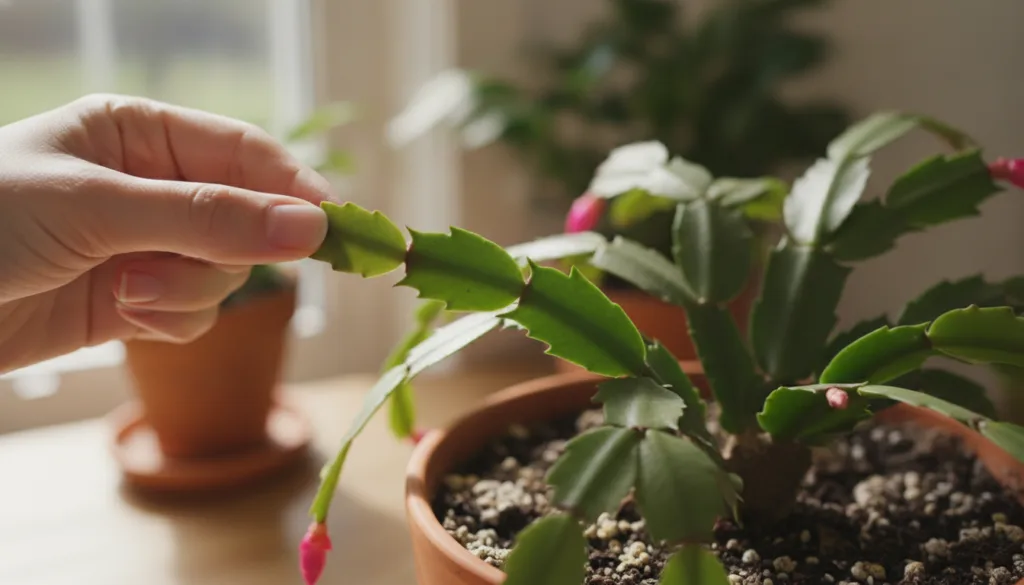
Step 2: Let Them Callus
This is a crucial step! After taking your cuttings, lay them in a dry, shaded spot for a few days (usually 2-4 days). This allows the cut end to form a callus, which prevents rot when you plant them. Don’t skip this step!
Step 3: Prepare Your Rooting Medium
You have a couple of options for rooting your cuttings:
- Water Propagation: Place the callused ends into a small glass of water, ensuring only the bottom segment is submerged. Change the water every few days to keep it fresh.
- Soil Propagation: This is often preferred for more robust plants. Use a well-draining potting mix, ideally one formulated for cacti and succulents. You can also mix perlite or sand into regular potting soil for better drainage.
Step 4: Planting Your Cuttings
For Water Rooting:
Once you see roots forming (usually within a few weeks), you can transfer your cuttings to soil. Gently plant them in a small pot with well-draining soil, ensuring the roots are covered.
For Soil Rooting:
Insert the callused end of each cutting about 1 inch deep into the potting mix. You can plant multiple cuttings in one pot, spacing them a few inches apart. Lightly water the soil after planting.
Step 5: Aftercare for Success
- Light: Place your newly planted cuttings in a spot with bright, indirect light. Avoid direct, harsh sunlight, which can scorch tender new growth.
- Watering: If rooting in soil, water sparingly. Allow the top inch or two of soil to dry out completely between waterings. Overwatering is the most common cause of rot.
- Humidity: Christmas cacti appreciate humidity. You can mist the cuttings occasionally or place the pot on a pebble tray filled with water.
- Patience: Rooting can take anywhere from a few weeks to a couple of months. Be patient! Once new growth appears, you’ll know your cuttings have successfully rooted.
Troubleshooting Common Issues
- Cuttings Rotting: This usually indicates overwatering or insufficient callusing. Ensure the cut ends are dry before planting and water only when the soil is dry.
- No Roots Forming: Ensure the cuttings are in a warm, bright spot. Sometimes, a rooting hormone can help speed up the process, though it’s not strictly necessary for Christmas Cactus.
- Wilting Cuttings: This could be due to lack of water (if the soil is bone dry) or, conversely, too much water leading to rot. Check the soil moisture carefully.
Start Your Christmas Cactus Collection Today!
Propagating your Christmas Cactus is a wonderfully rewarding experience that allows you to expand your plant collection and share the beauty with others. With these simple steps, you’ll be well on your way to enjoying more of these festive blooms for many seasons to come. Happy gardening!