Unlock Healthier Harvests: Your Fruit Pruning Guide
Ready to transform your fruit trees and bushes? Mastering fruit pruning isn’t as daunting as it seems, and it’s key to unlocking healthier plants and bigger, juicier harvests! Pruning is more than just trimming branches; it’s an art and a science that encourages vigorous growth, improves fruit quality, and keeps your plants productive for years to come.
Many new gardeners shy away from pruning, fearing they might harm their precious plants. But with a little knowledge and the right approach, you’ll be shaping your garden for success. This guide will help you understand the essentials of fruit pruning, so you can give your garden the best care and see incredible results this season!
Why Prune Your Fruit Plants? The Benefits Are Abundant!
Pruning is a vital practice for any fruit grower, from a small backyard enthusiast to a homesteader. Here’s why it’s so beneficial:
- Improved Health: Removing dead, diseased, or damaged branches prevents the spread of pathogens and pests, keeping your plants robust.
- Increased Yield: By directing the plant’s energy to fewer, stronger branches, you encourage more flowers and, consequently, more fruit.
- Better Fruit Quality: Pruning improves air circulation and sunlight penetration to all parts of the plant, leading to larger, sweeter, and more uniformly ripened fruits.
- Enhanced Structure & Shape: Shaping your trees and bushes makes harvesting easier and prevents branches from breaking under the weight of heavy fruit.
- Pest and Disease Control: Open canopies are less hospitable to pests and allow for better air movement, reducing fungal diseases.
When to Prune: Timing is Everything
The best time to prune depends on the type of fruit and your desired outcome:
- Dormant Pruning (Late Winter/Early Spring): This is the most common time for structural pruning of most fruit trees (apples, peaches, pears) and many berry bushes before new growth begins. It promotes vigorous growth in the spring.
- Summer Pruning: Primarily used for growth control, maintaining shape, or removing water sprouts and suckers. It can slow down growth and encourage fruit bud formation for the following year on some fruits like apples.
Always aim for a time when the weather is dry to minimize the risk of disease entry through fresh cuts.
Essential Pruning Tools for a Clean Cut
Having the right tools makes the job easier and ensures clean cuts that heal quickly:
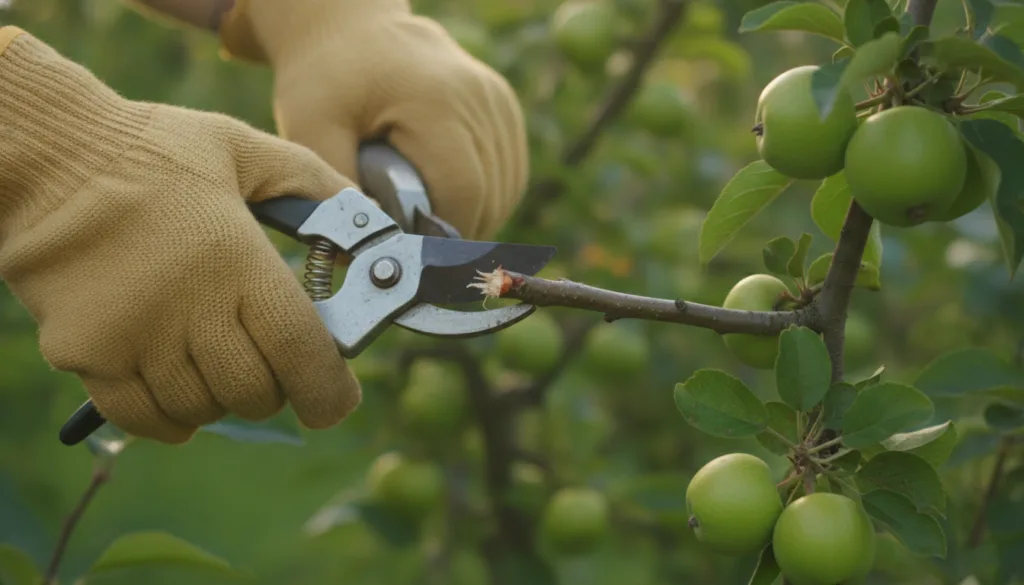
- Hand Pruners (Bypass Shears): Perfect for small branches (up to ¾ inch thick).
- Loppers: For branches up to 1½ inches thick, offering more leverage.
- Pruning Saw: Necessary for larger branches.
- Safety Glasses & Gloves: Protect your eyes and hands!
Remember to keep your tools sharp and sterilize them with rubbing alcohol or a bleach solution between plants, especially if you’re dealing with diseased branches.
4 Essential Pruning Approaches for Your Favorite Fruits
While the basic principles of pruning are universal, specific fruit types benefit from tailored approaches. Let’s look at peaches, apples, grapes, and berries.
1. Pruning Apples and Pears
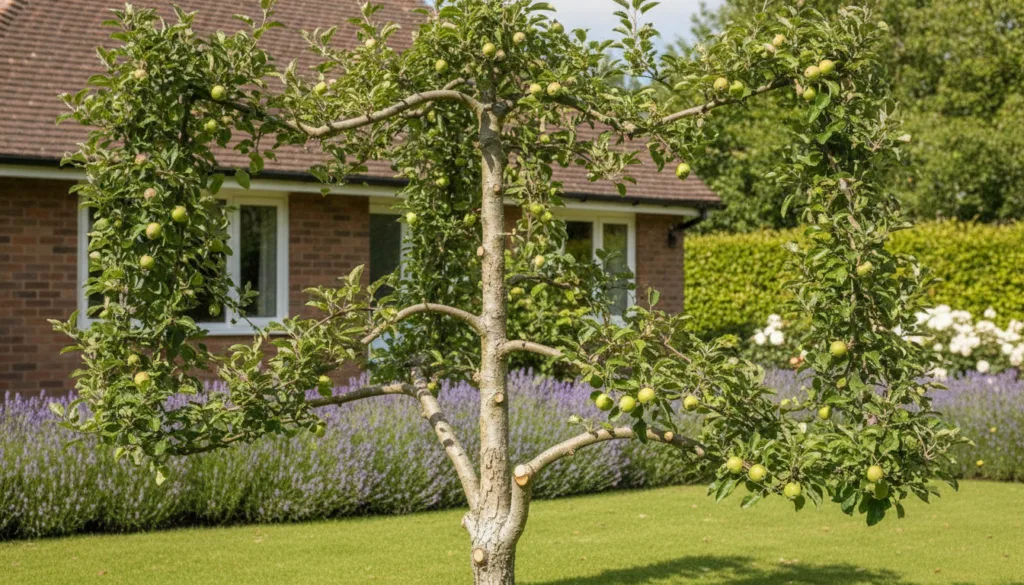
Apples and pears often thrive with a central leader or modified central leader system, or an open vase system in warmer climates, aiming to create a strong framework that supports fruit production and allows light to penetrate.
- Key Goal: Create an open structure for good air circulation and sunlight, and encourage fruiting spurs (short branches that bear fruit).
- What to Remove: Dead, diseased, or damaged wood; crossing branches; water sprouts (vertical vigorous shoots) and suckers (shoots from the base); branches growing inward.
- Shape: Maintain a dominant central leader or opt for a modified central leader/open vase where main branches extend outwards.
2. Pruning Peaches and Nectarines
Peaches and nectarines primarily fruit on one-year-old wood, making annual pruning essential for continuous production.
- Key Goal: Establish an open vase shape to maximize sunlight penetration to the developing fruit and encourage new fruiting wood.
- What to Remove: Dead, diseased, or damaged wood; any vertical shoots (water sprouts); old, unproductive branches; branches growing inward.
- Shape: Cut back central vertical growth, encouraging 3-4 strong scaffold branches to grow outwards at a 45-degree angle, creating a bowl-like structure.
3. Pruning Grapes
Grape pruning is crucial for maximizing yield and quality, as grapes fruit on new shoots that grow from one-year-old wood.
- Key Goal: Balance vegetative growth with fruit production, manage vine vigor, and maintain a manageable shape.
- Styles:
- Cane Pruning: More common for vigorous varieties. You leave a few one-year-old canes (each with several buds) and remove most other growth.
- Spur Pruning: Suitable for less vigorous varieties. You leave short spurs (one- or two-bud sections of one-year-old wood) along permanent arms.
- What to Remove: Almost all of the previous season’s growth, leaving only selected canes or spurs, and cleaning up any dead or weak wood.
4. Pruning Berries (Raspberries, Blackberries, Blueberries)
Berry bushes have different growth habits, so their pruning needs vary.
- Raspberries:
- Summer-bearing: Remove canes that fruited in summer immediately after harvest. Thin new canes to 4-5 strongest per foot.
- Fall-bearing (Everbearing): You can either cut all canes to the ground in late winter for one fall crop, or prune summer-fruiting canes after summer harvest and fall-fruiting canes after fall harvest for two crops.
- Blackberries: Similar to raspberries, but can be trailing or erect. Remove canes that have fruited. Thin out new canes to promote air circulation.
- Blueberries: Prune in late winter/early spring while dormant. Remove old, weak, or crossing branches, and thin out overall. Aim to remove about 20% of the oldest wood each year to encourage new, productive growth.
Make Every Cut Count: General Tips for Success
- Start with the 3 D’s: Always remove anything Dead, Diseased, or Damaged first.
- Open Up the Canopy: Remove branches that grow inward, cross, or shade each other excessively to improve light and air flow.
- Make Clean Cuts: Use sharp tools to make cuts just above an outward-facing bud or branch collar (the slightly swollen area at the base of a branch). Avoid leaving stubs.
- Don’t Over-Prune: Removing too much at once can stress the plant and reduce yields. A general rule is to remove no more than 25-30% of the total canopy in a single pruning session.
Your Healthier Harvest Awaits!
Pruning might seem intimidating at first, but with practice, you’ll gain confidence and develop an eye for what your plants need. The benefits—healthier plants, more robust growth, and delicious, abundant fruit—are incredibly rewarding. So grab your pruners, get out into your garden, and start shaping your way to a truly incredible harvest season!
Which fruit are you most excited to prune this year and see flourish? Tell us in the comments below!