Imagine plucking baskets of delicious, homegrown fruit from your own backyard! It’s a dream for many gardeners, and achieving a truly abundant harvest often hinges on one crucial skill: proper fruit tree pruning. Far from just a chore, strategic pruning is an art and a science that invigorates your trees, boosts fruit quality, and helps prevent disease. It ensures every branch receives the vital sunlight and airflow it needs, leading to healthier trees and significantly larger yields.
Many gardeners hesitate, unsure of where to make the first cut. But with a little guidance, you can approach your fruit trees with confidence, transforming them into productive powerhouses. This comprehensive guide will walk you through the essential pruning techniques for nine common fruit trees, empowering you to cultivate a more fruitful and sustainable garden.
The Core Principle: Why Pruning Matters for Fruit Trees
Pruning isn’t about simply hacking away branches; it’s about making thoughtful cuts that direct the tree’s energy. By removing dead, diseased, or poorly placed branches, you improve air circulation, allowing sunlight to penetrate the canopy and ripen fruit evenly. This also reduces humidity, a common breeding ground for fungal diseases. Proper pruning encourages the formation of strong scaffold branches, which can support heavy fruit loads, and stimulates the growth of new fruiting wood, ensuring consistent harvests year after year.
Understanding your tree’s natural growth habit and its fruiting patterns is key. While many fruit trees are best pruned during their dormant season (late winter to early spring before bud break), some benefit from light summer pruning to manage growth or remove unproductive wood. Always use sharp, clean tools to make precise cuts that heal quickly.
Peach Tree (Prunus persica)
Peach trees thrive with an open-vase shape, which allows maximum sunlight penetration to ripen their sweet fruit. The primary goal is to encourage vigorous new growth that bears fruit in the following season.
- Hardiness: USDA Zones 4–9
- Plant type: Deciduous fruit tree
- Exposure: Full sun (at least 6-8 hours daily)
- Height: 10-25 feet, depending on rootstock and pruning
- Spread: 10-20 feet
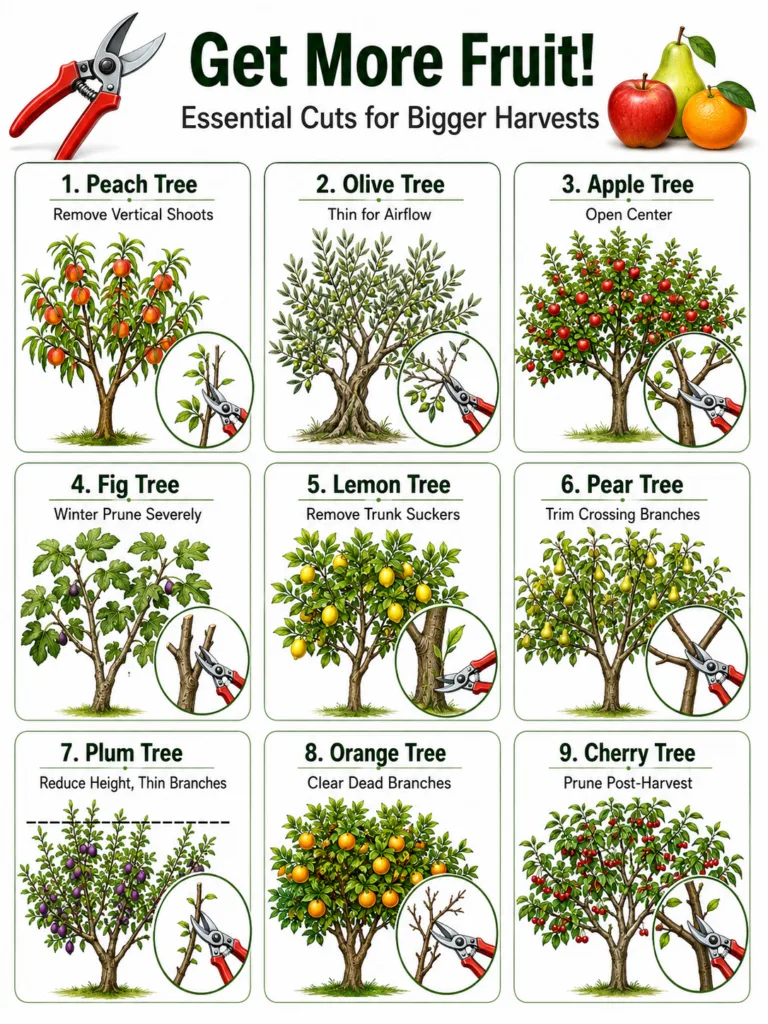
Essential Cut: Remove Vertical Shoots. Focus on removing vigorous, upright shoots (water sprouts) that grow from main branches and do not contribute to fruit production. Also, remove suckers growing from the base of the tree. Thin out crowded branches to create an open center, leaving 3-5 strong scaffold branches evenly spaced around the trunk. Aim to leave branches that grow horizontally, as these are typically more productive.
Practical Tip: Peaches fruit on one-year-old wood. Prune annually in late winter to encourage new growth and thin fruit-bearing branches to prevent overcrowding and improve fruit size.
Apple Tree (Malus domestica)
Apples benefit from a modified central leader system, balancing a strong central trunk with productive lateral branches. Regular pruning keeps the tree healthy and stimulates spur development.
- Hardiness: USDA Zones 3–9
- Plant type: Deciduous fruit tree
- Exposure: Full sun
- Height: 8-30 feet, varies greatly by cultivar and rootstock
- Spread: 8-25 feet
Essential Cut: Trim Dead & Diseased Branches. This is crucial for tree health. Identify and remove any branches that are broken, discolored, or show signs of disease (e.g., cankers, black spots). Make cuts back to healthy wood. Also, thin out crossing branches and those growing inwards to improve light and air circulation, vital for preventing fungal issues like apple scab.
Practical Tip: Sterilize your pruning shears with a 10% bleach solution or rubbing alcohol between cuts when removing diseased wood to prevent spreading pathogens.
Cherry Tree (Prunus avium, Prunus cerasus)
Sweet cherries (Prunus avium) are often grown with a central leader, while sour cherries (Prunus cerasus) can be pruned more like a bush. Pruning ensures good light penetration, which is vital for fruit development and even ripening.
- Hardiness: Sweet cherries: USDA Zones 5–8; Sour cherries: USDA Zones 4–6
- Plant type: Deciduous fruit tree
- Exposure: Full sun
- Height: Sweet: 20-35 feet; Sour: 10-15 feet
- Spread: Sweet: 15-25 feet; Sour: 10-15 feet
Essential Cut: Open Canopy for Airflow. Thin out branches, especially in the interior of the canopy, to allow more light and air to reach all parts of the tree. Remove any branches that are growing too close together or rubbing. For sweet cherries, maintain a central leader and lateral branches. For sour cherries, focus on removing older, less productive wood and maintaining a bushy shape.
Practical Tip: Cherries are best pruned in late summer after harvest, especially sweet cherries, to minimize the risk of bacterial canker. Sour cherries can be pruned in late winter.
Plum Tree (Prunus domestica, Prunus salicina)
Plums can be vigorous growers, requiring thoughtful pruning to manage their size and encourage fruit production. European plums tend to be more upright, while Japanese plums have a more spreading habit.
- Hardiness: USDA Zones 4–9, depending on species and cultivar
- Plant type: Deciduous fruit tree
- Exposure: Full sun
- Height: 10-30 feet
- Spread: 10-20 feet
Essential Cut: Cut Back Overlapping Branches. Identify branches that are crossing or growing too closely, causing shading and poor air circulation. Remove one of the offending branches, choosing the weaker or less ideally placed one. This prevents branches from rubbing, which can create wounds vulnerable to pests and diseases, and improves overall light exposure.
Practical Tip: Plums often set a very heavy fruit load, which can lead to smaller fruit and broken branches. Thin developing fruit in early summer to about 4-6 inches apart to improve fruit size and quality.
Fig Tree (Ficus carica)
Figs fruit on new wood, so pruning focuses on encouraging fresh growth and maintaining an open, manageable structure. They can be grown as trees or large shrubs.
- Hardiness: USDA Zones 8–10 (can be grown in containers in colder zones)
- Plant type: Deciduous shrub or small tree
- Exposure: Full sun
- Height: 10-30 feet, smaller in containers
- Spread: 10-30 feet
Essential Cut: Prune Old, Unproductive Wood. Figs produce fruit on new growth. Annually, remove about one-third of the oldest, thickest branches at the base to stimulate new, productive shoots. Also, remove any dead, damaged, or weak branches. Maintain an open, vase-like shape with 3-5 main scaffold branches for optimal sun exposure.
Practical Tip: In colder zones (below USDA Zone 8), grow figs in large containers and prune them to a manageable size, moving them indoors during winter to protect them from frost.
Olive Tree (Olea europaea)
Olive trees are relatively low-maintenance but benefit from pruning to maintain an open structure, promote air circulation, and encourage fruit production, which occurs on one-year-old wood.
- Hardiness: USDA Zones 8–10 (some cold-hardy cultivars down to Zone 7)
- Plant type: Evergreen tree
- Exposure: Full sun
- Height: 20-30 feet, smaller with pruning or in containers
- Spread: 15-25 feet
Essential Cut: Thin for Airflow. Olive trees can become very dense. Remove inner branches that are not receiving adequate light and those that are growing inwards. Aim for a structure that allows light and air to penetrate the entire canopy. This helps reduce fungal diseases and ensures an even distribution of fruit.
Practical Tip: Prune olive trees lightly each year after harvest to maintain shape and encourage new growth for the next season’s fruit. Avoid heavy pruning too frequently, as this can reduce yield.
Lemon Tree (Citrus limon)
Citrus trees, including lemons, thrive with regular light pruning to maintain their shape, improve fruit production, and remove unproductive growth. They can be grown outdoors in warm climates or indoors as houseplants.
- Hardiness: USDA Zones 9–11 (grow in containers in colder zones)
- Plant type: Evergreen shrub or small tree
- Exposure: Full sun (outdoors), bright indirect light (indoors)
- Height: 10-20 feet outdoors, 3-8 feet indoors
- Spread: 8-15 feet outdoors, 2-5 feet indoors
Essential Cut: Remove Suckers & Water Sprouts. Suckers are vigorous shoots that grow from below the graft union on the rootstock, and water sprouts are fast-growing, upright shoots that emerge from established branches. Both are unproductive and compete for the tree’s energy. Prune them off cleanly at their origin as soon as you spot them.
Practical Tip: For indoor lemon trees, prune lightly throughout the year to manage size and shape. Ensure adequate drainage and consistent watering to prevent root rot.
Pear Tree (Pyrus communis)
Pear trees are similar to apples in their need for a strong central leader or modified central leader structure. They often produce fruit on spurs, which are short, twiggy growths that develop on older wood.
- Hardiness: USDA Zones 4–9
- Plant type: Deciduous fruit tree
- Exposure: Full sun
- Height: 15-40 feet, depending on rootstock and cultivar
- Spread: 10-25 feet
Essential Cut: Shorten Main Branches. To establish strong scaffold branches, shorten aggressive upright growth on main branches. This encourages more lateral branching and promotes the formation of fruit spurs. Make cuts back to a strong outward-facing bud or side branch to direct growth and maintain an open structure.
Practical Tip: Pears are susceptible to fire blight. If you notice blackened, scorched-looking branches, prune them immediately, making cuts 8-12 inches into healthy wood, and sterilize your tools between each cut.
Orange Tree (Citrus sinensis)
Like other citrus, orange trees benefit from light, regular pruning to maintain a healthy structure, promote air circulation, and remove any unproductive or problematic branches.
- Hardiness: USDA Zones 9–11 (grow in containers in colder zones)
- Plant type: Evergreen tree
- Exposure: Full sun (outdoors), bright indirect light (indoors)
- Height: 15-30 feet outdoors, 4-10 feet indoors
- Spread: 10-20 feet outdoors, 3-8 feet indoors
Essential Cut: Remove Crossing Branches. Identify any branches that are growing into the center of the tree or rubbing against other branches. These can create wounds and impede airflow. Remove the weaker or less ideally placed branch to prevent damage and open up the canopy for better light penetration and air circulation.
Practical Tip: Orange trees generally require less heavy pruning than deciduous fruit trees. Focus on shaping the tree and removing dead, damaged, or diseased wood. Pruning is best done after harvest in late winter or early spring.
General Pruning Principles and Tools
Regardless of the fruit tree, a few universal principles apply to ensure successful pruning:
- Timing: Most deciduous fruit trees (apples, pears, peaches, plums, cherries) are best pruned in late winter or early spring during dormancy. This allows you to easily see the tree’s structure and minimizes stress. Summer pruning can be used for light shaping or to slow down vigorous growth. Citrus and figs are often pruned after harvest.
- Clean Cuts: Always make clean cuts just outside the branch collar (the slightly swollen area where a branch joins a larger branch or trunk). This area contains cells that heal wounds quickly. Avoid leaving stubs, which can become entry points for pests and diseases.
- Sharp Tools: Use bypass pruners for branches up to 3/4 inch thick, loppers for branches up to 2 inches, and a pruning saw for larger limbs. Sharp tools make clean cuts and reduce strain on your hands.
- Sterilize Tools: Clean your tools between trees, and especially between cuts if you suspect disease, using rubbing alcohol or a 10% bleach solution.
Common Pruning Mistakes to Avoid
Even with good intentions, it’s easy to make mistakes that can hinder your tree’s health and productivity:
- Over-Pruning: Removing too much foliage at once can stress the tree, reduce its ability to photosynthesize, and encourage excessive new growth that isn’t productive. Aim to remove no more than 25-30% of the canopy in one season.
- Improper Timing: Pruning at the wrong time (e.g., heavy pruning in late fall or early winter for deciduous trees) can stimulate new growth that is vulnerable to frost damage.
- Leaving Stubs: Stubs don’t heal properly and can become entry points for pests and diseases. Always cut back to a branch collar or a strong bud.