There’s nothing quite like the satisfaction of harvesting fresh, homegrown vegetables right from your garden. Whether you have a sprawling backyard or just a small balcony, container gardening makes this dream a reality for everyone. But as you plan your miniature farm, one crucial question often arises: Are my containers safe for growing food?
Choosing the right containers isn’t just about aesthetics or size; it’s about ensuring the health of your plants and, ultimately, the safety of the food you eat. Unsafe materials can leach harmful chemicals into your soil, affecting plant growth and potentially contaminating your harvest. Let’s dive into how to choose containers that will keep your homegrown veggies thriving and healthy!
Why Container Safety Matters for Your Home Harvest
The soil in your containers is where your plants get their nutrients and water. If your container itself is made from materials that can break down or leach substances, those substances can end up in your soil and be absorbed by your plants. This is particularly concerning with certain plastics, treated woods, and metals that may contain heavy metals or toxic chemicals. By choosing safe materials, you’re protecting your plants from potential harm and ensuring your harvest is as pure as possible.
The Best & Safest Container Materials for Growing Vegetables
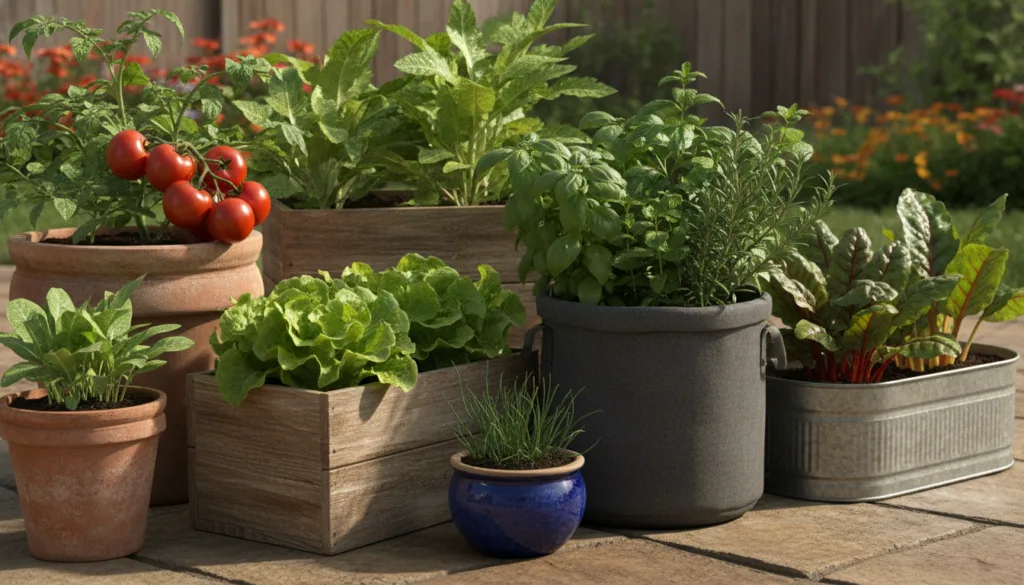
Thankfully, there are many excellent and safe options available for your vegetable garden. Here are some of our favorites:
1. Terracotta and Clay Pots
- Pros: These classic pots are porous, allowing excellent air circulation to the roots and preventing waterlogging. They also look beautiful and natural.
- Cons: Their porous nature means they dry out quickly, requiring more frequent watering, especially in hot climates. They can also be heavy and brittle.
2. Wooden Planters (Untreated)
- Pros: Wood is a natural, attractive material that provides good insulation for roots against temperature fluctuations. Larger wooden raised beds are fantastic for root vegetables.
- Cons: Untreated wood will eventually decompose. Crucially, ensure any wood you use is untreated, as treated lumber often contains chemicals that are harmful to plants and humans. Cedar and redwood are naturally rot-resistant and safe choices.
3. Fabric Grow Bags
- Pros: These lightweight, breathable bags prevent roots from circling, encouraging healthier root systems. They offer excellent drainage and aeration, and are easy to move and store.
- Cons: Like terracotta, they can dry out quickly.
4. Food-Grade Plastics (HDPE, PP, LDPE)
- Pros: Lightweight, durable, inexpensive, and retain moisture well. Many come in large sizes perfect for vegetables.
- How to identify: Look for the recycling symbols #2 (HDPE – High-Density Polyethylene), #4 (LDPE – Low-Density Polyethylene), or #5 (PP – Polypropylene) on the bottom of the container. These plastics are generally considered safe for food contact and gardening. Common examples include five-gallon buckets, milk jugs, and some nursery pots.
- Cons: Can heat up in direct sun, potentially stressing roots.
5. Metal Containers (Galvanized Steel, Stainless Steel)
- Pros: Extremely durable, long-lasting, and can look very modern.
- Cons: Galvanized steel is generally safe once its zinc coating weathers, but always ensure it’s specifically rated for gardening or food contact. Stainless steel is completely safe but often more expensive. Be aware that metal can heat up significantly in the sun, which can cook roots. Choose lighter colors or provide some shade.
Containers to Approach with Caution (or Avoid Entirely)
Not all containers are created equal when it comes to growing food. Here’s what to be wary of:
- Non-Food Grade Plastics: Plastics without the #2, #4, or #5 recycling symbols, especially those labeled #3 (PVC) or #7 (other/polycarbonate), may leach harmful chemicals like phthalates or bisphenol A (BPA) into your soil.
- Treated Lumber: Wood treated with preservatives (like chromated copper arsenate, or CCA, though less common now) should be avoided entirely for food gardens due to the toxic chemicals it contains.
- Old Tires: While seemingly a free option, tires can leach heavy metals and other pollutants as they break down, especially when exposed to sun and heat.
- Unknown Materials: If you’re unsure about the material or its history, it’s best to err on the side of caution and choose something you know is safe.
Tips for Container Gardening Success
- Ensure Excellent Drainage: No matter the material, good drainage is critical. Most containers need at least a few drainage holes at the bottom to prevent root rot.
- Choose the Right Size: Research the mature size of your vegetable plants and choose containers that provide ample space for roots to grow. Larger containers generally mean healthier, more productive plants.
- Use High-Quality Potting Mix: A good, well-draining potting mix designed for containers is essential. Garden soil is too dense for pots.
- Monitor Watering: Container plants dry out faster than in-ground plants. Check soil moisture daily, especially during hot, windy weather.
- Consider Sun Exposure: Most vegetables need at least 6-8 hours of direct sunlight. Place your containers in the sunniest spot available!
Start Growing Safely Today!
By making smart choices about your containers, you’re setting yourself up for a bountiful harvest of healthy, delicious vegetables. It’s an easy step that makes a big difference in your gardening journey. So, grab your safe containers, get your hands dirty, and enjoy the incredible rewards of growing your own food!
Happy gardening from Garden – L. Quyên!