As men journey past the age of 50, a variety of health considerations often come into focus. From maintaining vitality to supporting overall well-being, many are seeking natural, simple ways to feel their best. What if a humble kitchen staple held a surprising secret that could contribute to your health routine? It might sound unexpected, but a simple glass of onion water, prepared overnight, is garnering attention for its potential benefits, particularly for men in this age bracket. Could this ancient, easy practice be a helpful addition to your wellness journey?

Why This Matters for Men Over 50
For many men crossing the half-century mark, maintaining energy, cardiovascular health, and prostate wellness becomes a priority. It’s a time when many begin to research natural approaches and home remedies, hoping to complement conventional care and embrace a more holistic lifestyle. The buzz around onion water isn’t about a miracle cure, but rather about its potential as a supportive addition to a healthy diet and lifestyle.
Onions, long celebrated in traditional medicine across various cultures, are packed with beneficial compounds. It’s this rich nutritional profile that sparks curiosity about their liquid form. People are drawn to the simplicity and accessibility of this ‘kitchen cure,’ especially when searching for natural ways to support their body’s systems as they age.
The Unveiling of Onion Water’s Potential
So, what exactly makes humble onion water a topic of discussion for men’s health? The secret lies in the powerful compounds found within onions themselves. When sliced onions are left to soak in water, some of these water-soluble compounds infuse into the liquid, creating a subtle, yet potentially beneficial, drink.
Key Compounds at Play
- Quercetin: This potent antioxidant flavonoid is abundant in onions, particularly in the outer layers. Quercetin has been extensively studied for its anti-inflammatory properties and its role in protecting cells from oxidative stress.
- Sulfur Compounds: Onions are rich in organosulfur compounds, which are responsible for their pungent smell and many of their health-promoting effects. These compounds are believed to have various beneficial actions in the body.
- Antioxidants: Beyond quercetin, onions contain a spectrum of antioxidants that work to neutralize free radicals, contributing to overall cellular health and potentially supporting healthy aging.
Traditional Uses vs. Modern Understanding
Traditionally, onions have been used in folk medicine for their purported diuretic, anti-inflammatory, and immune-boosting properties. In some cultures, remedies involving onions were used to support urinary health and general vitality.
Modern scientific interest is growing, though specific studies on onion water are still emerging. However, research into the compounds found in onions (like quercetin) suggests that they may support:
- Cardiovascular Health: Antioxidants and sulfur compounds may help maintain healthy blood pressure and cholesterol levels already within a normal range.
- Anti-inflammatory Response: Quercetin’s anti-inflammatory properties may contribute to reducing general inflammation in the body, which is often a factor in age-related discomforts.
- Prostate Health: Some preliminary studies on onion compounds suggest a potential role in supporting prostate cell health, though more direct research on onion water and human prostate health is needed. It’s important to remember this is an area of ongoing research, and onion water should not replace medical advice or treatment for prostate conditions.
- Immune Function: The vitamin C and other antioxidants in onions may help strengthen the immune system.
It’s crucial to understand that while the compounds in onions show promise, drinking onion water is a supportive measure, not a definitive treatment or cure for any medical condition. Always approach natural remedies with a balanced perspective and alongside professional medical guidance.
Your Practical Guide to Making Onion Water
Ready to give this simple remedy a try? Here’s how to prepare and incorporate onion water into your routine.
Preparation
- Choose Your Onion: Any onion variety works, but red or yellow onions often contain higher levels of beneficial antioxidants. Organic is always a great choice if available.
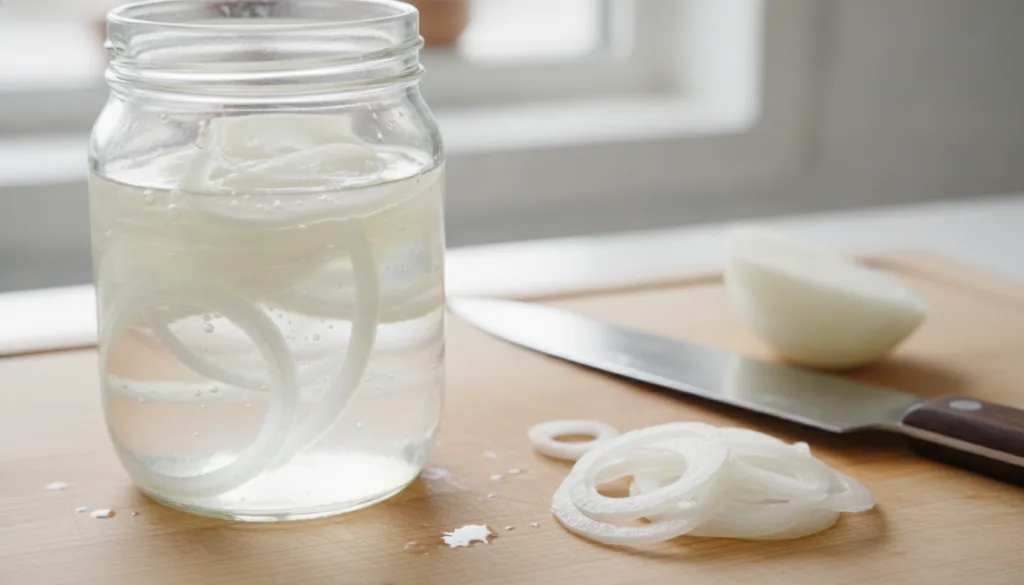
- Wash and Slice: Thoroughly wash the onion. You don’t need to peel it completely, as many beneficial compounds are in the outer layers, but remove any very dry or damaged skin. Slice about half a medium-sized onion into thin or medium-sized rings.
- Soak Overnight: Place the onion slices in a clean glass jar or pitcher. Pour 2-3 cups of filtered water over the slices, ensuring they are fully submerged. Cover the container and let it sit at room temperature or in the refrigerator overnight (8-12 hours).
- Strain: The next morning, strain the onion water into a clean glass. Discard the onion slices.
Usage Ideas & Frequency
- Drink Plain: Many prefer to drink 1/2 to 1 cup of onion water on an empty stomach in the morning.
- Flavor Boost: If the taste is too strong, you can add a squeeze of fresh lemon juice, a dash of honey, or a few mint leaves to make it more palatable.
- Consistency is Key: For potential benefits, consistency is often more important than large doses. Start with a smaller amount and see how your body responds.
Storage
Onion water is best consumed within 24-48 hours. Store any leftover liquid in a sealed container in the refrigerator.
Safety & Precautions
While onion water is generally considered safe for most people, it’s essential to be mindful of potential considerations:
- Digestive Sensitivity: Some individuals may experience mild digestive upset, such as gas or bloating, especially when first introducing onion water. Start with a small amount to assess tolerance.
- Allergies: If you have an allergy to onions or other alliums (garlic, chives), avoid onion water.
- Medication Interactions: Onions, particularly in concentrated forms, may have mild anticoagulant (blood-thinning) properties. If you are on blood-thinning medications (e.g., Warfarin, Aspirin), or have a bleeding disorder, consult your doctor before regularly consuming onion water.
- Existing Medical Conditions: If you have any underlying medical conditions, are pregnant or breastfeeding, or are taking medications, always speak with your healthcare provider before adding new remedies to your routine. Onion water is a supplement, not a replacement for prescribed medical treatment.
Key Takeaways
- Onion water is a simple, natural beverage made by soaking sliced onions in water overnight.
- It contains beneficial compounds like quercetin and organosulfur compounds, known for their antioxidant and anti-inflammatory properties.
- For men over 50, it may offer supportive benefits for cardiovascular health, a healthy inflammatory response, and potentially prostate health, based on the compounds found in onions.
- Preparation is easy: slice an onion, soak it in water overnight, then strain.
- Always practice caution, especially if you have digestive sensitivities, allergies, or are on medication. Consult your doctor for personalized advice.
FAQ
1. How often should I drink onion water?
Starting with 1/2 to 1 cup once daily is a common approach. Listen to your body and adjust as needed. Consistency over a few weeks or months may show better results than infrequent large doses.
2. Does onion water taste strong?
The taste is generally milder than eating raw onion, often described as subtly onion-flavored water. Some people find it palatable, while others prefer to add lemon or honey to mask the flavor slightly.
3. Can onion water help with hair growth?
While onion juice is a popular traditional remedy for hair growth when applied topically, the benefits of drinking onion water for hair health are not well-established. Its general nutrient content may support overall wellness, which can indirectly affect hair health.
4. Is red onion water better than white onion water?
Red onions tend to have higher concentrations of certain antioxidants, like quercetin, due to their pigment. However, both red and white onions offer beneficial compounds, so either can be used.
5. Can I reuse the onion slices?
It’s generally not recommended to reuse the onion slices, as most of their water-soluble beneficial compounds will have already infused into the water. For best results, use fresh slices each time.
6. Does onion water help with colds or flu?
Traditionally, onions have been used to support the immune system. While onion water’s antioxidants and vitamin C may support general immune function, it’s not a treatment for colds or flu. It may help you feel better due to its hydrating and potentially anti-inflammatory properties.
Related Reading
- The Power of Quercetin: Nature’s Anti-Inflammatory Ally
- Boosting Your Immune System Naturally: A Practical Guide
- Healthy Aging: Foods and Habits for Lasting Vitality
- Understanding Prostate Health: Natural Support Strategies