Want to support your body with better everyday food choices? Our bodies are incredible machines, equipped with sophisticated systems to keep us healthy and functioning. While trendy ‘detoxes’ often miss the mark, a powerful truth remains: the foods we eat play a crucial role in supporting our organs’ natural, vital functions. It’s not about deprivation, but about intentional nourishment.
At Glowra Health, we believe in empowering you with simple, actionable insights for a healthier life. This article will guide you through specific nutrient-rich foods that can help bolster the health of your blood, brain, eyes, intestines, kidneys, liver, and lungs. Discover how incorporating these healthy foods for organs into your diet can make a tangible difference in your overall well-being.
Understanding Your Organs: A Food-First Approach
Your body is inherently designed to manage its own ‘detoxification’ and maintenance. Instead of seeking quick fixes, focusing on a consistent, nutrient-rich diet is the most effective way to support these natural processes. The key lies in providing your organs with the building blocks and protective compounds they need to thrive. Let’s explore how everyday foods can become your allies in health.
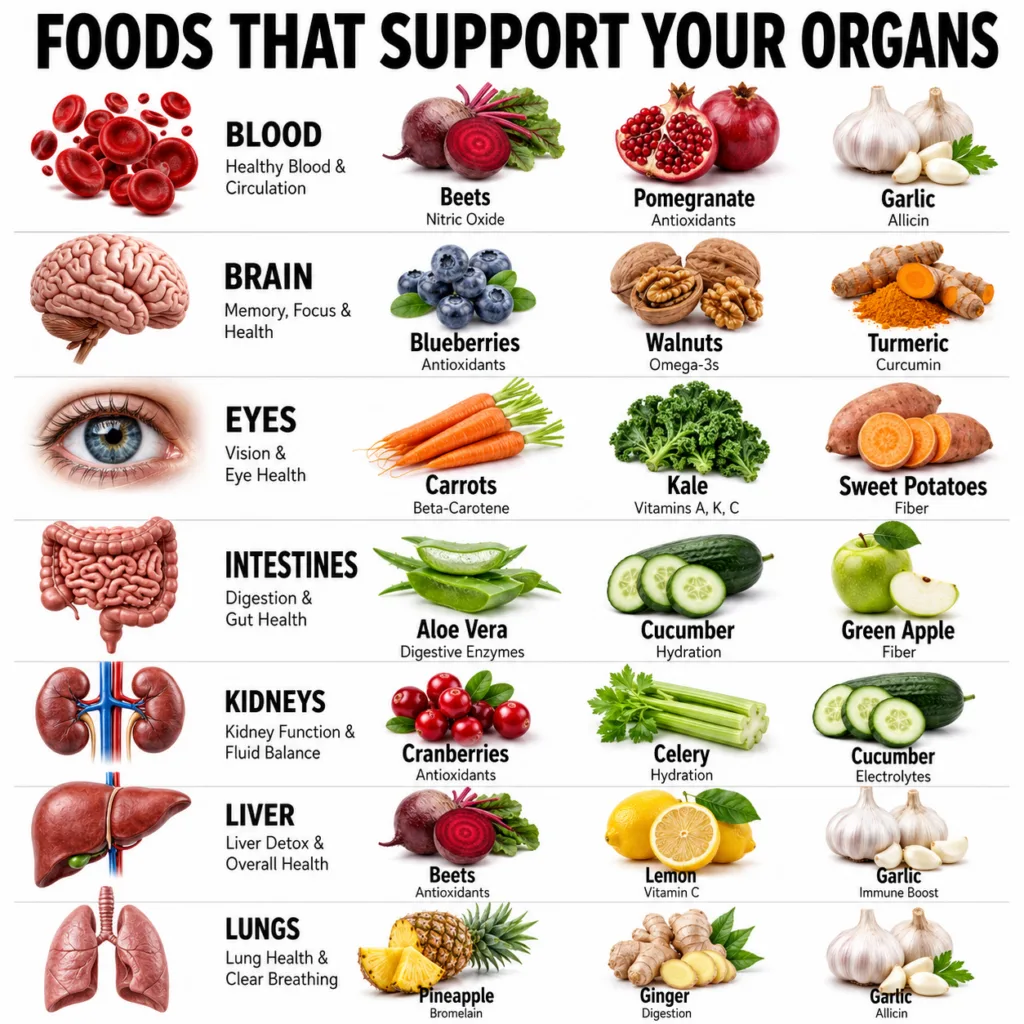
Blood Support: Beets, Pomegranate, Garlic
- Beets: Rich in nitrates, beets can help improve blood flow and lower blood pressure by widening blood vessels. Their vibrant color comes from betalains, powerful antioxidants that combat oxidative stress.
- Pomegranate: These ruby-red jewels are packed with antioxidants, particularly punicalagins, which may help protect blood vessel linings and support overall cardiovascular health.
- Garlic: Beyond its culinary charm, garlic contains allicin, a compound known for its potential to support healthy circulation and contribute to healthy blood pressure levels.
Fueling Your Brain: Blueberries, Walnuts, Turmeric
- Blueberries: Often called ‘brain berries,’ blueberries are brimming with anthocyanins, antioxidants that may help improve memory and cognitive function by protecting brain cells from damage.
- Walnuts: These brain-shaped nuts are an excellent source of omega-3 fatty acids, specifically alpha-linolenic acid (ALA), which are crucial for brain health and may help reduce inflammation.
- Turmeric: The golden spice contains curcumin, a compound with potent anti-inflammatory and antioxidant properties. Research suggests it may cross the blood-brain barrier and could support brain health.
Visionary Foods for Your Eyes: Carrots, Kale, Sweet Potatoes
- Carrots: Famous for their eye-boosting power, carrots are rich in beta-carotene, which the body converts into Vitamin A. Vitamin A is essential for good vision, especially in low light.
- Kale: This leafy green is a powerhouse of lutein and zeaxanthin, two antioxidants that accumulate in the retina and can help protect your eyes from harmful light and age-related macular degeneration.
- Sweet Potatoes: Another fantastic source of beta-carotene and Vitamin A, sweet potatoes contribute to maintaining healthy vision and protecting the surface of the eye.
Happy Intestines: Aloe Vera, Cucumber, Green Apple
- Aloe Vera: While often used topically, the inner gel of aloe vera can be consumed in drinks. It contains compounds that may help soothe the digestive tract and support gut regularity.
- Cucumber: High in water content and containing beneficial fiber, cucumbers contribute to hydration and can help promote healthy bowel movements, supporting intestinal function.
- Green Apple: Rich in fiber, especially pectin, green apples act as a prebiotic, feeding beneficial gut bacteria. This can lead to a healthier gut microbiome and smoother digestion.
Kidney Allies: Cranberries, Celery, Cucumber
- Cranberries: Well-known for supporting urinary tract health, cranberries contain compounds that can help prevent bacteria from adhering to the walls of the bladder and kidneys, promoting kidney wellness.
- Celery: With its high water content and natural diuretic properties, celery can help flush out toxins and excess fluids from the body, supporting healthy kidney function.
- Cucumber: Similar to its benefits for the intestines, cucumber’s high water content aids hydration, which is vital for kidney health as it helps the kidneys filter waste more efficiently.
Liver Love: Beets, Lemon, Garlic
- Beets: Beyond blood health, beets support the liver with their betalains, which aid in detoxification pathways and can help reduce oxidative stress in the liver.
- Lemon: Often associated with ‘cleanses,’ lemons contain Vitamin C and antioxidants that may help protect liver cells from damage and support its natural detoxification processes.
- Garlic: This pungent bulb boosts liver enzymes and contains sulfur compounds that are essential for liver detoxification and repair mechanisms.
Lung Health Boosters: Pineapple, Ginger, Garlic
- Pineapple: Contains bromelain, an enzyme with anti-inflammatory properties that may help reduce inflammation in the airways and support respiratory comfort.
- Ginger: A potent anti-inflammatory and antioxidant, ginger can help soothe respiratory passages and may offer relief from congestion, contributing to overall lung health.
- Garlic: Its immune-boosting and anti-inflammatory compounds, particularly allicin, can also benefit the lungs by helping to fight infections and reduce inflammation in the respiratory system.
The Simple Takeaway: Embrace Variety
The common thread among all these organ-supporting foods is their richness in diverse nutrients. Instead of fixating on a single ‘superfood,’ the most impactful strategy is to embrace a wide variety of whole foods. Fruits, vegetables, nuts, herbs, and other unprocessed foods provide a spectrum of fiber, antioxidants, vitamins, minerals, and healthy fats that work synergistically to maintain your body’s delicate balance.
Incorporating These Foods into Your Daily Diet
Making these healthy choices a regular part of your routine doesn’t have to be complicated. Here are a few simple ideas:
- Start Your Day Strong: Add blueberries and walnuts to your oatmeal or yogurt. Blend spinach (like kale) and a piece of green apple into your morning smoothie.
- Snack Smart: Keep carrots, celery, and cucumber sticks handy for a refreshing snack.
- Colorful Salads: Load your lunch salads with kale, pomegranate seeds, and a sprinkle of walnuts.
- Flavorful Meals: Use garlic and turmeric generously in your cooking. Add cooked beets to your grain bowls or salads.
- Hydration with a Twist: Infuse your water with lemon slices, cucumber, or a few cranberries.
- Juice or Smoothies: Consider a fresh juice or smoothie with pineapple, ginger, and a small amount of aloe vera juice.
Remember, consistency is key. Small, incremental changes to your diet can lead to significant improvements in how you feel and how your organs function.
Frequently Asked Questions About Organ-Supporting Foods
Do these foods ‘detox’ my organs?
No, your organs (especially the liver and kidneys) are perfectly capable of detoxifying your body on their own. These foods ‘support’ their function by providing essential nutrients, antioxidants, and anti-inflammatory compounds that help them perform their jobs more efficiently.
How much of these foods should I eat?
While there are no strict guidelines for ‘organ-specific’ quantities, aim for a balanced diet rich in a variety of fruits and vegetables daily. Incorporate a mix of the foods mentioned across your meals and snacks.
Can I just take supplements instead?
Whole foods provide a complex array of nutrients, fiber, and beneficial compounds that supplements often cannot replicate. While supplements can play a role for specific deficiencies, prioritizing whole foods is generally recommended for overall organ health.
Are there any side effects to these foods?
For most healthy individuals, these foods are safe and beneficial. However, if you have specific health conditions (e.g., kidney stones, blood thinning medication) or allergies, it’s always wise to consult with a healthcare professional before making significant dietary changes.