Imagine stepping onto your balcony and plucking fresh herbs for tonight’s dinner. No need for a vast backyard or complicated setup – a thriving balcony herb garden is within reach for anyone! At Garden – L. Quyên, we believe everyone can cultivate a little slice of green paradise, even in compact urban spaces. Let’s explore how you can transform your balcony into a fragrant, productive herb haven.
Why Start a Balcony Herb Garden?
Balcony herb gardens offer a bounty of benefits. They provide immediate access to fresh, organic ingredients, elevating your culinary creations. Beyond the kitchen, they add a touch of natural beauty to your outdoor space, attracting beneficial pollinators and offering a calming, green escape. Plus, growing your own herbs is incredibly rewarding and a fantastic way to connect with nature, even if you’re living in the city.
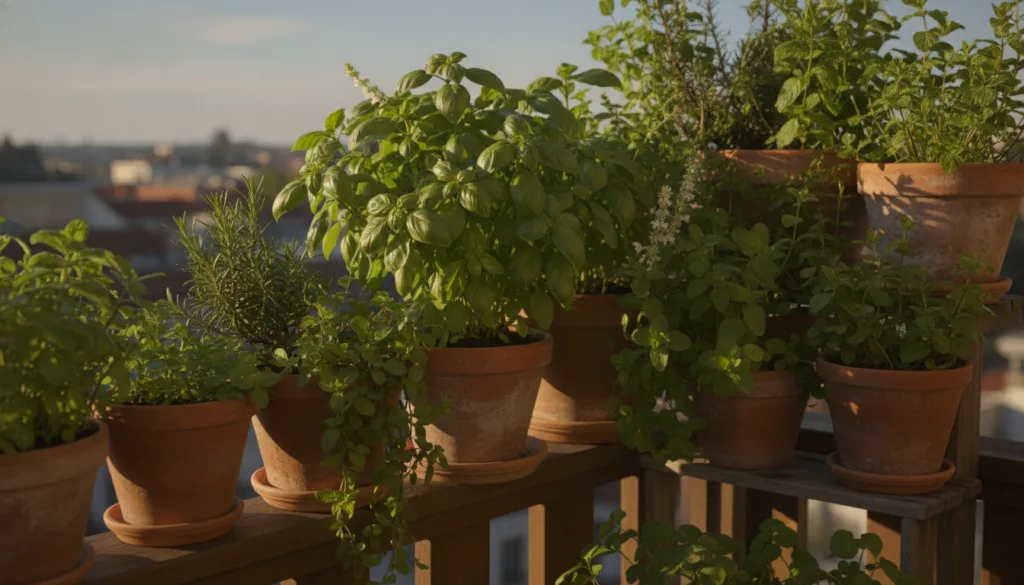
Getting Started: Your Balcony Herb Garden Checklist
1. Choose Your Herbs Wisely
Start with herbs you love to use and that suit your climate. Popular choices for beginners include:
- Basil: Loves sun and warmth.
- Mint: Grows vigorously, best in its own pot.
- Rosemary: Drought-tolerant, needs plenty of sun.
- Thyme: Hardy and forgiving.
- Parsley: Prefers partial shade in hot climates.
- Chives: Easy to grow and perennial.
2. Pick the Perfect Pots and Containers
Container size matters! Most herbs do well in pots at least 6-8 inches in diameter. Ensure your containers have drainage holes to prevent waterlogging. Terracotta pots are excellent as they allow the soil to breathe, but plastic or glazed ceramic pots work well too. Consider vertical planters or hanging baskets to maximize space.
3. Sunlight is Key
Most herbs thrive with at least 6 hours of direct sunlight per day. Observe your balcony throughout the day to determine its sun exposure. If your balcony receives less sun, opt for shade-tolerant herbs like mint, parsley, or chives.
4. Quality Soil for Healthy Growth
Use a good quality potting mix that drains well. Avoid using garden soil, as it can be too heavy and might harbor pests. A mix specifically formulated for containers will give your herbs the best start.
Caring for Your Herbs: Tips for Success
Watering
Consistency is key! Water your herbs when the top inch of soil feels dry to the touch. Overwatering can lead to root rot, so always check the soil before watering. In hot weather, container plants tend to dry out faster, so you might need to water daily.
Pruning and Harvesting
Regular pruning encourages bushier growth and prevents herbs from going to seed too quickly. Harvest leaves from the top of the plant, cutting just above a leaf node. Don’t be shy – the more you harvest, the more your herbs will produce!
The Secret to Thriving Herbs: A Homemade Nutrient Boost
While good soil provides initial nutrients, regular feeding helps your herbs flourish, especially in containers where nutrients can deplete quickly. Instead of relying solely on store-bought options, try this simple, homemade nutrient boost that’s gentle on your plants and the environment.
DIY Liquid Fertilizer for Lush Herbs
This natural concoction provides essential nutrients and beneficial microbes to keep your herbs vibrant and healthy.
Ingredients:
- 1 gallon of non-chlorinated water (rainwater or tap water left out for 24 hours)
- 1 cup of aged compost or worm castings
- 1/4 cup of liquid seaweed extract (optional, but highly beneficial)
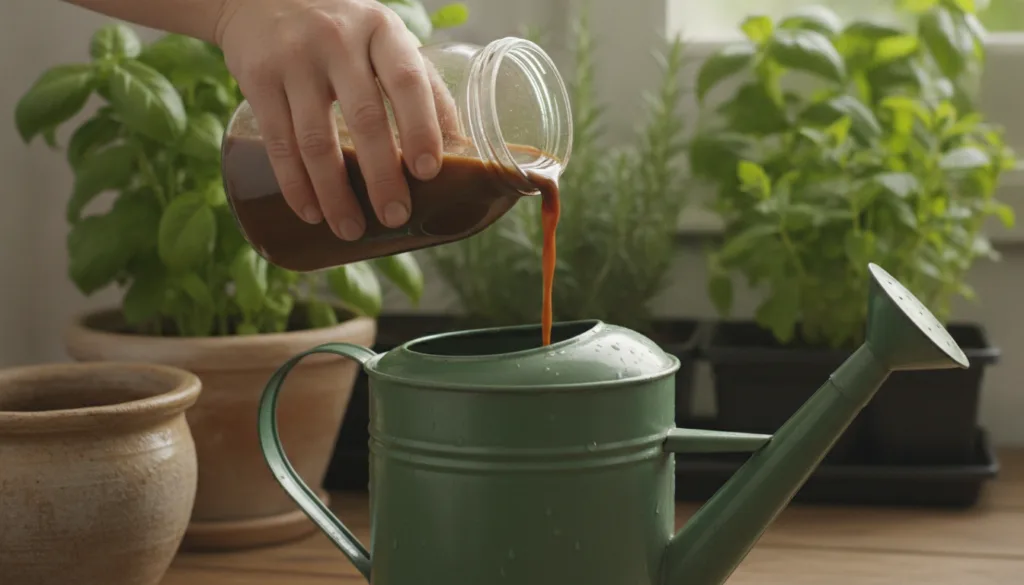
Instructions:
- Combine Ingredients: In a large bucket or watering can, combine the non-chlorinated water, aged compost/worm castings, and liquid seaweed extract (if using).
- Steep: Stir the mixture well and let it sit for 12-24 hours. This allows the nutrients from the compost/worm castings to infuse into the water. Stir occasionally during this period.
- Strain (Optional but Recommended): For a cleaner application, you can strain the liquid through a cheesecloth or fine mesh sieve to remove any solid particles. This prevents clogging your watering can.
- Dilute and Apply: Dilute the strained liquid with an equal amount of non-chlorinated water (1 part fertilizer to 1 part water). Use this diluted solution to water your herbs every 2-4 weeks during their active growing season.
This nutrient boost provides a gentle supply of nitrogen, phosphorus, and potassium, along with a host of micronutrients and beneficial microorganisms, helping your herbs grow stronger and more flavorful.
Common Challenges and Solutions
- Yellowing Leaves: Often a sign of overwatering or nutrient deficiency. Check soil moisture and consider applying your homemade nutrient boost.
- Pests: Inspect your plants regularly. For common pests like aphids, a gentle spray of soapy water can often do the trick. Companion planting with marigolds can also deter some pests.
- Bolting (going to seed): This happens when plants get stressed, often from heat or lack of water. Harvest regularly and consider providing some afternoon shade during hot spells.
Harvesting and Enjoying Your Herbs
The best part of growing herbs is enjoying them! Harvest leaves as needed for cooking, drying, or making herbal teas. Consistent harvesting encourages your plants to produce even more, ensuring a steady supply throughout the season.
Start Your Balcony Herb Garden Today!
A thriving balcony herb garden is a wonderful addition to any home, providing beauty, flavor, and a connection to nature. With a little care, attention to sunlight, and a nourishing homemade boost, your herbs will flourish. We at Garden – L. Quyên encourage you to embrace the joy of growing your own – happy gardening!