Healthy plant growth starts from the ground up. While we often focus on leaf discoloration or wilting stems, potting soil provides immediate visual clues about moisture balance, mineral content, and microbial health.
Learning to decode these common soil symptoms allows you to diagnose and resolve underlying care issues before root damage occurs.
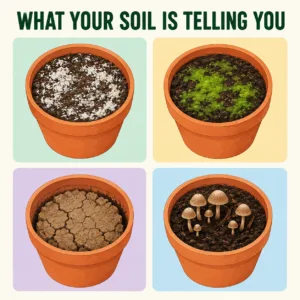
1. White Crust: Mineral & Salt Buildup
-
The Symptom: A chalky, brittle white crust forming on the soil surface and around the inner terracotta pot rim.
-
What It Means: Hard tap water minerals (calcium, magnesium) and chemical fertilizer salts have accumulated over time through regular surface watering.
-
The Fix:
-
Flush the Pot (Leaching): Place the pot in the sink and slowly pour 2 to 3 times the container’s volume in filtered or distilled water through the soil to wash away excess salts.
-
Scrape the Surface: Gently remove the top 1/2 inch of crusty soil and replace it with fresh, organic potting mix.
-
Switch Water Sources: Use rainwater, distilled, or filtered water if your municipal tap water is heavily chlorinated or hard.
-
2. Green Algae: Soil Is Staying Too Wet
-
The Symptom: A slimy or velvety green coating spreading across the soil top.
-
What It Means: The soil mix is receiving continuous surface moisture combined with light exposure, creating an ideal habitat for algal colonies.
-
The Fix:
-
Dial Back Watering: Allow the top 1 to 2 inches of soil to dry out thoroughly between waterings.
-
Improve Drainage: Ensure pot drainage holes are clear of compacted debris and blend 20% to 30% perlite or coarse pumice into the soil to accelerate drying times.
-
Aerate the Surface: Lightly scrape away the green layer with a fork to break up surface compaction and let oxygen reach the roots.
-
3. Mushrooms: Healthy, Active Living Soil
-
The Symptom: Small yellow, tan, or brown mushrooms sprouting overnight in the pot.
-
What It Means: Your potting mix contains active, beneficial saprophytic fungi that are breaking down decaying organic matter into absorbable plant nutrients.
-
The Fix:
-
No Major Action Needed: Mushrooms are generally harmless to the plant and indicate fertile, biologically active soil.
-
Pluck for Safety: If you have pets or small children, pluck the mushroom caps at the base to prevent accidental ingestion.
-
Check Moisture: While fungi are beneficial, persistent fruiting mushrooms can signal that the soil is staying consistently damp for too long.
-
4. Cracked Soil: Needs a Deep Watering (Hydrophobic Soil)
-
The Symptom: Soil contracts, forms deep dry fissures, and pulls completely away from the inner walls of the pot.
-
What It Means: The peat moss or coco coir in the potting mix has become bone-dry and hydrophobic, causing water to channel straight down the edges without penetrating the root ball.
-
The Fix:
-
Bottom Watering: Submerge the bottom half of the pot in a basin of room-temperature water for 30 to 45 minutes until the soil rehydrates and swells back to the pot edges.
-
Gentle Aeration: Poke several small holes into the hardened surface with a chopstick before bottom watering to create pathways for moisture absorption.
-
5. Fungus Gnats: Surface Soil Is Too Damp
-
The Symptom: Tiny, mosquito-like black flies crawling across the soil and flying around the plant when disturbed.
-
What It Means: Adult gnats are laying eggs in persistently wet, organic topsoil, where their larvae feed on decaying matter and tender plant root hairs.
-
The Fix:
-
Let the Top Layer Dry: Allow the top 2 inches of soil to dry out completely; gnat larvae cannot survive in dry soil.
-
Add a Sand Barrier: Top-dress the pot with a 1/2-inch layer of coarse horticultural sand or fine gravel to prevent adults from laying eggs.
-
Treat with Mosquito Bits / BTI: Water with Bacillus thuringiensis israelensis (BTI) tea to naturally eradicate larvae in the root zone.
-
6. White Mold: Needs More Airflow & Less Moisture
-
The Symptom: A fluffy, fuzzy white webbing or powdery layer resting on the soil surface.
-
What It Means: High ambient humidity, low room ventilation, and damp surface soil have created conditions for harmless saprophytic mold to colonize.
-
The Fix:
-
Increase Ventilation: Place a small oscillating fan in the room or move the plant to an area with better air circulation.
-
Direct Sunlight: Move the plant into brighter, filtered light to naturally inhibit mold spores.
-
Natural Antifungal Dusting: Scrape off the fuzzy layer and lightly dust the surface with pure cinnamon powder, which contains natural cinnamaldehyde to suppress mold growth.
-