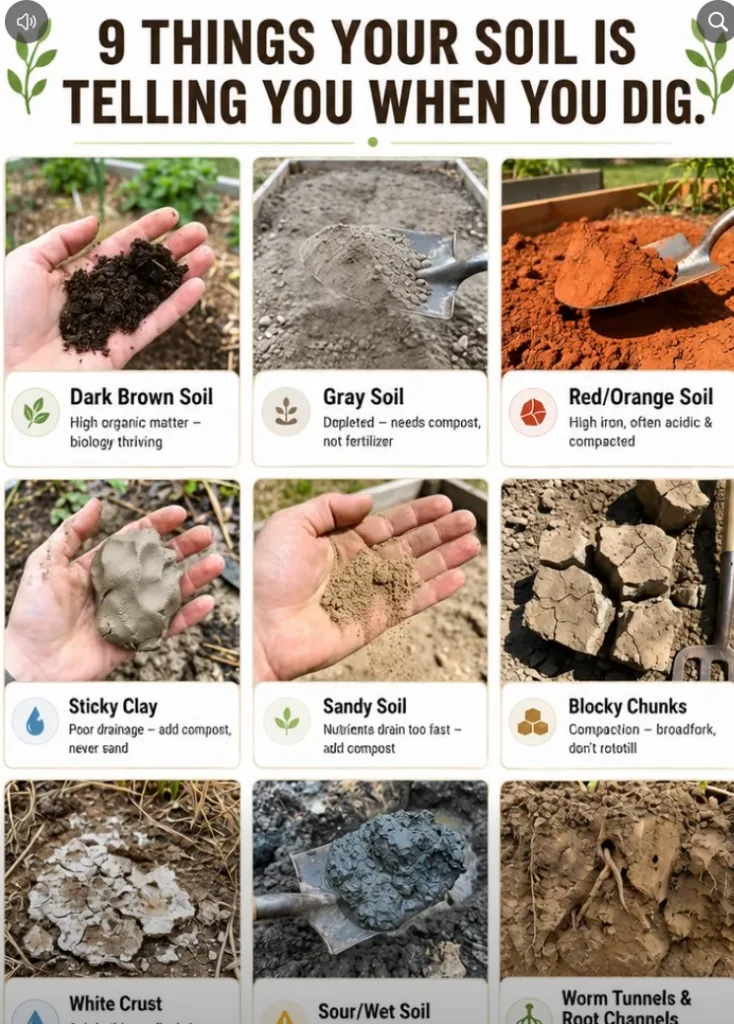
Healthy plants start with healthy soil. Before buying fertilizer or replacing plants, dig down about 6–8 inches and take a close look at what is happening beneath the surface.
The color, texture, smell, moisture, and structure of your soil can reveal a lot about drainage, compaction, organic matter, and overall soil health.
Here are 9 common signs to look for and what you can do about them.
1. Dark Brown Soil
Dark brown soil is often a positive sign because it can indicate plenty of decomposed organic matter.
What it may mean:
- Good organic matter
- Active soil biology
- Better moisture retention
- Improved nutrient availability
What to do:
Keep adding compost, shredded leaves, grass clippings, or other organic mulch. Avoid disturbing the soil more than necessary so beneficial organisms can continue working.
2. Gray Soil
Gray soil can sometimes indicate poor aeration, low organic matter, or prolonged wet conditions.
What to do:
Add several inches of finished compost and gently work it into the upper soil layer.
If the area stays wet for long periods, check the drainage before adding fertilizer.
Tip: More fertilizer will not necessarily fix unhealthy soil structure.
3. Red or Orange Soil
Red and orange colors commonly come from iron compounds naturally present in the soil.
Some red soils may also be acidic or heavily compacted.
What to do:
Before adding lime or other amendments, test the soil pH.
Improve the soil gradually with:
- Compost
- Leaf mold
- Organic mulch
- Cover crops
Avoid trying to completely change the natural color of the soil.
4. Sticky Clay
If wet soil becomes extremely sticky and can easily be shaped into a smooth ball or ribbon, you probably have clay-rich soil.
Clay can hold nutrients well, but drainage and aeration may become problems.
What to do:
Add organic matter regularly.
Good choices include:
- Finished compost
- Shredded leaves
- Aged organic mulch
Avoid adding a small amount of sand directly to heavy clay. In the wrong proportions, it can create an even denser mixture.
5. Sandy Soil
Sandy soil feels loose and gritty and usually drains very quickly.
The problem is that water and nutrients can move through it faster than plants can use them.
What to do:
Add compost regularly to improve moisture and nutrient retention.
Apply mulch around plants to slow evaporation.
You may also need to water more frequently but in appropriate amounts for the plants you are growing.
6. Hard, Blocky Chunks
Large hard chunks can be a sign of compaction or poor soil structure.
Compacted soil makes it difficult for roots, water, and oxygen to move freely.
What to do:
Avoid repeatedly walking on garden beds.
Use a garden fork or broadfork to gently loosen compacted soil without completely turning everything upside down.
Then add compost and mulch to encourage better structure over time.
7. White Crust on the Surface
A white crust may sometimes come from mineral or salt buildup, especially in dry climates, containers, or heavily fertilized soil.
What to do:
First determine whether the white material is actually mineral buildup.
If excess salts are the problem:
- Reduce unnecessary fertilizer
- Improve drainage
- Water deeply enough to move accumulated salts downward where appropriate
- Add organic matter
A soil or water test can help if the problem keeps returning.
8. Sour-Smelling or Constantly Wet Soil
Healthy soil usually smells earthy.
If it smells sour, rotten, or swampy and stays saturated, oxygen may be limited.
What to do:
Fix drainage before adding fertilizer.
Possible solutions include:
- Improving drainage channels
- Raising the planting bed
- Adding organic matter
- Reducing excessive irrigation
- Avoiding working the soil while it is waterlogged
Roots need oxygen as well as water.
9. Worm Tunnels and Root Channels
Earthworm tunnels, old root channels, and crumbly aggregates are encouraging signs.
They suggest that the soil has pathways for:
- Air
- Water
- New roots
- Soil organisms
What to do:
Protect this structure.
Use compost and mulch, minimize unnecessary tilling, and avoid compacting the soil.
A Simple 5-Minute Soil Check
Dig a hole about 6–8 inches deep and examine a handful of soil.
Check these five things:
- Color: Is it dark, gray, red, pale, or unusually white?
- Texture: Is it sticky, gritty, crumbly, or hard?
- Moisture: Is it constantly wet or extremely dry?
- Smell: Does it smell earthy or sour?
- Life: Can you see worms, roots, insects, or small soil channels?
These clues can help you decide what your garden actually needs before spending money on unnecessary products.
The Most Important Rule
For many garden soil problems, the best long-term improvement is surprisingly simple:
Add organic matter, protect the soil surface, improve drainage when necessary, and disturb the soil as little as possible.
Remember that soil color or texture alone cannot provide a complete diagnosis. For persistent problems—or before making major pH changes—a basic soil test is the safest way to know exactly what your garden needs.
🌱 One shovel of soil can tell you more than you think. Learn to read it, and your plants will thank you.