When you think of Vitamin C, what’s the first food that comes to mind? For most of us, it’s the classic orange. While oranges are indeed a great source of this essential nutrient, they are far from being the only, or even the most potent, option available. In fact, many other delicious fruits and vegetables pack an even bigger Vitamin C punch!
This article will take you on a journey to uncover some unexpected Vitamin C superstars. You’ll learn why this vitamin is so vital for your health, discover surprising foods that offer more Vitamin C than an orange, and get practical tips on how to easily incorporate them into your daily meals. Get ready to supercharge your immunity and boost your overall vitality with these colorful additions!
The Power of Vitamin C: Essential Benefits
Vitamin C, also known as ascorbic acid, is a water-soluble vitamin crucial for numerous bodily functions. Since our bodies cannot produce it, we must obtain it through our diet. Here’s why it’s a true superstar:
- Immune System Support: Perhaps its most famous role, Vitamin C helps boost your immune system by supporting the production and function of various immune cells. It can help reduce the severity and duration of common colds.
- Powerful Antioxidant: It acts as a potent antioxidant, protecting your cells from damage caused by free radicals. This may help reduce the risk of chronic diseases.
- Collagen Production: Vitamin C is vital for the synthesis of collagen, a protein essential for healthy skin, hair, nails, bones, blood vessels, and cartilage. It contributes to wound healing and maintaining skin elasticity.
- Iron Absorption: It significantly enhances the absorption of non-heme iron (iron from plant-based sources), making it particularly important for vegetarians and vegans.
- Energy and Mood: Research suggests Vitamin C plays a role in neurotransmitter synthesis, which can influence mood and energy levels.
Unexpected Vitamin C Superstars: Beyond Oranges
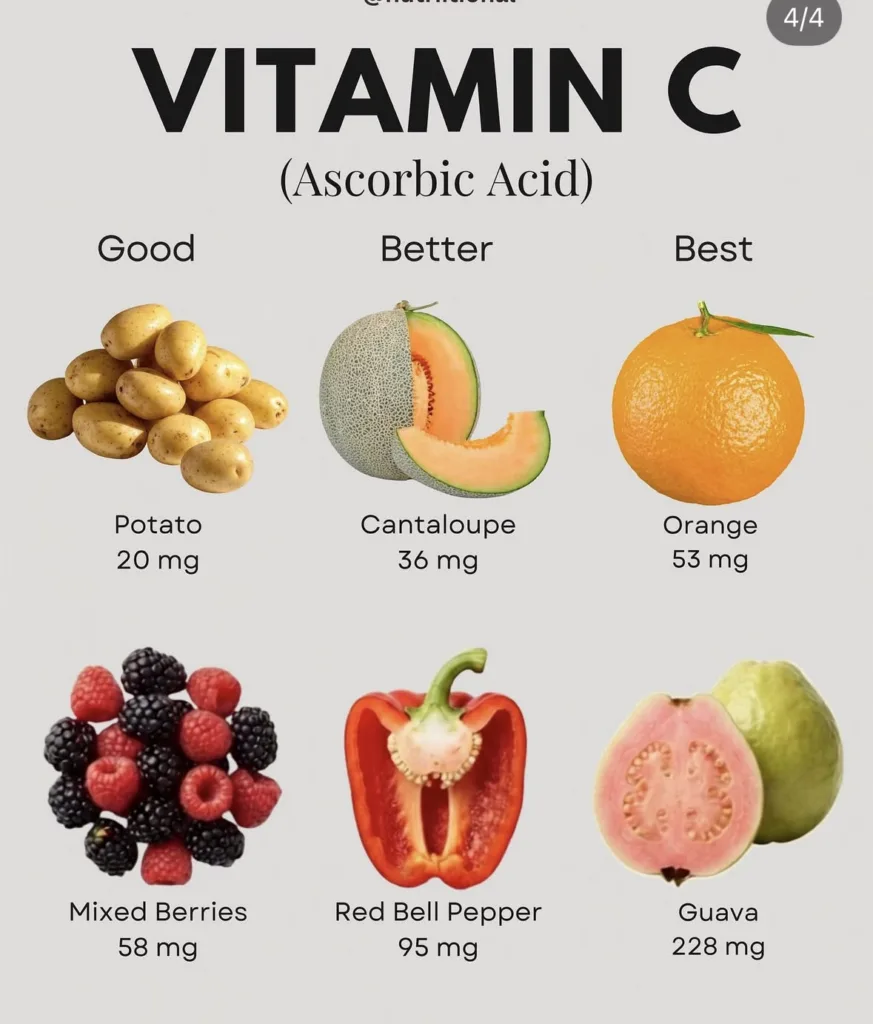
While an orange provides a decent amount of Vitamin C (around 70 mg for a medium one), many other foods offer significantly more. Let’s look at some of these powerhouses:
Vitamin C Food Chart
| Food | Vitamin C (mg per 100g) | Best Benefit |
|---|---|---|
| Guava | 228 | Immune power, antioxidant |
| Red Bell Pepper | 128 | Eye health, collagen boost |
| Mixed Berries | 50-90 (varies) | Antioxidant protection |
| Cantaloupe | 36 | Hydration, skin health |
| Potato | 19 | Versatile, good baseline |
| Orange | 53 | Classic immune support |
As you can see, some of these foods really shine! Guava and red bell peppers, in particular, stand out with exceptionally high Vitamin C levels.
Scientific Explanation: How Vitamin C Works
Once ingested, Vitamin C is absorbed in the small intestine and transported throughout the body via the bloodstream. Its antioxidant properties involve donating electrons to neutralize free radicals, preventing cellular damage. In collagen synthesis, it acts as a co-factor for enzymes that stabilize and strengthen collagen fibers. For iron absorption, it converts ferric iron (Fe3+) into ferrous iron (Fe2+), which is more readily absorbed by the body.
Best Ways to Incorporate These Foods
Adding these Vitamin C powerhouses to your diet is easy and delicious:
- Red Bell Peppers: Slice them raw for a crunchy snack with hummus, add them to stir-fries, fajitas, salads, or roast them for a sweet flavor.
- Guava: Enjoy fresh, add to smoothies, make juice, or use in fruit salads. Just remember to eat the skin for maximum benefits!
- Mixed Berries: A fantastic addition to breakfast cereals, yogurt, oatmeal, smoothies, or simply as a refreshing snack.
- Cantaloupe: Perfect in fruit salads, blended into smoothies, or eaten fresh as a light dessert.
- Potatoes: A staple vegetable that offers a baseline of Vitamin C. Enjoy baked, roasted, or boiled – just be mindful of cooking methods that might reduce nutrient content (like deep frying).
Potential Risks and Considerations
Vitamin C is generally safe, even in larger doses, because it’s water-soluble and any excess is typically flushed out of the body. However, very high doses (above 2,000 mg per day) may lead to digestive upset like diarrhea, nausea, and abdominal cramps. For most healthy adults, a balanced diet rich in fruits and vegetables provides sufficient Vitamin C without the need for supplements.
Practical Tips for Boosting Your Vitamin C
- Eat Raw When Possible: Heat can reduce Vitamin C content, so enjoy fruits and vegetables raw or lightly cooked.
- Pair with Iron: Combine Vitamin C-rich foods with iron-rich plant foods (like lentils or spinach) to enhance iron absorption.
- Variety is Key: Don’t stick to just one source! Enjoy a wide array of colorful fruits and vegetables to get a spectrum of nutrients.
- Snack Smart: Keep sliced bell peppers, berries, or cantaloupe handy for healthy, convenient snacks.
FAQs About Vitamin C
How much Vitamin C do I need daily?
The recommended daily intake for adults is generally 65-90 milligrams, but this can vary based on age, gender, and specific health conditions. Always consult a healthcare professional for personalized advice.
Can cooking destroy Vitamin C?
Yes, Vitamin C is sensitive to heat, light, and air. Boiling vegetables can cause some of the vitamin to leach into the water. Steaming or quick stir-frying can help preserve more of the nutrient.
Are Vitamin C supplements necessary?
For most people who consume a varied diet rich in fruits and vegetables, supplements are not necessary. However, if you have certain medical conditions or dietary restrictions, your doctor might recommend one.
Can I get too much Vitamin C from food?
It’s very difficult to consume too much Vitamin C from food alone. The risk of adverse effects primarily comes from high-dose supplements.
What are good plant-based sources of iron to pair with Vitamin C?
Excellent plant-based iron sources include lentils, beans, spinach, fortified cereals, and tofu. Pair them with bell peppers, berries, or other Vitamin C-rich foods.
Does Vitamin C help with skin health?
Yes, Vitamin C is crucial for collagen production, which is essential for skin elasticity and integrity. It also acts as an antioxidant, protecting skin cells from environmental damage.
Conclusion
While oranges hold a special place in our minds as a Vitamin C champion, it’s exciting to discover the array of other fruits and vegetables that offer even higher concentrations of this vital nutrient. From the tropical sweetness of guava to the crisp versatility of red bell peppers, integrating these unexpected superstars into your diet is a delicious and effective way to boost your immunity, enhance your skin health, and support your overall well-being.
Embrace the rainbow on your plate and enjoy the incredible health benefits these foods have to offer. Keep exploring our website for more healthy food content and delicious recipes to nourish your body!
This content is for educational purposes only and should not be considered medical advice. Consult a qualified healthcare professional for personalized dietary recommendations.