Ever felt a little sluggish or foggy? You might be missing out on a vital nutrient: Vitamin B12! This powerhouse vitamin plays a crucial role in keeping your body running smoothly, from boosting your energy to supporting your nervous system. In this guide, we’ll explore why B12 is so important and dive into delicious natural sources you can easily add to your meals.
Whether you’re looking to enhance your energy levels, improve nerve health, or simply eat a more balanced diet, understanding your B12 intake is a great place to start. Get ready to discover tasty foods that can help you unlock better health!
Why Vitamin B12 Matters for Your Health
Vitamin B12, also known as cobalamin, is an essential nutrient that your body can’t produce on its own. It’s critical for several bodily functions, and not getting enough can lead to a range of health issues. Here’s a closer look at its main benefits:
- Red Blood Cell Formation: B12 is crucial for producing healthy red blood cells, which carry oxygen throughout your body. Without enough B12, your body may produce large, immature red blood cells, leading to a type of anemia.
- Nerve Function: It plays a key role in the maintenance of your central nervous system. B12 helps form the myelin sheath, which insulates nerves and allows them to transmit signals efficiently.
- DNA Synthesis: This vitamin is fundamental for DNA synthesis and regulation. This means it’s involved in the creation of new cells and genetic material.
- Energy Production: While B12 doesn’t directly provide energy, it’s essential for converting food into usable energy, helping to reduce fatigue and maintain vitality.
- Brain Health: Research suggests adequate B12 levels may support cognitive function and memory, potentially helping to prevent age-related decline.

Top Natural Food Sources of Vitamin B12
Good news! Many delicious and common foods are excellent sources of Vitamin B12. Since B12 is primarily found in animal products, vegetarians and vegans need to pay special attention to their intake.
1. Beef Liver and Other Organ Meats
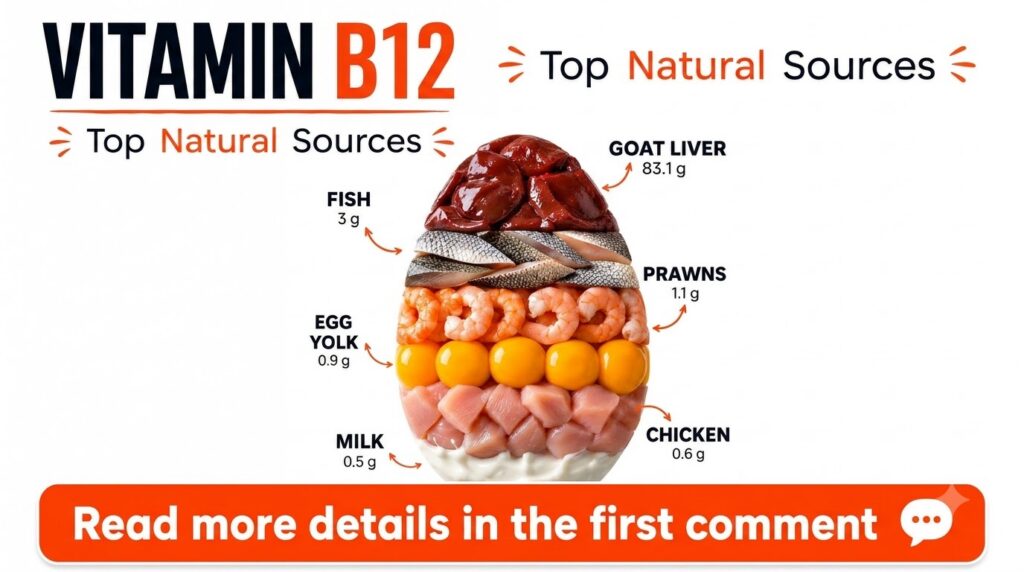
Organ meats, especially liver, are among the most concentrated sources of Vitamin B12. Just a small serving can provide several times your daily recommended intake. Goat liver, as mentioned in our infographic, is a fantastic option.
- Approximate B12: Up to 70 mcg per 3 oz (cooked beef liver)
- Also rich in: Iron, Vitamin A, Folate
2. Clams and Oysters
These shellfish are not only delicious but also nutritional powerhouses. Clams are particularly high in B12, offering an incredible amount per serving.
- Approximate B12: Up to 84 mcg per 3 oz (steamed clams)
- Also rich in: Iron, Selenium, Zinc
3. Fish (Salmon, Tuna, Sardines)
Fatty fish like salmon, tuna, and sardines are excellent sources of B12, along with heart-healthy omega-3 fatty acids. Fish fillets are a great way to boost your intake.
- Approximate B12: ~5-10 mcg per 3 oz (cooked salmon)
- Also rich in: Omega-3s, Vitamin D, Protein
4. Prawns and Shrimp
Another great seafood option, prawns and shrimp provide a good amount of B12 and are versatile for many dishes.
- Approximate B12: ~1.5-2 mcg per 3 oz (cooked shrimp)
- Also rich in: Protein, Selenium, Iron
5. Beef and Lamb
Red meats are substantial sources of Vitamin B12. Opt for leaner cuts to balance your intake.
- Approximate B12: ~2-3 mcg per 3 oz (cooked lean beef)
- Also rich in: Protein, Iron, Zinc
6. Poultry (Chicken, Turkey)
While not as high as red meat or liver, chicken cubes and other poultry still contribute to your daily B12 needs.
- Approximate B12: ~0.3-0.5 mcg per 3 oz (cooked chicken breast)
- Also rich in: Protein, Niacin, Selenium
7. Eggs
Especially egg yolks, eggs are a convenient source of B12, protein, and other nutrients. They are a staple in many healthy diets.
- Approximate B12: ~0.5 mcg per large egg
- Also rich in: Protein, Vitamin D, Choline
8. Dairy Products (Milk, Yogurt, Cheese)
Milk and other dairy products offer a bioavailable form of B12. Incorporating creamy milk or yogurt into your diet is an easy way to get some B12.
- Approximate B12: ~1.2 mcg per 1 cup (milk)
- Also rich in: Calcium, Vitamin D, Protein
Who Should Pay Extra Attention to B12 Intake?
While most people can meet their B12 needs through a balanced diet, certain groups are at higher risk of deficiency:
- Vegetarians and Vegans: Since B12 is primarily found in animal products, plant-based diets require careful planning, often needing fortified foods or supplements.
- Older Adults: As we age, the body’s ability to absorb B12 from food can decrease due to reduced stomach acid.
- Individuals with Digestive Disorders: Conditions like Crohn’s disease, celiac disease, or a history of gastric surgery can impair B12 absorption.
- People on Certain Medications: Some medications, such as proton pump inhibitors (PPIs) and metformin, can interfere with B12 absorption.
Practical Tips for Incorporating B12-Rich Foods
- Start Your Day Strong: Enjoy eggs for breakfast, or add fortified plant-based milk to your cereal or smoothie.
- Lunch & Dinner: Include lean meats, fish, or poultry in your main meals. Think salmon salads, beef stir-fries, or chicken and veggie skewers.
- Snack Smart: A small container of plain yogurt can be a great B12-boosting snack.
- Explore Fortified Foods: If you’re vegetarian or vegan, look for cereals, nutritional yeast, and plant-based milks fortified with B12.
- Variety is Key: Don’t stick to just one source. Rotate different B12-rich foods in your diet to ensure a wide range of nutrients.
FAQs About Vitamin B12
Q1: What are the symptoms of Vitamin B12 deficiency?
Symptoms can include fatigue, weakness, numbness or tingling, difficulty walking, memory loss, depression, and a sore tongue.
Q2: Can I get too much Vitamin B12?
Vitamin B12 is water-soluble, meaning your body excretes excess amounts. It has a very low toxicity risk, even at high doses, but it’s always best to follow recommended guidelines.
Q3: Are plant-based sources of B12 as good as animal sources?
Natural, unfortified plant foods do not reliably provide B12. Vegetarians and vegans usually need to rely on fortified foods or supplements to meet their B12 needs.
Q4: How much Vitamin B12 do I need daily?
The recommended daily allowance (RDA) for adults is 2.4 micrograms (mcg), though this can vary for pregnant or breastfeeding individuals and older adults.
Q5: Should I take a B12 supplement?
If you’re in a high-risk group (vegan, elderly, certain medical conditions), a supplement may be beneficial. Always consult a healthcare professional before starting any new supplement regimen.
Q6: Does cooking destroy Vitamin B12?
Some B12 can be lost during cooking, especially with high heat and prolonged cooking times. However, a significant amount usually remains in most cooked animal products.
Conclusion
Vitamin B12 is a powerhouse nutrient vital for your energy, nerve health, and overall well-being. By incorporating a variety of natural sources like meat, fish, eggs, and dairy into your diet, you can easily meet your daily needs and feel your best. For those on plant-based diets or with absorption issues, fortified foods and supplements offer reliable alternatives.
Remember, a healthy, balanced diet is your best tool for vitality. Keep exploring healthy food content to enrich your knowledge and inspire your culinary adventures!
This content is for educational purposes only and should not be considered medical advice. Consult a qualified healthcare professional for personalized dietary recommendations.