Imagine stepping into your backyard and plucking fresh, ripe fruit or gathering a handful of delicious nuts, knowing that these plants have been providing for years and will continue to do so for decades to come. This isn’t just a dream; it’s the reality of planting long-lasting food trees!
At Garden – L. Quyên, we believe in creating sustainable, beautiful, and productive spaces. Food trees are an incredible investment, offering not only a continuous source of fresh produce but also contributing to a healthier environment and adding significant beauty to your landscape.
Why Plant Long-Lasting Food Trees?
Planting trees that yield food for many years transforms your garden into a vibrant, edible landscape, often referred to as a ‘food forest’. Here are just a few reasons why this approach is so rewarding:
- Sustainable Harvests: Unlike annuals that need replanting every year, these trees provide a harvest season after season, often for generations.
- Freshness and Flavor: Enjoy produce picked at peak ripeness, unmatched by anything from a grocery store.
- Cost Savings: Reduce your grocery bill significantly when your backyard becomes a primary source of fruits and nuts.
- Environmental Benefits: Trees improve air quality, provide habitat for wildlife, reduce soil erosion, and can even help cool your home.
- Increased Property Value: A well-designed edible landscape can enhance the aesthetic and functional value of your property.
Key Considerations Before You Plant
Before you dig that first hole, a little planning goes a long way:
- Climate Zone: Ensure the trees you choose are suitable for your specific climate.
- Sunlight: Most fruit and nut trees require at least 6-8 hours of direct sunlight daily.
- Soil Health: Good drainage and rich, loamy soil are crucial. Consider a soil test to understand your soil’s composition.
- Space: Account for the mature size of the tree. Some can grow quite large!
- Pollination: Some trees require a second tree of the same species for successful pollination and fruit production.
Meet Some Giving Trees for Your Garden
Ready to get started? Here are some fantastic, long-lasting fruit and nut trees that can thrive in many backyards:
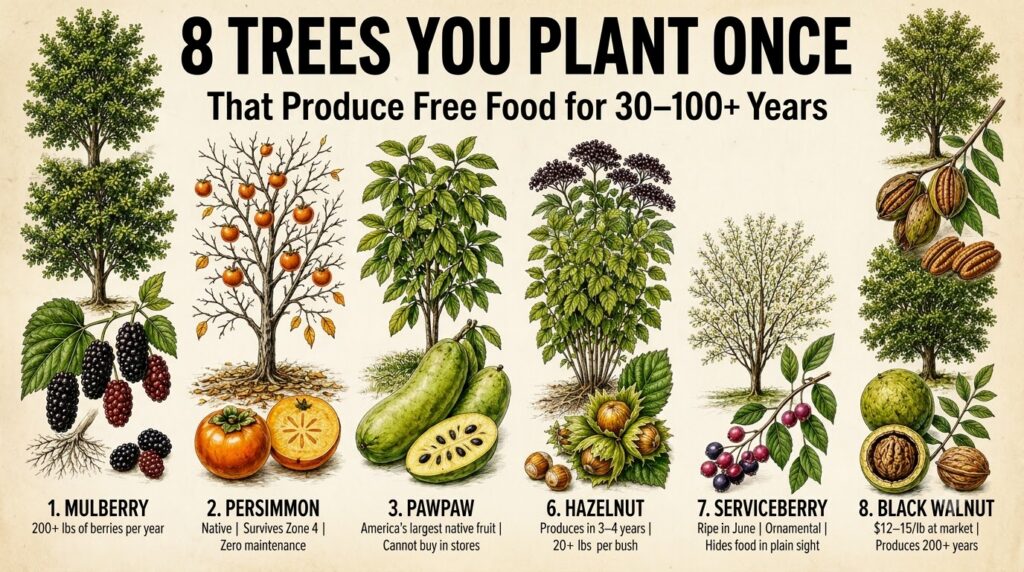
Mulberry (Morus spp.)
Mulberries are fast-growing, resilient, and incredibly productive. They offer a bounty of sweet berries, perfect for fresh eating, jams, pies, or dried snacks. They’re also relatively low-maintenance once established.
Persimmon (Diospyros spp.)
Known for their unique, sweet fruit that ripens in the fall, persimmon trees are also beautiful ornamental trees. They are generally pest-resistant and can be quite long-lived.
Pawpaw (Asimina triloba)
America’s largest native edible fruit, pawpaws offer a tropical-like flavor often compared to mango or banana. They are understory trees, meaning they can tolerate some shade, and are surprisingly hardy.
Pecan (Carya illinoinensis)
If you have the space, a pecan tree is a true legacy plant. These majestic trees can live for centuries, providing delicious, nutritious nuts for generations. Be patient, as they can take several years to start producing.
Elderberry (Sambucus canadensis)
More of a large shrub than a tree, elderberries are incredibly versatile. Their berries are packed with antioxidants and often used in syrups, jams, and wines. They are relatively easy to grow and adaptable to various conditions.
Hazelnut (Corylus americana)
Another excellent shrub-tree option, hazelnuts are cold-hardy and produce tasty nuts. They can be grown as a multi-stemmed shrub or trained into a small tree, providing valuable food and an attractive landscape element.
Serviceberry (Amelanchier spp.)
Also known as Juneberry or Saskatoon berry, serviceberries offer beautiful spring blossoms, delicious early summer fruit, and stunning fall foliage. They are a multi-season delight and quite adaptable.
Black Walnut (Juglans nigra)
A stately native tree known for its valuable timber and flavorful nuts. Be aware that black walnuts produce a chemical called juglone, which can inhibit the growth of some plants nearby. Plan your planting accordingly!
Care and Maintenance Tips
- Watering: Especially crucial during the first few years. Ensure consistent moisture, particularly during dry spells.
- Pruning: Regular pruning helps maintain tree health, shape, and encourages better fruit production. Research specific pruning needs for each tree type.
- Pest and Disease Management: Healthy trees are more resilient. Monitor for signs of pests or disease and address them promptly using organic methods where possible.
- Mulching: Apply a layer of organic mulch around the base of your trees to conserve moisture, suppress weeds, and enrich the soil.
Harvesting and Enjoying Your Bounty
The best part of growing food trees is enjoying the harvest! Most fruits and nuts will indicate ripeness through color, size, and ease of separation from the branch. Remember to enjoy some fresh, share with friends and family, and preserve any excess through canning, freezing, or drying.
Start Your Giving Garden Today!
Planting long-lasting food trees is a wonderful way to invest in your future, enhance your property, and connect with nature. With a little planning and care, you can create a thriving edible landscape that provides fresh, healthy food for years to come. What trees are you dreaming of adding to your backyard food forest?