Dreaming of a bountiful vegetable garden but short on space? Or perhaps you’re looking for an affordable, creative way to start your gardening journey? Look no further! The humble laundry basket, often used for clothes, is about to become your new best friend in the garden. This ingenious DIY method allows you to grow a variety of fresh vegetables right on your patio, balcony, or even a sunny corner of your yard.
At Garden – L. Quyên, we love sharing simple, effective, and inspiring gardening hacks, and this one truly delivers. Get ready to transform everyday items into thriving green spaces and enjoy the satisfaction of harvesting your own homegrown produce!
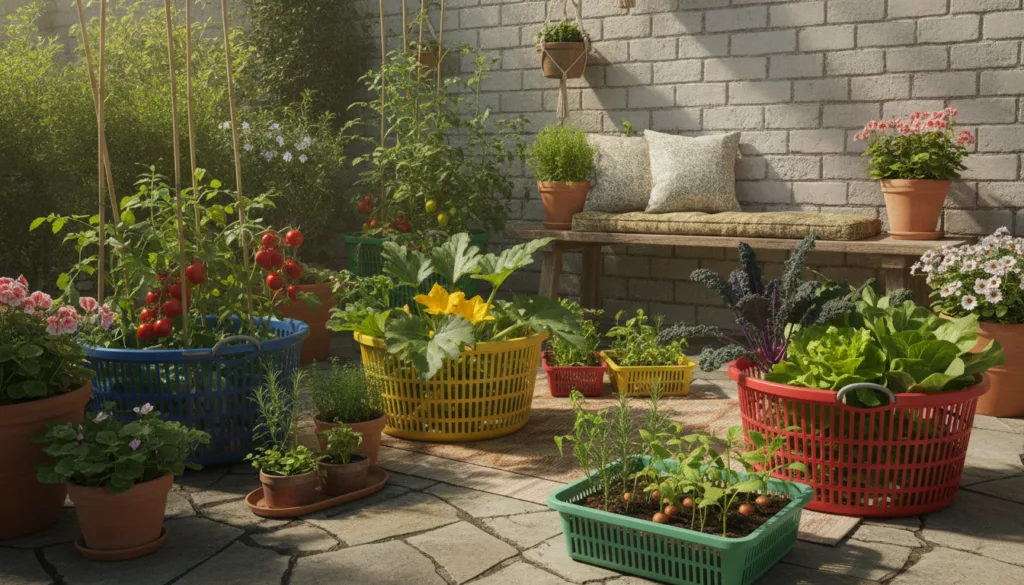 Your next garden might just be a collection of laundry baskets bursting with fresh produce!
Why Choose Laundry Baskets for Your Vegetable Garden?
Before we dive into the how-to, let’s explore why laundry baskets are such a fantastic choice for container gardening:
- Affordability: Many of us already have spare laundry baskets, making this a zero-cost or very low-cost gardening solution. Even buying new ones is often cheaper than traditional planters.
- Excellent Drainage: The numerous holes in laundry baskets are a huge advantage. They prevent waterlogging, which is a common killer of container plants, ensuring your plant roots can breathe.
- Portability: Want to move your plants to catch more sun, protect them from a sudden storm, or even rearrange your patio? Laundry baskets are lightweight and easy to relocate.
- Versatility: They come in various sizes and shapes, allowing you to accommodate different types of plants.
- Space-Saving: Perfect for small patios, balconies, urban gardens, or anyone with limited ground space.
Choosing and Preparing Your Laundry Baskets
Selecting the Right Baskets
- Material: Opt for sturdy plastic laundry baskets. They are durable, weather-resistant, and won’t break down quickly. Avoid wicker or fabric baskets unless you plan to line them very thoroughly, as they will degrade faster and soil will escape.
- Size: Consider the mature size of the plants you want to grow. Deeper baskets are better for root vegetables like carrots or larger plants like tomatoes, while shallower ones are fine for leafy greens.
- Drainage Holes: Ensure the basket has plenty of holes for drainage. If a basket has very few, you can carefully drill a few more on the bottom and sides (about 1/2 inch in diameter) for optimal water flow.
Preparing Your Baskets
- Cleanliness is Key: Give your baskets a good wash with soap and water, especially if they’ve been used for laundry. Rinse thoroughly.
- Lining (Optional but Recommended): While laundry baskets have great drainage, the holes can be a bit large, allowing soil to escape. To prevent this, you have a few options:
- Landscape Fabric: Line the inside of the basket with a piece of landscape fabric. This allows water to pass through but keeps the soil contained. Cut it to fit the bottom and sides, leaving some overhang.
- Burlap: Similar to landscape fabric, burlap is natural and breathable.
- Newspaper/Cardboard: For a temporary solution, a few layers of newspaper or a piece of cardboard at the bottom can work, though they will break down over time.
- The goal is to retain soil while still allowing excellent drainage.
- Fill with Quality Potting Mix: Do NOT use garden soil directly, as it compacts easily in containers and can harbor pests and diseases. Use a good quality, lightweight potting mix that is specifically designed for containers. This provides excellent aeration and drainage for your plants.
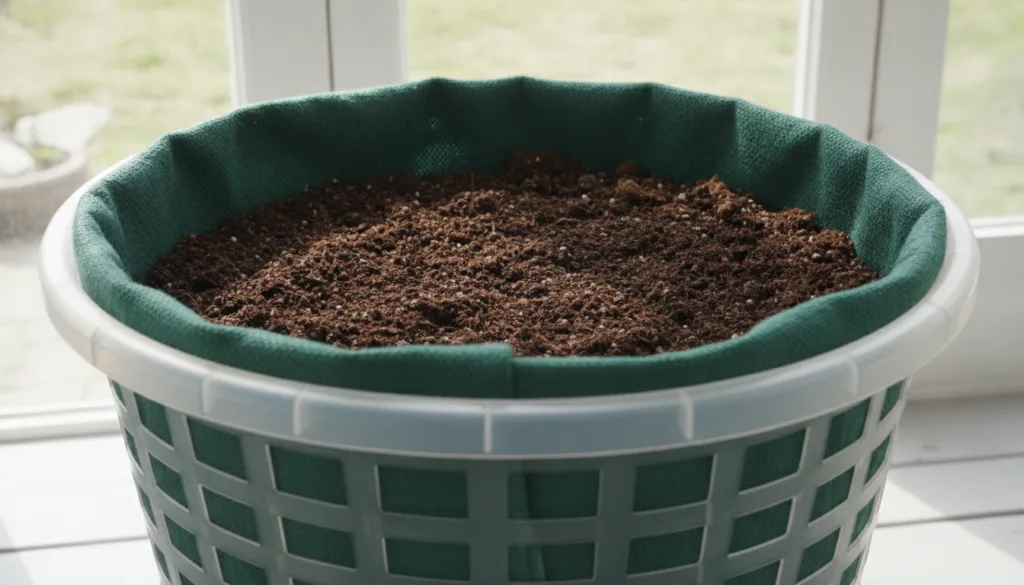 Lining your baskets helps keep the soil in place while still allowing excess water to drain freely.
What Vegetables Grow Best in Laundry Baskets?
Many popular vegetables thrive in containers, making them perfect candidates for your laundry basket garden:
- Leafy Greens: Lettuce, spinach, kale, Swiss chard, arugula. These are shallow-rooted and excellent for continuous harvesting.
- Herbs: Basil, mint, parsley, cilantro, chives. Grow them individually or combine complementary herbs.
- Radishes & Carrots: Choose shorter, stubbier varieties for carrots (e.g., ‘Paris Market’ or ‘Danvers Half Long’) to ensure they have enough room to grow downwards.
- Bush Beans: Unlike pole beans, bush beans don’t need extensive trellising and are very productive in containers.
- Peppers: Bell peppers and chili peppers do well in containers.
- Eggplant: Many varieties are well-suited for container growing.
- Strawberries: A fantastic choice for a sweet treat from your DIY garden.
- Smaller Tomatoes: Cherry tomatoes, determinate (bush) varieties, or dwarf tomato plants are ideal. Indeterminate (vining) tomatoes will require very large baskets and substantial support.
Planting Your Laundry Basket Garden: Step-by-Step
- Choose Your Plants: Decide what you want to grow, keeping in mind the size of your baskets and the space each plant needs.
- Fill with Potting Mix: Fill your prepared basket with potting mix, leaving about an inch or two from the rim. This gap (known as the “headspace”) prevents soil from washing out when you water.
- Plant Your Seeds or Seedlings: Follow the instructions on your seed packets or seedling tags for planting depth and spacing. Gently firm the soil around your plants.
- Water Thoroughly: Water immediately after planting until water drains freely from the bottom of the basket.
- Mulch (Optional but Beneficial): Add a layer of mulch (like straw, wood chips, or shredded leaves) on top of the soil. This helps retain moisture, regulate soil temperature, and suppress weeds.
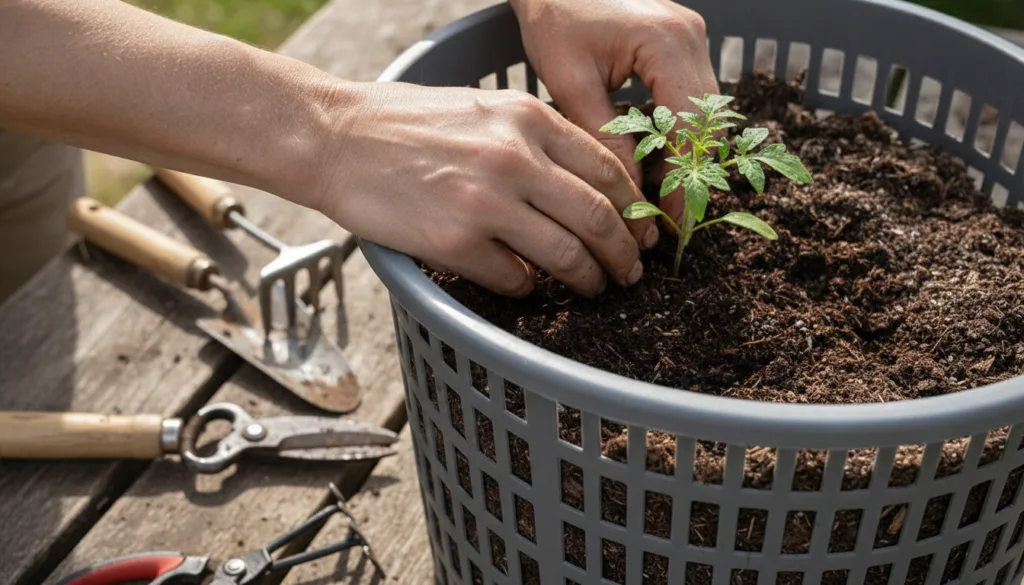 Give your young plants the best start by planting them carefully in good quality potting mix.
Care and Maintenance for a Thriving Harvest
Watering
Container gardens dry out faster than in-ground gardens. Check your baskets daily, especially during warm weather. Water when the top inch of soil feels dry to the touch. Water deeply until you see water draining from the bottom.
Fertilizing
Potting mix often contains some nutrients, but they deplete over time. Begin fertilizing about 2-4 weeks after planting. Use a balanced liquid fertilizer formulated for vegetables, following the product instructions. Organic options like compost tea or fish emulsion are also great choices.
Pest and Disease Management
Regularly inspect your plants for any signs of pests or diseases. Catching issues early is key. Many common pests can be managed with organic solutions like neem oil spray or by simply hand-picking them off your plants.
Support
Some plants, like peppers or smaller tomatoes, may still benefit from a small stake or cage to support their growth as they get larger and heavier with fruit.
Harvesting Your Bounty
The best part of growing your own garden is the harvest! Research the specific harvesting times and methods for each vegetable you’re growing. For leafy greens, you can often do a “cut-and-come-again” harvest, picking outer leaves and allowing the plant to continue producing.
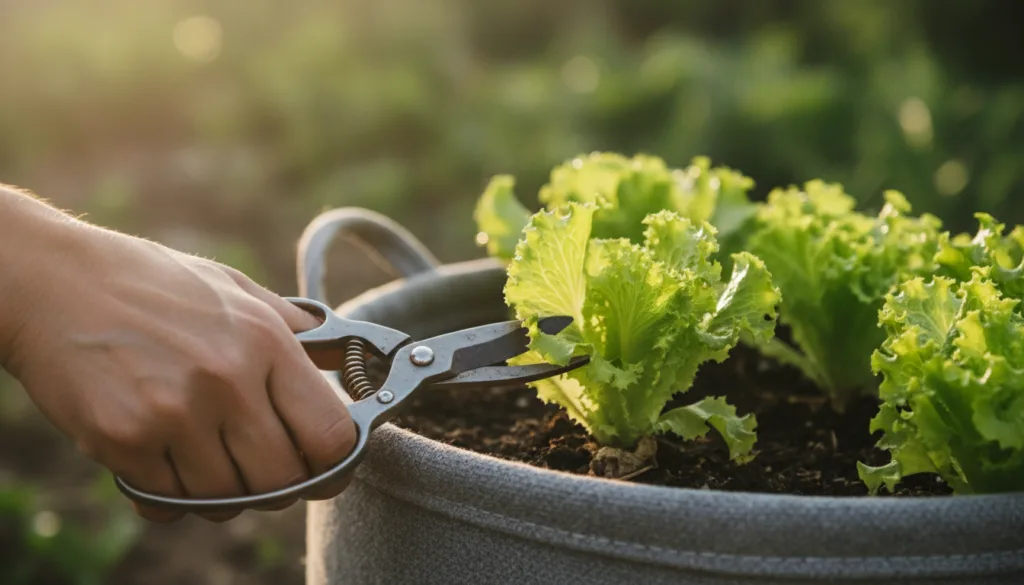 The rewarding moment: fresh, homegrown produce ready for your kitchen!
Tips for Success
- Sunlight is Crucial: Most vegetables need at least 6-8 hours of direct sunlight per day. Choose the sunniest spot available for your laundry basket garden.
- Don’t Overcrowd: Give your plants enough space to grow. Overcrowding leads to poor air circulation and smaller yields.
- Repurpose & Reuse: After your growing season, you can empty the baskets, clean them, and store them for next year. Consider adding the spent potting mix to your compost pile.
- Experiment: Don’t be afraid to try different vegetables and basket sizes. Gardening is a continuous learning process!
Start Your Laundry Basket Garden Today!
Growing your own vegetables in laundry baskets is an incredibly satisfying and accessible way to embrace gardening, no matter your space limitations. It’s a fantastic project for beginners, budget-conscious gardeners, and anyone looking to add fresh, homegrown flavor to their meals.
Are you ready to turn those forgotten baskets into a vibrant home harvest? Give it a try, and share your journey with us at Garden – L. Quyên! Happy planting!