Are you looking to boost your garden’s yield, naturally deter pests, and make the most of your gardening space? Whether you’re an urban gardener with a small balcony or simply love the flexibility of container gardening, companion planting in grow bags is a game-changer! At Garden – L. Quyên, we believe in smart, sustainable, and joyful gardening, and this technique perfectly embodies that spirit.
Grow bags are fantastic for their versatility, portability, and excellent drainage, but did you know you can unlock even greater potential by planting compatible plants together? Let’s dive into how this ancient practice can transform your grow bag garden into a thriving ecosystem.
What is Companion Planting?
Companion planting is the practice of growing different plants together for mutual benefit. It’s like building a friendly neighborhood in your garden where plants help each other out! These benefits can range from attracting beneficial insects and deterring pests to improving soil health, enhancing growth, and even boosting flavor.
Why Companion Plant in Grow Bags?
Grow bags offer a unique advantage for companion planting, especially when space is limited. Here’s why it’s a brilliant strategy for your fabric containers:
- Space Efficiency: Grow bags can be compact, and companion planting allows you to maximize every inch by utilizing different growth habits (e.g., tall plants with ground cover).
- Targeted Pest Control: You can create mini-ecosystems in each bag to address specific pest issues, reducing the need for chemical interventions.
- Nutrient Optimization: Certain plant pairs can help each other access nutrients more efficiently, leading to healthier growth in a confined space.
- Increased Yields: By creating ideal growing conditions and protecting plants, you can often achieve a more abundant harvest from each bag.
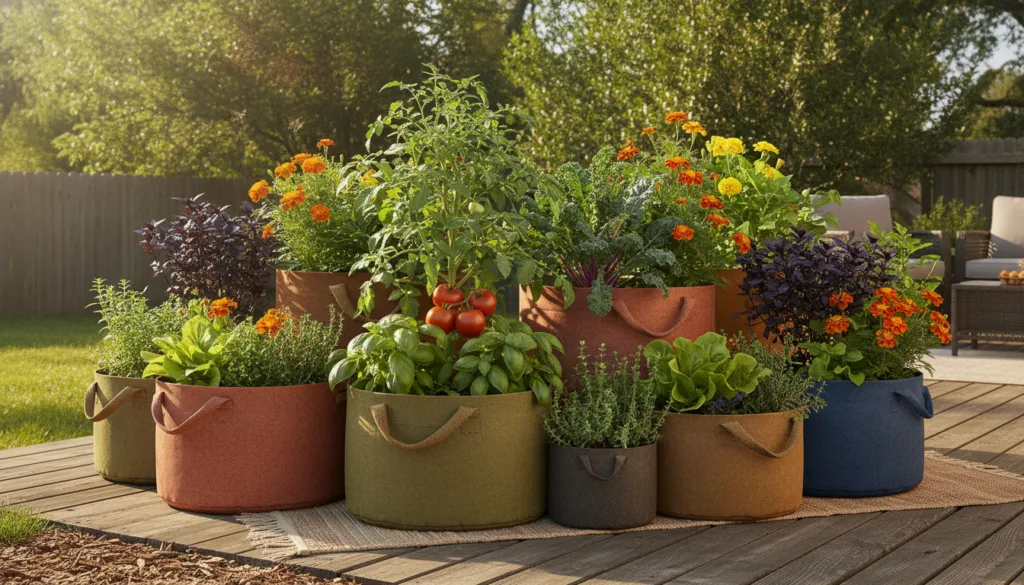 Create a thriving mini-ecosystem in your grow bags with smart companion planting!
Effective Companion Plant Pairs for Grow Bags
Here are some of our favorite combinations that work wonderfully in grow bags:
1. Tomatoes & Basil/Marigolds
- Basil: Believed to improve the flavor of tomatoes and repel tomato hornworms and flies. Plant one tomato plant and a few basil plants in a large grow bag.
- Marigolds: Known to deter nematodes and other harmful soil pests. Plant dwarf marigold varieties around your tomato plant.
2. Cucumbers & Radishes/Nasturtiums
- Radishes: Quick-growing and help break up the soil, improving aeration for cucumber roots. Harvest them before cucumbers get too large.
- Nasturtiums: Act as a trap crop for aphids, drawing them away from your cucumbers. Their vibrant flowers are also edible!
3. Lettuce & Chives/Mint (in separate pots)
- Chives: Can deter aphids and improve the vigor of lettuce.
- Mint: While a great pest deterrent, mint is highly invasive. Grow it in its own small grow bag right next to your lettuce bag to keep it contained while still benefiting from its presence.
4. Peppers & Carrots/Onions
- Carrots: Grow well in the slightly shaded lower layer provided by pepper plants, keeping the soil cool.
- Onions/Garlic: Their strong scent can deter a wide range of pests that bother peppers.
5. Bush Beans & Marigolds/Rosemary
- Marigolds: Again, great for deterring nematodes and other soil pests.
- Rosemary: Repels bean beetles and carrot rust flies, adding a pleasant aroma to your grow bag garden.
Tips for Successful Companion Planting in Grow Bags
To ensure your grow bag companions thrive, keep these tips in mind:
- Choose the Right Grow Bag Size: Ensure the bag is large enough to accommodate all plants without overcrowding their root systems. For tomatoes and their companions, a 15-20 gallon bag is ideal.
- Provide Ample Nutrients: With multiple plants drawing from the same soil, consistent feeding with organic fertilizers or compost tea is crucial.
- Monitor Watering: Different plants have varying water needs. Group plants with similar requirements together, and check soil moisture regularly, as grow bags can dry out faster.
- Ensure Adequate Sunlight: Pay attention to the light requirements of all plants in the bag. Taller plants shouldn’t completely shade out shorter companions unless they thrive in partial shade.
- Observe and Adjust: Every garden is unique. Watch how your plants interact and adjust combinations as needed. Gardening is an ongoing learning process!
Common Mistakes to Avoid
- Incompatible Pairs: Some plants actually hinder each other’s growth (e.g., beans and onions/garlic, or fennel with almost anything). Always research before pairing!
- Overcrowding: Even compatible plants need space to breathe and grow. Don’t stuff too many plants into one bag.
- Ignoring Individual Needs: While companion planting helps, remember that each plant still has specific requirements for light, water, and nutrients.
Start Your Grow Bag Companion Garden Today!
Companion planting in grow bags is a simple yet powerful way to enhance your gardening experience. It promotes natural balance, reduces pest issues, and can lead to healthier, more bountiful harvests – all within the flexible confines of your grow bags. Experiment with these combinations and discover the joy of a truly integrated garden.
Happy planting from Garden – L. Quyên!