Every passionate gardener dreams of a thriving harvest, overflowing with fresh, vibrant vegetables. But have you ever wondered why some plants flourish in one spot while struggling in another, even with the same care? The secret often lies beneath the surface: in the soil!
Understanding your soil type is like having a superpower for your garden. It dictates water retention, nutrient availability, and root growth, directly impacting the health and yield of your plants. Let’s dig in and uncover how to match the perfect soil with your favorite vegetables to unlock your garden’s full potential.
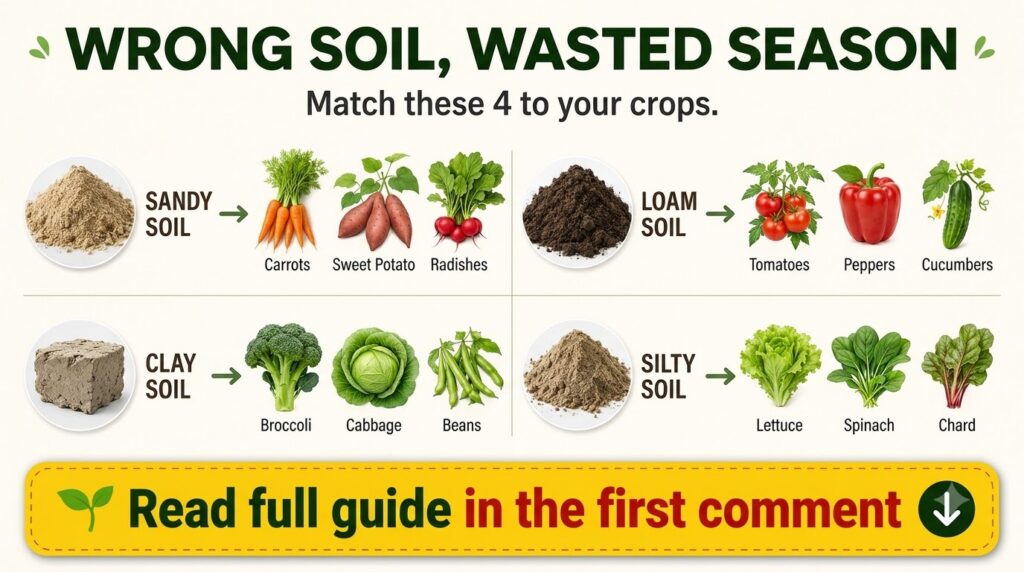
Why Soil Type Matters So Much
Soil isn’t just dirt; it’s a complex ecosystem. It provides physical support, stores water, supplies essential nutrients, and facilitates aeration crucial for root respiration. Different soil types have varying compositions of sand, silt, and clay particles, which in turn determine their:
- Drainage: How quickly water moves through the soil.
- Water Retention: How much water the soil can hold for plants.
- Nutrient Retention: Ability to hold onto vital plant nutrients.
- Aeration: The amount of air available to plant roots.
- Texture: How it feels and how easily roots can penetrate it.
Matching your plants to the right soil type ensures they get the specific conditions they need to grow strong and healthy.
The Main Soil Types and Their Vegetable Companions
1. Sandy Soil
Characteristics: Sandy soil has large particles, making it loose and well-draining. It warms up quickly in spring but struggles to retain water and nutrients. It feels gritty to the touch.
- Advantages: Easy to work with, good for root crops, warms up fast.
- Disadvantages: Low water and nutrient retention, can be infertile.
Vegetables that Thrive: Root vegetables love sandy soil because their roots can easily push through it.
- Carrots: They need loose soil to grow long and straight.
- Potatoes: Prefer well-draining soil to prevent rot.
- Radishes: Quick growers that benefit from easy root penetration.
- Also consider: Asparagus, Lettuce, Corn.
2. Clay Soil
Characteristics: Composed of very fine particles, clay soil is dense and retains water and nutrients exceptionally well. However, it can become compacted, leading to poor drainage and aeration when wet, and hard and cracked when dry. It feels sticky when wet and clumpy when dry.
- Advantages: High nutrient and water retention.
- Disadvantages: Poor drainage, slow to warm up, can be hard to work with, susceptible to compaction.
Vegetables that Thrive: Plants that need consistent moisture and plenty of nutrients often do well in clay, provided it’s amended for better drainage.
- Broccoli: Benefits from clay’s high nutrient content.
- Cabbage: A heavy feeder that appreciates nutrient-rich clay.
- Peas: Can tolerate heavier soils and appreciate moisture.
- Also consider: Brussels Sprouts, Kale, Beans.
3. Loam Soil
Characteristics: Often called the