Welcome, fellow garden enthusiasts! Are you dreaming of a lush, productive vegetable patch overflowing with healthy, delicious produce? A common challenge many gardeners face is understanding the magic behind proper plant spacing. It might seem like a small detail, but getting it right is one of the most crucial steps to cultivating a thriving garden. Too close, and your plants will struggle; too far, and you’re wasting valuable garden space. Let’s dig in!
Proper spacing isn’t just about giving each plant room to grow. It’s about ensuring adequate air circulation to prevent diseases, allowing roots to spread freely for nutrient uptake, and giving leaves ample sunlight for photosynthesis. This guide will walk you through the essential spacing requirements for some of the most popular vegetables, helping you achieve your best harvest yet!
Why Proper Plant Spacing Matters So Much
Imagine living in a crowded room with barely enough space to move. You’d feel stifled, right? Plants feel the same way! When plants are too close together, they:
- Compete for Resources: They fight for sunlight, water, and essential nutrients in the soil. The weaker plants will suffer, leading to stunted growth and smaller yields.
- Increase Disease Risk: Densely packed foliage reduces air circulation, creating a humid environment that’s perfect for fungal diseases to thrive.
- Attract Pests: Pests find it easier to spread from plant to plant in a dense canopy, and it’s harder for beneficial insects or your own eyes to spot them.
- Hinder Harvesting: Reaching into a tangled mess to harvest your vegetables can be difficult and even damage neighboring plants.
On the flip side, planting too far apart wastes precious garden real estate. The goal is to find that sweet spot – the ideal distance that allows each plant to flourish.
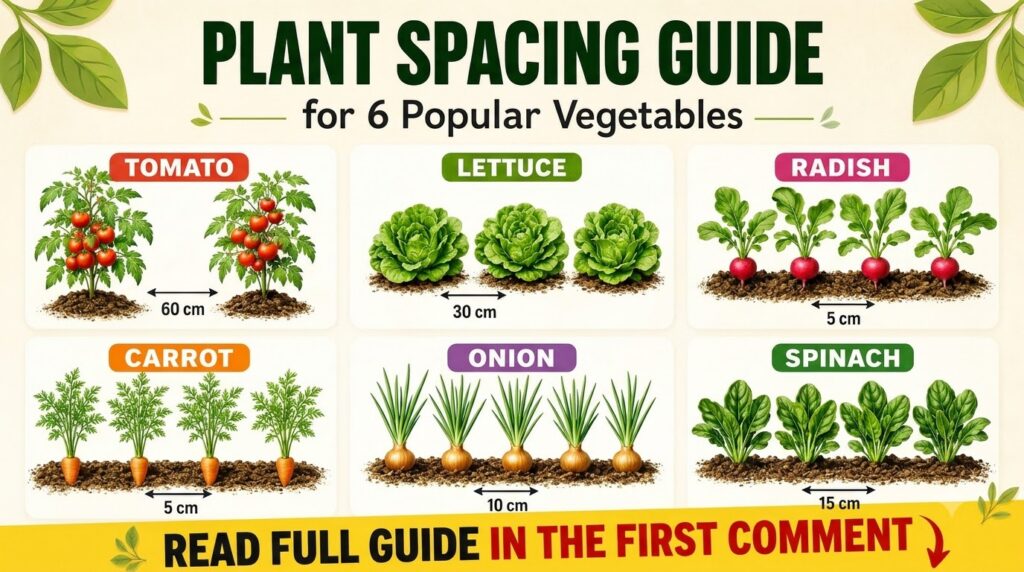
Essential Spacing for 6 Popular Vegetables
Let’s look at the spacing recommendations for some garden favorites:
1. Tomatoes (Solanum lycopersicum)
Tomatoes are heavy feeders and love their space. Proper spacing ensures good air circulation, which is vital for preventing common issues like blight and powdery mildew.
- Recommended Spacing: 24-36 inches (60-90 cm) apart for indeterminate varieties, 18-24 inches (45-60 cm) for determinate varieties.
- Why it matters: Prevents disease spread, allows ample sunlight penetration, and supports strong root systems for fruit production.
2. Lettuce (Lactuca sativa)
Whether you’re growing loose leaf or head lettuce, giving these greens room will result in bigger, healthier leaves and better head formation.
- Recommended Spacing: 6-12 inches (15-30 cm) apart for head lettuce; 4-6 inches (10-15 cm) for loose leaf (or harvest outer leaves as needed).
- Why it matters: Promotes good air flow to prevent fungal diseases and allows leaves to grow full and tender without bruising each other.
3. Carrots (Daucus carota)
Carrots need space to develop long, straight roots. Crowding can lead to stunted, twisted, or forked carrots.
- Recommended Spacing: 2-3 inches (5-7.5 cm) apart after thinning, with rows 12-18 inches (30-45 cm) apart.
- Why it matters: Ensures roots have enough room to grow uniformly and deeply, preventing misshapen vegetables.
4. Radishes (Raphanus sativus)
Radishes are quick growers, and thinning is crucial for those crisp, round roots. Don’t skip this step!
- Recommended Spacing: 1-2 inches (2.5-5 cm) apart after thinning, with rows 10-12 inches (25-30 cm) apart.
- Why it matters: Allows the root bulb to swell without being constricted by neighbors, leading to better flavor and texture.
5. Onions (Allium cepa)
Similar to carrots and radishes, onions need adequate space to form large, well-developed bulbs. Both direct-sown seeds and sets benefit from proper spacing.
- Recommended Spacing: 4-6 inches (10-15 cm) apart for large bulbs, with rows 12-18 inches (30-45 cm) apart.
- Why it matters: Critical for bulb enlargement and preventing disease in damp conditions.
6. Spinach (Spinacia oleracea)
Spinach is another leafy green that benefits from generous spacing, especially if you plan on harvesting larger leaves.
- Recommended Spacing: 3-6 inches (7.5-15 cm) apart, with rows 12-18 inches (30-45 cm) apart.
- Why it matters: Allows for good air circulation to reduce bolting (going to seed) and provides space for healthy leaf development.
General Tips for Optimal Plant Spacing
While specific recommendations are helpful, here are some overarching principles to keep in mind:
- Read Seed Packets: Always check your seed packets or plant tags! They provide the most accurate spacing information for that particular variety.
- Consider Mature Size: When spacing, think about the plant’s full grown size, not just its seedling stage.
- Know Your Climate: In very humid climates, slightly wider spacing might be beneficial to further improve air circulation.
- Thinning is Key: Don’t be afraid to thin out seedlings! It can feel counterintuitive to remove healthy plants, but it’s essential for the survival and productivity of the remaining ones.
- Intensive Planting: For smaller spaces, consider square foot gardening or other intensive planting methods, which have their own specific spacing guidelines designed to maximize yield in a small area while still giving plants enough room.
Cultivate Your Best Garden Yet!
Mastering plant spacing is a foundational skill for any gardener. By giving your vegetables the room they need to breathe, spread their roots, and soak up the sun, you’re setting them up for success. You’ll reduce disease, deter pests, and ultimately enjoy a more abundant, healthier harvest. So grab your gardening tools, plan your layout, and get ready to watch your garden flourish!
Happy gardening!