Are you dreaming of a bountiful harvest but limited by a small backyard, a tiny balcony, or even just a sunny wall? It’s time to unlock your garden’s full potential with vertical gardening! This innovative approach allows you to grow more food and flowers in less space by utilizing vertical dimensions. Say goodbye to sprawling rows and hello to towering harvests!
What is Vertical Gardening?
Vertical gardening is exactly what it sounds like: growing plants upwards rather than outwards. Instead of planting in traditional ground beds, you use structures like trellises, stacked planters, wall-mounted pockets, or hanging containers to create a multi-level growing space. It’s a fantastic solution for urban gardeners, small space dwellers, or anyone looking to add a unique aesthetic to their landscape.
Benefits of Going Vertical
-
Maximize Space
This is the most obvious benefit. Vertical gardens allow you to grow a surprising amount of produce in a footprint no larger than a small patio or balcony.
-
Reduce Pests and Diseases
Many ground-dwelling pests find it harder to reach elevated plants. Improved air circulation around plants can also help prevent fungal diseases.
-
Easier Harvesting and Maintenance
No more bending over! With plants at eye level, weeding, watering, and harvesting become much more comfortable, making gardening accessible for everyone.
-
Stunning Aesthetics
Transform a drab wall or fence into a living work of art. Vertical gardens add greenery, beauty, and a unique focal point to any area.
-
Water Efficiency
Many vertical systems allow water to trickle down through multiple layers, reducing evaporation and conserving water.
Designing Your DIY Vertical Garden for Bountiful Harvests
Creating your own vertical garden is a rewarding DIY project. Here’s how to plan for a home harvest:
1. Choose Your Structure
There are many options, depending on your space and budget:
- Stacked Planters: Terraced pots that sit one on top of another, great for strawberries, herbs, and leafy greens.
- Wall-Mounted Pockets/Planters: Fabric or plastic pockets affixed to a wall, perfect for herbs and smaller vegetables.
- Pallet Gardens: Repurposed wooden pallets can be stood upright and filled with soil to create multiple planting levels.
- Trellises and Arbors: Excellent for climbing plants like cucumbers, pole beans, tomatoes, and melons.
- Hydroponic Systems: More advanced, these use water-based nutrient solutions instead of soil, often in vertical towers.
2. Select the Right Location
Most vegetables need at least 6-8 hours of direct sunlight per day. Choose a spot on your balcony, patio, or yard that receives ample sun. Consider proximity to a water source for easy watering.
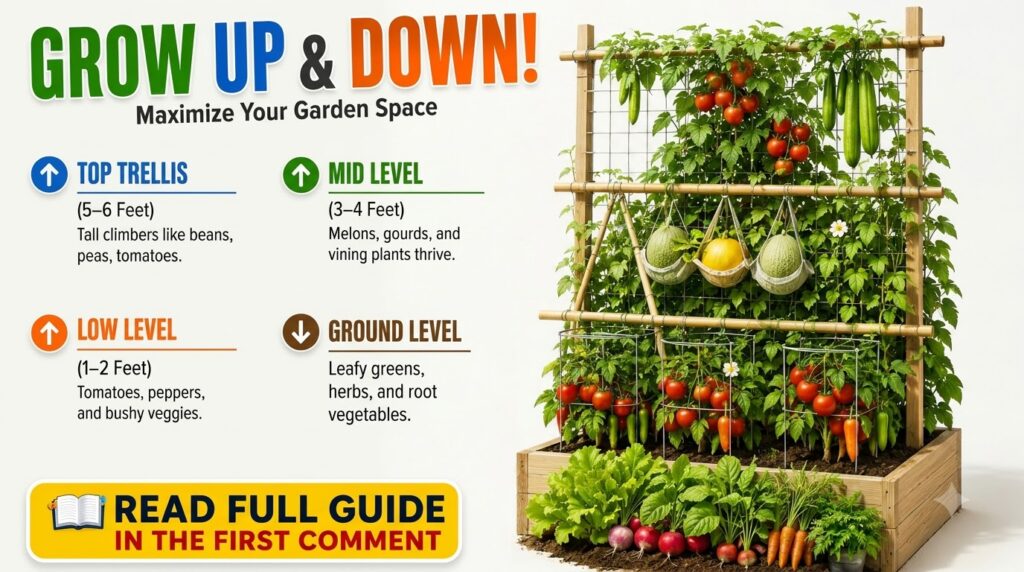
3. Pick Your Plants Wisely (Layer by Layer!)
Not all plants are suited for vertical gardening, but many thrive. Think about how plants grow and their light requirements. Here’s a guide inspired by multi-level designs:
Top Trellis/Upper Levels
These spots get the most sun and are ideal for plants that love to climb or trail:
- Cucumbers: Vining varieties will happily climb a trellis.
- Tomatoes: Indeterminate (vining) varieties, especially cherry or grape tomatoes, do well with strong support.
- Melons: Smaller melon varieties can be grown vertically if given sturdy support for the fruit (e.g., slings).
- Pole Beans: Quick growers that love to climb.
- Peas: Another excellent climbing option.
Mid-Level Sections
These areas still get good light but might be slightly more sheltered, suitable for a wide range of plants:
- Peppers: Bell peppers and chili peppers thrive in containers.
- Strawberries: Perfect for stacked planters, allowing runners to dangle.
- Lettuce & Leafy Greens: Many varieties do well in pockets or shallow planters.
- Herbs: Basil, mint, parsley, cilantro, thyme, and rosemary are excellent choices.
- Bush Beans: Compact and productive.
Low Level/Ground Level
These spots might receive less direct sun and are suitable for plants that prefer a bit more shade or are root vegetables grown in deeper containers:
- Radishes: Quick-growing root vegetables that don’t need deep soil.
- Carrots: Choose smaller, shorter varieties for containers, ensuring the container is deep enough.
- Spinach: Tolerates some shade and grows well in shallow planters.
- Swiss Chard: A leafy green that can handle varying light conditions.
- Marigolds & Nasturtiums: Companion plants that add beauty and can deter pests.
4. Soil and Watering
Use a good quality potting mix that drains well. Vertical gardens can dry out faster than ground beds, so regular watering is crucial. Consider drip irrigation or self-watering systems for efficiency.
5. Support and Maintenance
For climbing plants, ensure your trellises or supports are strong. Fertilize regularly, as nutrients can leach out faster in containers. Keep an eye out for pests and address them organically if they appear.
Start Your Vertical Gardening Journey Today!
Vertical gardening is a creative and efficient way to grow fresh produce, herbs, and beautiful flowers, regardless of your space constraints. It’s an empowering way to embrace the joy of gardening and enjoy a ‘home harvest’ right at your fingertips. So, gather your materials, pick your favorite plants, and start building your upward-bound garden today!