Most people reach for rosemary to flavor their favorite dishes, completely overlooking a potent secret hiding in its fragrant leaves. This isn’t just a culinary herb; it’s a botanical powerhouse that many herbalists swear by for stronger, healthier, and more vibrant hair. If you’ve been struggling with thinning, lackluster strands, or an itchy scalp, the answer might be simpler and closer than you think – right in your herb garden or spice cabinet.
For centuries, various cultures have intuitively used rosemary for its stimulating properties. However, modern scientific interest has focused on its potential to improve scalp circulation and promote hair vitality. It’s not about magical promises, but rather consistent application of natural preparations that can make a noticeable difference in your hair’s overall health and appearance. Here’s how to harness this incredible herb for your hair, moving beyond general advice to practical, actionable steps.

What Rosemary Does for Your Hair
Rosemary (Rosmarinus officinalis) is rich in antioxidants and anti-inflammatory compounds. When applied topically, it is believed to stimulate blood circulation in the scalp, which in turn helps deliver essential nutrients to hair follicles. This enhanced blood flow can contribute to stronger hair roots, potentially leading to reduced hair loss and encouraging new growth. It also possesses antimicrobial properties, which can help maintain a healthy, balanced scalp environment, addressing issues like dandruff and itchiness. There are two primary ways to utilize rosemary for hair: as a stimulating hair rinse or as a nourishing infused oil.
Quick Tip: Fresh vs. Dried Rosemary
Both fresh and dried rosemary can be effective for hair preparations. Fresh rosemary typically offers a more potent aroma and perhaps a slightly higher concentration of volatile compounds. However, dried rosemary is more readily available year-round and can be just as beneficial, especially when simmered or infused properly. When using dried, ensure it’s high-quality and free from additives.
Rosemary Hair Rinse: Ingredients and Formula
This simple preparation is excellent for daily or every-other-day use, invigorating the scalp and adding shine to your strands without weighing them down.
Ingredients
- 4 cups (approximately 1 liter) filtered water
- 1/4 cup fresh rosemary leaves (about 4-5 sprigs) OR 2 tablespoons dried rosemary
Approximate Measurements
The ratio of rosemary to water is flexible, but starting with 1/4 cup fresh or 2 tablespoons dried per liter of water provides a good concentration without being overly strong.
Formula / Recipe: Rosemary Hair Rinse
- Combine water and rosemary: In a medium saucepan, bring the filtered water to a boil.
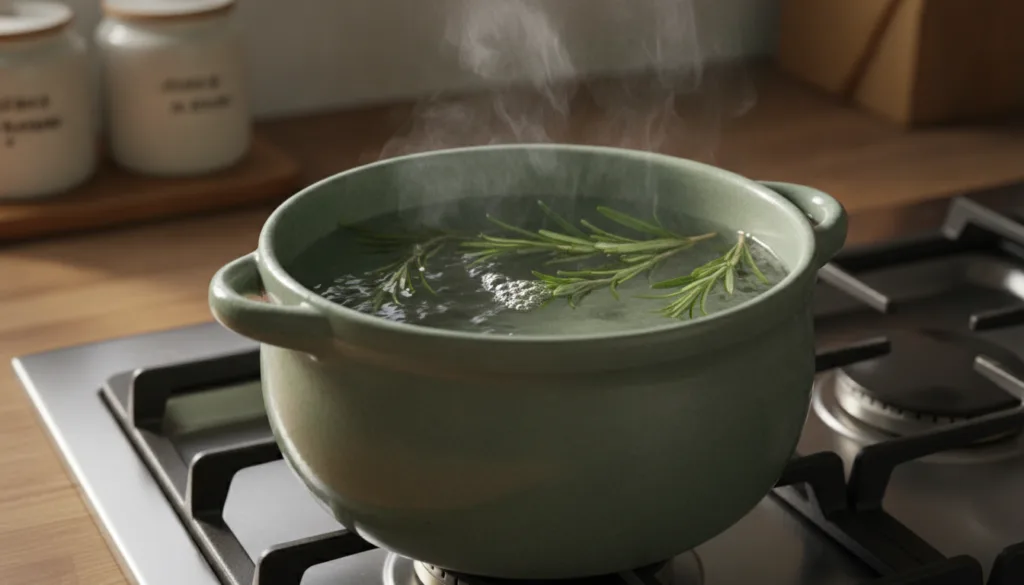
- Simmer: Once boiling, add the fresh or dried rosemary. Reduce the heat to low, cover the pot, and let it simmer gently for 15-20 minutes. This allows the beneficial compounds to extract into the water.
- Cool: Remove the pot from the heat and let the mixture cool completely to room temperature. Keeping it covered during cooling helps trap the aromatic compounds.
- Strain: Once cool, strain the liquid through a fine-mesh sieve or cheesecloth into a clean bottle or jar, discarding the rosemary leaves.
Rosemary Infused Oil: Ingredients and Formula
For a more intensive treatment that deeply nourishes the scalp and hair, an infused oil is ideal. This is also a good option if you want to make a larger batch for longer-term use.
Ingredients
- 1/2 cup fresh rosemary leaves (about 8-10 sprigs, roughly chopped) OR 1/4 cup dried rosemary
- 1 cup carrier oil (such as jojoba oil, olive oil, grapeseed oil, or almond oil)
Approximate Measurements
The 1:2 ratio of rosemary to carrier oil ensures a potent infusion. Jojoba oil is particularly good as it closely resembles the scalp’s natural sebum.
Formula / Recipe: Rosemary Infused Oil (Slow Infusion Method)
- Prepare rosemary: If using fresh rosemary, ensure it is completely dry to prevent mold. Roughly chop the leaves to expose more surface area.
- Combine: Place the rosemary in a clean, dry glass jar. Pour the carrier oil over the rosemary, ensuring the herb is fully submerged.
- Infuse: Seal the jar tightly. Place it in a cool, dark place for 2-4 weeks. Gently shake the jar every few days to encourage infusion.
- Strain: After the infusion period, strain the oil through a fine-mesh sieve lined with cheesecloth into a clean, dark glass bottle. Squeeze the rosemary to extract all the oil. Discard the spent herb.
Formula / Recipe: Rosemary Infused Oil (Quick Heat Infusion Method)
- Combine: Place the rosemary and carrier oil in a heat-safe jar or a small saucepan.
- Gentle Heat: Create a double boiler by placing the jar in a pot of water, or put the saucepan directly on very low heat. Heat gently for 2-3 hours. The oil should be warm, not hot or simmering.
- Cool and Strain: Let the oil cool completely, then strain as described in the slow infusion method.
How to Use Rosemary Preparations
Rosemary Hair Rinse
- After shampooing and conditioning, pour the cooled rosemary rinse over your scalp and hair.
- Gently massage your scalp for a few minutes to stimulate circulation.
- Do not rinse it out. Leave it in to let the beneficial compounds work their magic.
- Style your hair as usual.
Rosemary Infused Oil
- Pre-shampoo treatment: Section your dry hair and apply the oil directly to your scalp. Massage gently for 5-10 minutes.
- Work any remaining oil through the lengths of your hair.
- Leave it on for at least 30 minutes, or even overnight for a deeper treatment.
- Wash your hair as usual with shampoo and conditioner. You might need two shampoos to remove all the oil.
How Often to Use
- Rosemary Hair Rinse: Can be used 2-3 times per week, or even after every wash if your hair doesn’t feel weighed down. Consistency is key for results.
- Rosemary Infused Oil: Use 1-2 times per week as a pre-shampoo treatment.
How to Buy / How to Choose Ingredients
- Rosemary: Look for organic fresh sprigs or high-quality dried rosemary from a reputable herbal supplier. Avoid any rosemary that has been sprayed with pesticides.
- Filtered Water: Using filtered water for the rinse can prevent mineral buildup on your hair.
- Carrier Oils: Choose cold-pressed, unrefined carrier oils like organic jojoba, olive, or grapeseed oil. These retain more of their natural nutrients.
Storage
- Rosemary Hair Rinse: Store the strained rinse in a clean, airtight bottle in the refrigerator for up to 1-2 weeks. Discard if it develops any unusual smell or cloudiness.
- Rosemary Infused Oil: Store in a dark glass bottle in a cool, dark place (like a pantry) for 3-6 months. Keep it away from direct sunlight and extreme temperatures to preserve its potency.

Practical Tips for Best Results
- Be Consistent: Natural remedies take time. Use your chosen rosemary preparation regularly for at least 2-3 months before expecting to see significant results.
- Patch Test: Before applying any new product extensively, do a patch test on a small area of your skin to check for any allergic reactions or sensitivities.
- Gentle Massage: When applying the rinse or oil, take the time to gently massage your scalp. This not only helps distribute the product but also further stimulates blood flow.
- Clean Scalp: Ensure your scalp is clean before applying the oil or rinse to allow for better absorption of the beneficial compounds.
Common Mistakes to Avoid
- Using Essential Oil Undiluted: If using rosemary essential oil, always dilute it in a carrier oil (e.g., 2-3 drops per tablespoon of carrier oil). Applying essential oils directly to the scalp can cause irritation.
- Boiling the Rinse Too Vigorously or Too Long: Over-boiling can degrade some of the delicate compounds in rosemary. A gentle simmer for 15-20 minutes is sufficient.
- Not Straining Properly: Leaving herb particles in your rinse or oil can lead to spoilage or irritate the scalp. Ensure thorough straining.
- Skipping Patch Tests: Even natural ingredients can cause reactions. Always test a small area first.
- Using Pesticide-Sprayed Rosemary: Always opt for organic or home-grown rosemary to avoid introducing harmful chemicals to your scalp.
Rinse vs. Oil: A Quick Comparison
| Feature | Rosemary Hair Rinse | Rosemary Infused Oil |
|---|---|---|
| Preparation Method | Simmering leaves in water | Infusing leaves in carrier oil |
| Primary Benefit | Scalp stimulation, light conditioning, shine | Deep nourishment, follicle strengthening |
| Usage Frequency | 2-3 times per week (leave-in) | 1-2 times per week (pre-shampoo) |
| Hair Feel | Light, refreshing | Richer, more intensive |
| Storage Duration | 1-2 weeks (refrigerated) | 3-6 months (cool, dark place) |
Cautions / Who Should Avoid It
- Pregnancy and Breastfeeding: Consult with a healthcare professional before using rosemary products, especially concentrated forms like essential oil.
- Sensitive Skin: If you have a very sensitive scalp or conditions like eczema, perform a patch test carefully. Discontinue use if irritation occurs.
- Allergies: If you are allergic to rosemary or plants in the Lamiaceae family (mint, lavender, basil), avoid using it.
- Children: Generally, natural remedies should be used with caution on young children. Consult a pediatrician.
Quick Summary
Rosemary offers fantastic natural support for hair health, primarily through two practical preparations: a stimulating hair rinse and a nourishing infused oil. The rinse is great for regular use to boost circulation and add shine, while the oil provides a deeper, pre-shampoo treatment for follicle strength. Always ensure proper preparation and storage, prioritize organic ingredients, and perform a patch test. Consistency and patience are your best allies in seeing results.
FAQ
Q1: Can I use rosemary essential oil instead of making a rinse or infused oil?
A1: Yes, but always dilute rosemary essential oil with a carrier oil (e.g., 2-3 drops per tablespoon of jojoba or olive oil) before applying it to your scalp. Never apply it undiluted.
Q2: How long does it take to see results?
A2: Results vary, but with consistent use, most people start noticing improvements in hair health, shine, or reduced shedding within 2-3 months.
Q3: Can I use fresh and dried rosemary together?
A3: While not typical, you certainly can. Just adjust the quantities slightly to achieve your desired concentration, perhaps leaning more towards the fresh if available.
Q4: Will rosemary darken my hair?
A4: Rosemary is not known to significantly darken hair color. However, prolonged use of strong rinses on very light hair might impart a subtle tint, though this is rare.
Q5: Can I refrigerate the rosemary infused oil?
A5: It’s not necessary to refrigerate the infused oil. Storing it in a cool, dark place is sufficient to maintain its quality for several months.
Q6: What if I don’t have filtered water for the rinse?
A6: Tap water can be used, but filtered water is preferred to minimize potential mineral buildup on your hair, especially if you have hard water.
Q7: Can I reuse the rosemary leaves for another batch?
A7: No, it’s best to use fresh rosemary for each new batch of rinse or oil. The beneficial compounds will have largely been extracted in the first preparation.
Q8: Is it okay to use rosemary every day?
A8: A rosemary rinse can be used daily or every other day by most people without issue. The infused oil, being more concentrated, is best limited to 1-2 times per week.
Conclusion
Rosemary is far more than just a kitchen staple; it’s a powerful ally in your natural hair care regimen. By understanding the simple methods for creating a hair rinse or an infused oil, you can provide your scalp and hair with the nourishment and stimulation they need to thrive. Embrace these time-tested preparations and give your hair the natural boost it deserves, turning ordinary rosemary into an extraordinary tool for hair vitality.