There’s nothing quite like the aroma of freshly baked bread filling your kitchen, and when it comes to healthy, homemade staples, soft and puffy Arabic bread (Kuboos) stands out. This humble flatbread, a cornerstone of Middle Eastern cuisine, is surprisingly simple to make from scratch, offering a healthier, more satisfying alternative to store-bought options.
Many people assume baking bread is a complex task reserved for seasoned bakers. However, with just a few basic ingredients and straightforward steps, you can achieve perfectly puffed Kuboos that are ideal for dipping, wrapping, or accompanying your favorite dishes. This guide will walk you through everything you need to know to create delicious, homemade Arabic bread that will impress your family and delight your taste buds.
Get ready to elevate your meals and enjoy the unique satisfaction of baking your own bread, knowing exactly what goes into every wholesome bite.
Why Bake Your Own Kuboos? The Benefits of Homemade Arabic Bread
Opting for homemade Arabic bread offers a wealth of benefits beyond just fresh flavor. When you make Kuboos in your own kitchen, you gain control over the ingredients, ensuring a healthier final product.
- Fewer Additives: Store-bought breads often contain preservatives, artificial flavors, and excessive sodium. Homemade Kuboos allows you to avoid these, using only natural ingredients.
- Cost-Effective: Flour, water, yeast, and salt are inexpensive staples. Baking your own bread can be significantly more economical than regularly purchasing it.
- Customizable: While traditional Kuboos is simple, you can experiment with adding a touch of whole wheat flour for extra fiber or a sprinkle of sesame seeds for flavor and texture.
- Freshness Guaranteed: There’s no comparison to the taste and texture of bread pulled fresh from the oven. The soft, chewy interior and slightly crisp exterior of homemade Kuboos are unmatched.
- Therapeutic Process: Baking can be a wonderfully relaxing and rewarding activity. The process of kneading dough and watching it rise can be a mindful escape from daily stress.
The Essential Ingredients for Perfect Puffy Arabic Bread
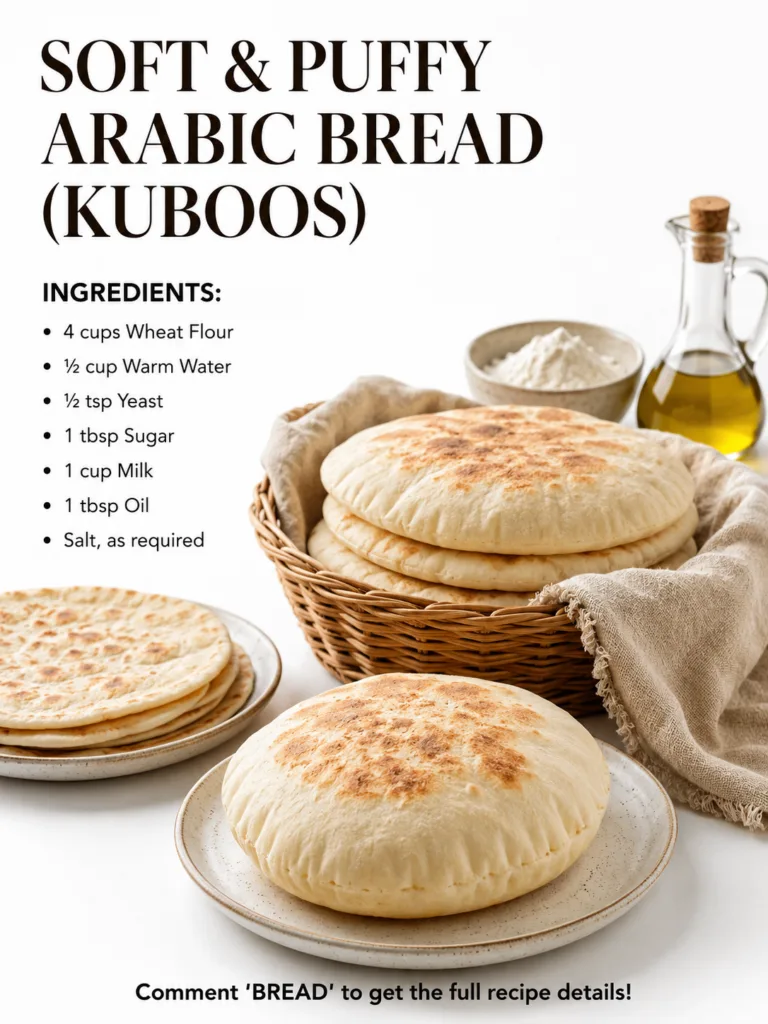
Making delicious Kuboos requires only a handful of simple ingredients you likely already have in your pantry. Quality matters, but even basic pantry staples can yield excellent results.
- All-Purpose Flour: This forms the base of your bread. While you can use bread flour for a chewier texture or a mix with whole wheat for added nutrition, all-purpose flour works perfectly for a soft, pliable Kuboos.
- Active Dry Yeast: The magic ingredient that makes your bread puff! Ensure your yeast is fresh and active for the best rise.
- Granulated Sugar: A small amount of sugar helps to activate the yeast and gives it something to feed on, promoting a good rise.
- Salt: Essential for flavor, salt also plays a role in controlling yeast activity and strengthening the dough’s gluten structure.
- Warm Water: Crucial for activating the yeast. The water should be warm to the touch, similar to bathwater (around 105-115°F or 40-46°C). Water that is too hot can kill the yeast, and too cold won’t activate it.
- Olive Oil: A touch of olive oil adds richness to the dough, improves its texture, and helps to keep the bread soft. It’s also great for greasing your bowl during proofing.
Step-by-Step Guide: Mastering Your Kuboos Dough
Follow these steps carefully to create a perfectly pliable and flavorful dough that will yield beautiful, puffy Kuboos.
1. Activate the Yeast
- In a large mixing bowl, combine 1 cup of warm water (105-115°F / 40-46°C) and 1 teaspoon of granulated sugar. Stir until the sugar dissolves.
- Sprinkle 1 teaspoon of active dry yeast over the water. Do not stir.
- Let it sit for 5-10 minutes. The mixture should become foamy and bubbly on top, indicating that the yeast is active. If it doesn’t foam, your yeast may be old, or your water temperature was off; start again with fresh yeast.
2. Combine Dry Ingredients
- In a separate medium bowl, whisk together 2 ½ cups of all-purpose flour and 1 teaspoon of salt.
3. Mix Wet and Dry
- Once the yeast mixture is foamy, add 1 tablespoon of olive oil to it.
- Gradually add the flour mixture to the wet ingredients, stirring with a wooden spoon or spatula until a shaggy, sticky dough forms.
4. Knead the Dough
- Turn the dough out onto a lightly floured surface.
- Knead for 8-10 minutes until the dough becomes smooth, elastic, and no longer sticky. If the dough is too sticky, add a very small amount of flour at a time (about a teaspoon), but avoid adding too much, which can make the bread tough.
5. First Rise (Proofing)
- Lightly grease a clean large bowl with a little olive oil.
- Place the kneaded dough into the bowl, turning it once to coat all sides with oil.
- Cover the bowl tightly with plastic wrap or a clean kitchen towel.
- Let the dough rise in a warm, draft-free place for 1 to 1.5 hours, or until it has doubled in size. This can be near a warm oven or in a sunny spot.
Shaping and Baking Your Perfect Kuboos
The shaping and baking process is where the magic happens, transforming your dough into those characteristic puffy flatbreads.
1. Divide and Shape
- Gently punch down the risen dough to release the air.
- Turn the dough out onto a lightly floured surface and divide it into 8-10 equal pieces.
- Roll each piece into a smooth ball.
- Flatten each ball slightly with your hand, then use a rolling pin to roll it into a thin, round disc, about 6-7 inches in diameter and about ⅛ inch thick. Ensure the edges are even.
2. Second Rise (Short Proof)
- Place the rolled discs on a lightly floured baking sheet or parchment paper.
- Cover them loosely with a clean kitchen towel and let them rest for another 15-20 minutes. This short second rise helps them puff up nicely when baked.
3. Bake Your Kuboos
- Preheat a heavy-bottomed skillet (like cast iron) or a non-stick pan over medium-high heat. Alternatively, preheat your oven to 450°F (230°C) with a pizza stone or baking steel inside.
- Do not add oil to the pan/stone.
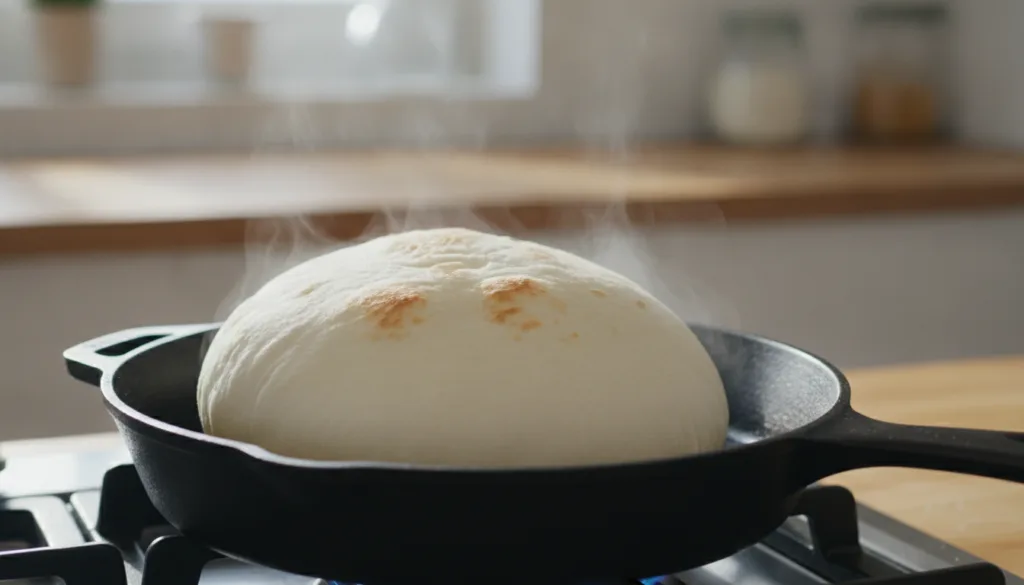
- Carefully place one rolled disc into the hot pan (or onto the pizza stone).
- Cook for 1-2 minutes until bubbles appear on the surface, and the underside is lightly golden.
- Flip the bread and cook for another 1-2 minutes on the other side. This is when the bread should puff up like a balloon.
- If baking in the oven, it may puff faster, usually within 1-2 minutes per side.
- Remove the cooked Kuboos and place it on a clean kitchen towel. Cover it with another towel to keep it warm and soft while you bake the remaining pieces.
Serving Suggestions & Pairing Ideas
Homemade Kuboos is incredibly versatile and can be enjoyed in countless ways:
- Dips: Perfect with hummus, baba ghanoush, mutabal, or a simple olive oil and za’atar mix.
- Wraps: Use it as a healthier wrap for falafel, shawarma, grilled chicken, or fresh vegetables.
- Breakfast: Serve with labneh, feta cheese, olives, and fresh herbs for a traditional Middle Eastern breakfast.
- Soups and Stews: Excellent for soaking up the rich broths of lentil soup or hearty stews.
- Side Dish: A wonderful accompaniment to virtually any meal, adding a satisfying carbohydrate.
Tips for Success & Troubleshooting
- Don’t Over-Flour: Too much flour makes the dough tough. Use just enough to prevent sticking during kneading and rolling.
- Hot Pan is Key: A sufficiently hot pan or oven is essential for the bread to puff quickly. If your bread isn’t puffing, your cooking surface might not be hot enough.
- Keep Dough Covered: Always cover your dough during resting times to prevent it from drying out.
- Don’t Overcook: Overcooked Kuboos can become dry and brittle. Cook until lightly golden spots appear.
- Storage: Store leftover Kuboos in an airtight bag or container at room temperature for 2-3 days, or freeze for longer storage. Reheat gently in a pan or microwave to restore softness.
Frequently Asked Questions About Baking Kuboos
Q: Can I use whole wheat flour for Kuboos?
A: Yes, you can substitute some of the all-purpose flour with whole wheat flour. A good starting point is a 50/50 mix. You may need to add a little extra water as whole wheat flour absorbs more liquid.
Q: My Kuboos didn’t puff up. What went wrong?
A: Common reasons include inactive yeast (check for foaminess after activation), dough not kneaded enough, dough not risen enough (too cold, or not enough time), or the pan/oven not being hot enough during baking.
Q: Can I prepare the dough ahead of time?
A: You can prepare the dough up to the first rise, then punch it down and refrigerate it overnight. Let it come to room temperature for about 30 minutes before proceeding with dividing and shaping.
Q: What’s the best pan to use?
A: A heavy cast iron skillet works wonderfully as it retains heat well. A good quality non-stick pan can also work.
Final Thoughts
Baking your own soft and puffy Arabic bread (Kuboos) is a rewarding experience that brings the authentic flavors of the Middle East right into your home. With this comprehensive guide, you have all the tools and knowledge to master this simple yet delicious flatbread. Enjoy the journey of baking and the joy of sharing freshly made Kuboos with loved ones.