Tackling toilet grime isn’t anyone’s favorite task, and sometimes traditional cleaners just don’t cut through tough stains as easily as we’d like. If you’re looking for an unconventional yet simple approach to help freshen your toilet bowl and loosen up some of that stubborn buildup, you might be surprised by what two common household items can do.
This DIY combines the mild acidity of cola with the softening and fragrancing power of fabric softener to offer a new way to refresh your toilet. It’s a low-effort method that can be surprisingly effective for regular maintenance or lighter stains, potentially saving you a trip to the store for harsh chemicals.
What You’ll Need
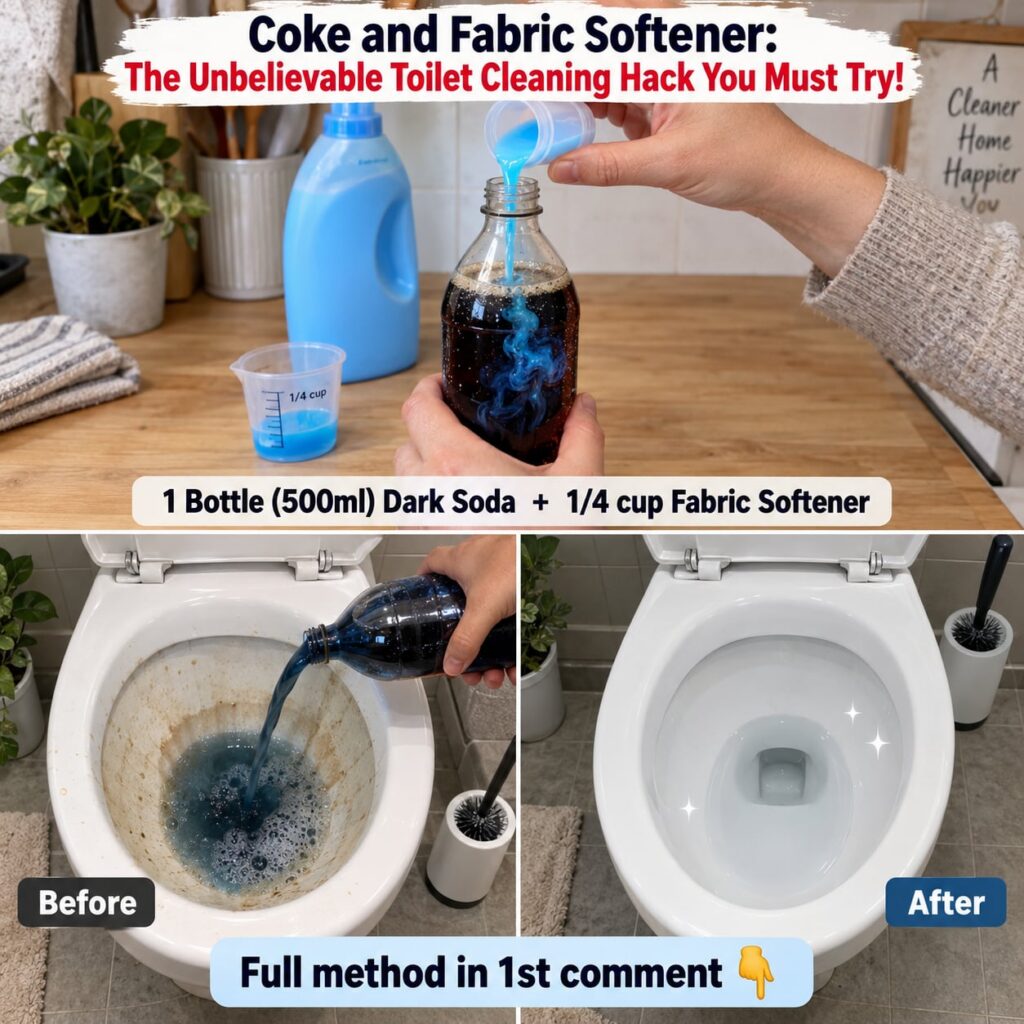
- 1 standard can (approx. 12 oz or 350ml) or 1-2 cups (250-500ml) of Coca-Cola (or any cola drink)
- 1/4 cup (approx. 60ml) of liquid fabric softener
- Toilet brush
- Optional: Measuring cup
Why This DIY Can Be Useful
This method leverages the properties of its two key ingredients:
- Cola: The phosphoric acid found in cola drinks is a mild acid. While not as strong as dedicated toilet bowl cleaners, this acidity can help to dissolve some mineral deposits, limescale, and light rust stains over time, making them easier to scrub away.
- Fabric Softener: Primarily known for making laundry soft and fresh-smelling, fabric softener in a toilet can help to loosen residues and provide a pleasant scent. Its slippery consistency might also assist in detaching grime from the porcelain surface.
Together, they create a gentle yet effective solution for routine toilet maintenance, aiming to refresh and clean without harsh fumes.
How to Make It
There’s no complex mixing involved; you’ll combine these directly in the toilet bowl.
- First, flush the toilet to ensure the bowl is wet.
- Pour the entire can or 1-2 cups of Coca-Cola directly into the toilet bowl, making sure to coat the sides where stains are present.
- Add about 1/4 cup of liquid fabric softener into the toilet bowl on top of the cola.
How to Use It
Once your ingredients are in, it’s time to let them work their magic.
- Let it Sit: Allow the cola and fabric softener mixture to sit in the toilet bowl for at least 1-2 hours. For tougher stains, you can let it sit overnight. The longer it sits, the more time the mild acid in the cola has to work on mineral deposits.
- Scrub: After the waiting period, take your toilet brush and thoroughly scrub the inside of the toilet bowl, focusing on any stained areas or grime lines.
- Flush: Flush the toilet to rinse away the mixture and the loosened grime. You should notice a cleaner bowl and a fresh scent.
What to Expect
You can expect a noticeably fresher toilet bowl and a reduction in lighter stains and mineral deposits. The fabric softener will also leave a pleasant aroma. For heavy limescale, deep rust, or stubborn stains that have built up over a long period, this method might require repeat applications or a more robust cleaning solution. It’s best used as a regular maintenance hack to keep your toilet looking and smelling clean.
Helpful Tips
- Targeted Application: For stains just below the rim, try to pour the cola slowly around the rim so it clings to the porcelain, allowing it to work on those specific areas.
- Use Old/Expired Cola: This is a great way to use up any flat or expired cola that you wouldn’t drink.
- Regular Use: Incorporate this into your routine every couple of weeks to prevent heavy buildup and maintain a consistently fresh toilet.
Important Notes / Safety
- Ventilation: While this DIY uses mild ingredients, it’s always good practice to ensure good ventilation when cleaning, especially in a bathroom.
- Avoid Mixing with Bleach: Never mix cola or fabric softener with bleach or other strong chemical cleaners, as this can create dangerous fumes.
- Test in an Inconspicuous Area: If you have an older toilet or are concerned about your specific porcelain finish, you could try a small test spot first, though cola and fabric softener are generally safe for ceramic.
- Not for Septic Systems: While a one-time use of these amounts should be fine, frequent use of large quantities of non-biodegradable products could potentially impact septic tank bacteria over time. Use judiciously if you have a septic system.