Fruits are nature’s candy, offering a delicious way to boost your health with essential vitamins, minerals, and fiber. But with so many options, which ones truly pack a nutritional punch? Understanding the core nutrients in common fruits can empower you to make smarter choices for your daily diet.
In this article, we’ll dive into the nutritional facts of five popular fruits: bananas, apples, blueberries, papaya, and oranges. We’ll compare their calories, fiber, and Vitamin C content, along with other key benefits. By the end, you’ll have a clearer picture of how each fruit can contribute to your well-being, inspiring you to incorporate more of these vibrant foods into your meals and snacks.
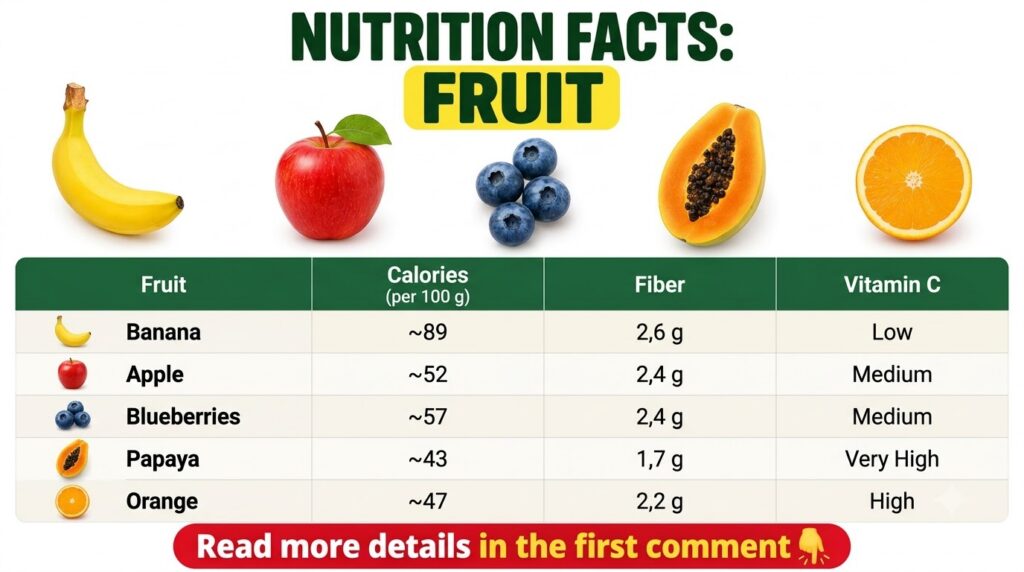
Fruit Nutrition Chart: A Quick Comparison
Let’s take a closer look at the nutritional breakdown of these five delicious fruits. The values below are approximate for a standard serving size.
| Food (Serving Size) | Calories | Protein (g) | Carbs (g) | Fat (g) | Fiber (g) | Vitamin C (mg) | Main Nutrients | Best Benefit |
|---|---|---|---|---|---|---|---|---|
| Banana (1 medium) | 105 | 1.3 | 27 | 0.4 | 3.1 | 10.3 | Potassium, Vitamin B6 | Energy, Muscle Function |
| Apple (1 medium) | 95 | 0.5 | 25 | 0.3 | 4.4 | 8.4 | Quercetin, Antioxidants | Digestive Health, Heart Health |
| Blueberries (1 cup) | 84 | 1.1 | 21 | 0.5 | 3.6 | 14.4 | Anthocyanins, Vitamin K | Antioxidant Power, Brain Health |
| Papaya (1 cup, cubed) | 62 | 0.7 | 16 | 0.4 | 2.5 | 94.0 | Vitamin A, Papain | Immune Support, Digestion |
| Orange (1 medium) | 62 | 1.2 | 15 | 0.2 | 3.1 | 69.7 | Folate, Potassium | Immune Boost, Skin Health |
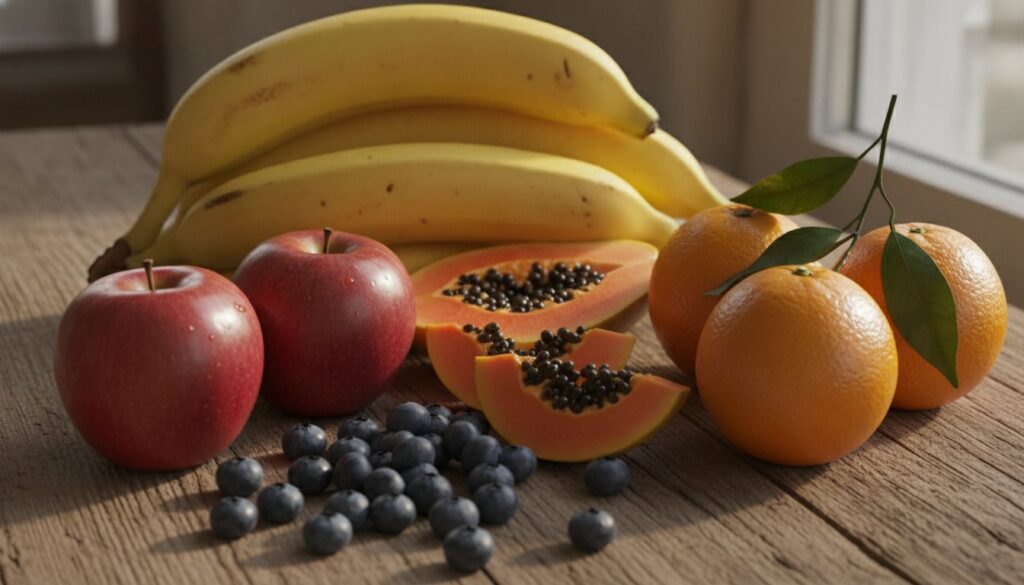
Dive Deeper into Each Fruit’s Nutrition
Banana: The Energy Booster
Known for its readily available energy and high potassium content, bananas are a favorite among athletes and anyone needing a quick pick-me-up. Potassium is crucial for maintaining fluid balance, nerve signals, and muscle contractions. Bananas also offer Vitamin B6, which is vital for brain development and immune function. Their fiber content supports healthy digestion and can help regulate blood sugar levels.
Apple: The Digestive Friend
The saying “an apple a day keeps the doctor away” holds some truth! Apples are rich in dietary fiber, particularly pectin, which acts as a prebiotic, feeding beneficial gut bacteria. They also contain important antioxidants like quercetin, which may help reduce inflammation and protect heart health. With their crisp texture and mild sweetness, apples are a versatile and satisfying snack.
Blueberries: The Antioxidant Powerhouse
Often hailed as a superfood, blueberries are packed with antioxidants, especially anthocyanins, which give them their vibrant blue color. These compounds are associated with reducing oxidative stress, supporting brain health, and potentially lowering the risk of chronic diseases. Blueberries also provide a good dose of Vitamin C and K, and their fiber contributes to digestive well-being.
Papaya: The Tropical Digestive Aid
This sweet, tropical fruit is an exceptional source of Vitamin C, far surpassing many other fruits. Just one cup can provide over 100% of your daily recommended intake! Papaya also contains an enzyme called papain, which may aid digestion and reduce inflammation. It’s a good source of Vitamin A (from beta-carotene), essential for vision and skin health.
Orange: The Immune Champion
Oranges are synonymous with Vitamin C, a powerful antioxidant that plays a key role in immune function, collagen production for healthy skin, and iron absorption. Beyond Vitamin C, oranges also provide folate, important for cell growth and function, and potassium. Their natural sugars combined with fiber offer a sustained energy release.
Serving Suggestions and Delicious Ways to Enjoy
- Bananas: Slice them into oatmeal, blend into smoothies, or enjoy them as a standalone snack.
- Apples: Pair with nut butter, add to salads, bake into healthy crumbles, or simply enjoy whole.
- Blueberries: Sprinkle over yogurt, mix into pancakes, add to cereal, or blend into vibrant smoothies.
- Papaya: Enjoy cubed in fruit salads, blend into tropical smoothies, or serve with a squeeze of lime.
- Oranges: Peel and eat, juice for a refreshing drink, or segment and add to green salads.

Who Should Eat More of These Fruits?
- Athletes and Active Individuals: Bananas are excellent for quick energy and potassium replenishment.
- Those Focusing on Digestion: Apples and papaya, with their fiber and enzymes, can support gut health.
- Anyone Boosting Immunity: Oranges and papaya are superstars for Vitamin C.
- Individuals Seeking Antioxidants: Blueberries are top-tier for protecting against oxidative stress.
- For General Wellness: All these fruits contribute to a balanced diet and overall health!
Practical Tips for Enjoying More Fruit
- Keep it Visible: Place a bowl of fresh fruit on your counter for easy access.
- Prep Ahead: Wash and chop fruits like melons or pineapple at the beginning of the week.
- Mix it Up: Don’t stick to just one or two fruits; explore a variety for a broader nutrient intake.
- Frozen Power: Keep frozen berries or sliced bananas on hand for smoothies and oatmeal.
- Snack Smart: Replace processed snacks with whole fruits to naturally boost fiber and nutrients.
FAQs About Fruit Nutrition
Q1: Is fruit sugar bad for me?
A: The natural sugars in whole fruit are different from added sugars. They come packaged with fiber, which helps slow down sugar absorption, preventing rapid spikes in blood sugar. Moderation is key, especially for those managing blood sugar.
Q2: How many servings of fruit should I eat per day?
A: Most dietary guidelines recommend about 1.5-2 cups of fruit per day for adults. This can vary based on age, sex, and activity level.
Q3: Are dried fruits as healthy as fresh fruits?
A: Dried fruits retain many nutrients and fiber but are much more concentrated in sugar and calories due to the removal of water. Enjoy them in smaller portions compared to fresh fruit.
Q4: Does cooking fruit destroy its nutrients?
A: Some heat-sensitive nutrients, like Vitamin C, can be reduced by cooking. However, other nutrients, like certain antioxidants, can become more available. Eating a mix of raw and cooked fruits is ideal.
Q5: What’s the best time to eat fruit?
A: You can eat fruit at any time of day! As a snack, part of a meal, or a healthy dessert. Some people prefer it in the morning for energy, but there’s no single “best” time for everyone.
Q6: Can I gain weight from eating too much fruit?
A: While fruit is healthy, it does contain calories and sugar. Eating excessively large quantities of fruit, beyond your body’s energy needs, could theoretically contribute to weight gain, just like any other food. However, it’s generally difficult to overeat whole fruits compared to processed foods.
Q7: Are organic fruits significantly better than conventional ones?
A: Both organic and conventional fruits are nutritious. Organic fruits are grown without synthetic pesticides and fertilizers. If you’re concerned about pesticide residues, you can consult lists like the “Dirty Dozen” to prioritize organic for certain fruits, or simply wash all your produce thoroughly.
Conclusion
Fruits are an indispensable part of a healthy diet, each bringing its own unique blend of nutrients and health benefits to the table. From the potassium-rich banana to the Vitamin C-packed orange and papaya, and the antioxidant powerhouses like apples and blueberries, there’s a fruit for every need and taste.
By understanding what these essential fruits offer, you can make informed choices that nourish your body and delight your taste buds. So go ahead, enjoy the natural goodness of fruit and explore new ways to incorporate these vibrant foods into your daily routine!
This content is for educational purposes only and should not be considered medical advice. Consult a qualified healthcare professional for personalized dietary recommendations.