There’s nothing quite as satisfying as harvesting your own food, and potatoes are a fantastic crop for beginners and experienced gardeners alike. Even if you have limited space, container gardening makes it possible to enjoy a bountiful potato harvest right in your backyard, on a patio, or even a balcony! Ditching the traditional garden bed, DIY potato planters offer a creative, sustainable, and often cost-effective way to grow your favorite spuds. Get ready to transform everyday items into thriving potato patches!
Why DIY Potato Planters Are a Game-Changer
Growing potatoes in containers comes with a host of benefits:
- Space-Saving: Perfect for small gardens, patios, or balconies.
- Pest Control: Easier to manage soil-borne pests and diseases.
- Easy Harvesting: Simply tip out the container for a no-fuss harvest.
- Mobility: Move your potatoes to follow the sun or protect them from harsh weather.
- Soil Management: You control the soil quality, ensuring optimal conditions for growth.
- Repurposing: A great way to give new life to old items.
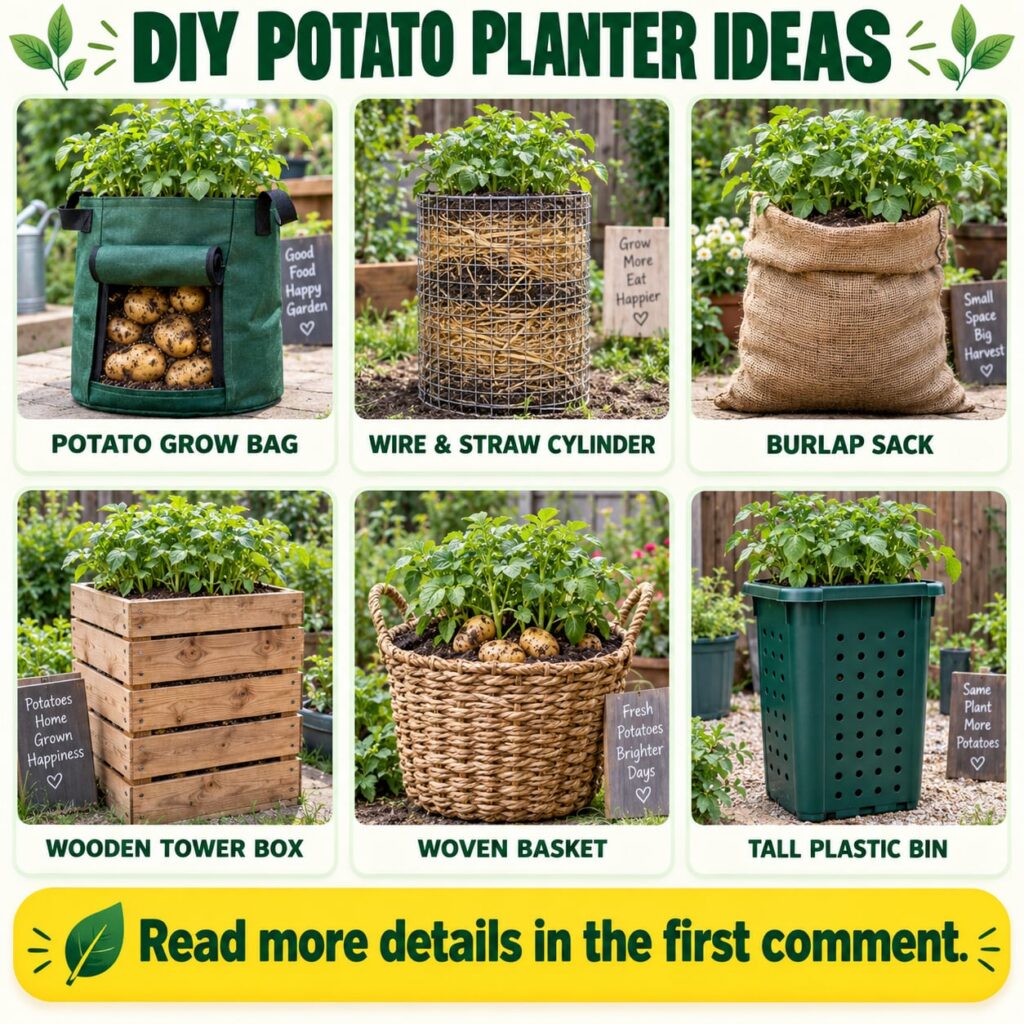
Top Creative DIY Potato Planter Ideas
Let’s explore some clever ways to create your own potato growing stations.
1. The Mighty Grow Bag
Grow bags are incredibly popular for a reason! They’re lightweight, breathable, and easy to store when not in use. They’re also designed with flaps or access points for easy harvesting throughout the season.
What You Need:
- Fabric grow bag (5-15 gallon capacity, depending on desired yield)
- Potting mix (well-draining, rich in organic matter)
- Seed potatoes
How to Use:
- Fill the bottom 4-6 inches of the grow bag with potting mix.
- Place 2-3 seed potatoes on the soil.
- Cover with another 4-6 inches of soil.
- As the potato plant grows to about 6-8 inches tall, add more soil, leaving the top few inches of foliage exposed (this is called

