Have you ever finished a meal feeling overly full, or wondered if you’re eating the right amount of food to support your health goals? Understanding portion control is a game-changer for anyone looking to eat healthier, manage their weight, and ensure they’re getting balanced nutrition.
It’s easy to accidentally overeat, especially with today’s larger serving sizes. But with a few simple tricks, you can learn to visually estimate healthy portions without needing a food scale. This guide will help you decode portion sizes, use your hands as a handy tool, and build balanced plates that leave you feeling satisfied and energized.
Let’s dive into the practical art of mindful eating and discover how simple adjustments can make a big difference!
Why Portion Control Matters for Your Health
Portion control isn’t about deprivation; it’s about balance and awareness. Here’s why paying attention to how much you eat is so beneficial:
- Weight Management: Consuming appropriate portions helps manage your calorie intake, which is crucial for losing, gaining, or maintaining weight.
- Balanced Nutrition: It ensures you get a variety of nutrients from different food groups without overdoing it on one. This can help prevent nutrient deficiencies and excesses.
- Improved Digestion: Eating appropriate amounts can reduce digestive discomfort often associated with overeating.
- Better Blood Sugar Control: Especially important for those managing diabetes, proper portion sizes of carbohydrates can help stabilize blood sugar levels.
- Mindful Eating: It encourages you to be more present with your food, savoring each bite and recognizing your body’s hunger and fullness cues.
The Healthy Plate Method: Your Blueprint for Balanced Meals
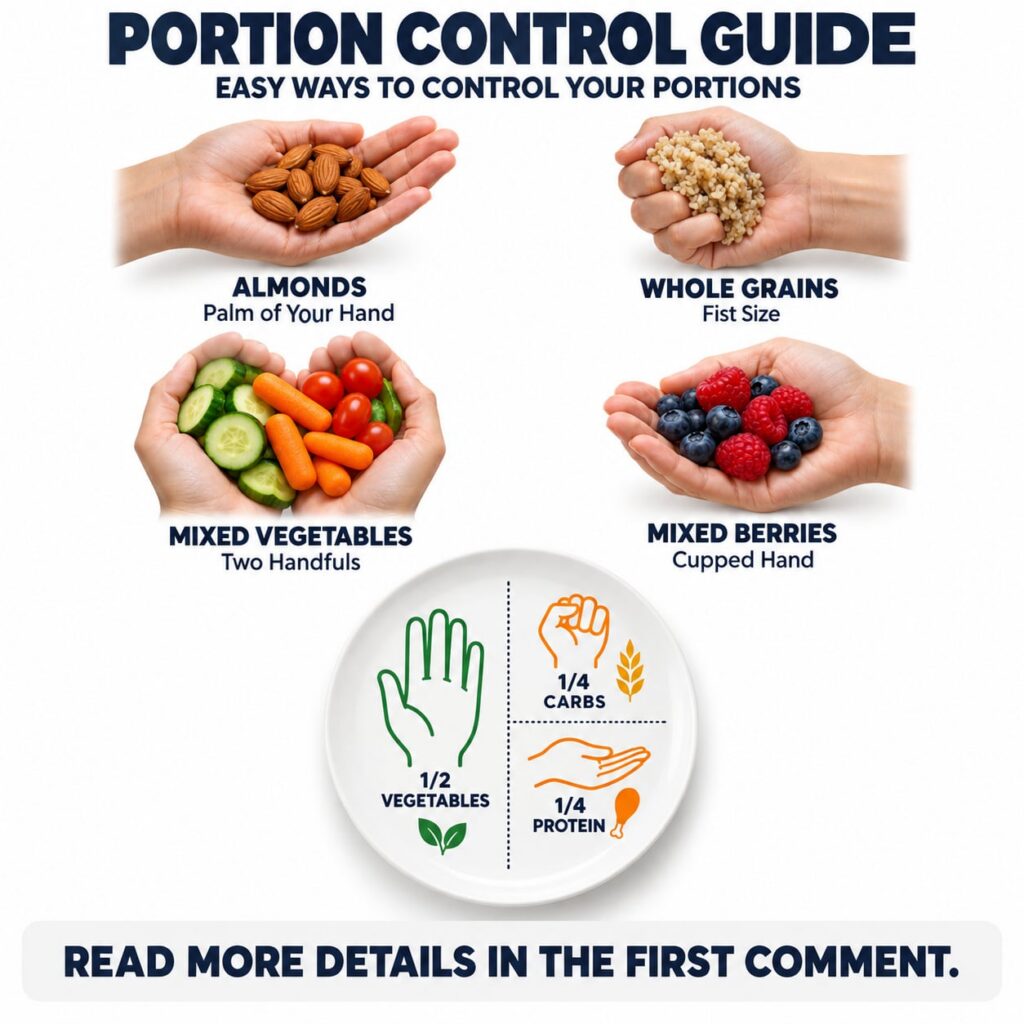
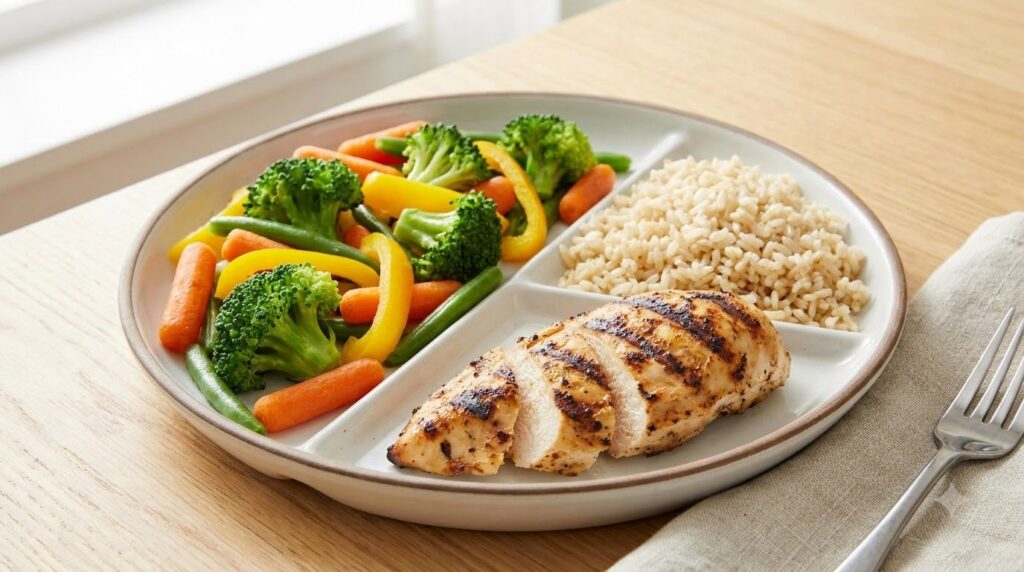
Imagine your plate as a canvas for healthy eating. The healthy plate method simplifies meal planning by visually guiding your food distribution:
- Half Your Plate: Vegetables
Fill half of your plate with non-starchy vegetables like broccoli, spinach, bell peppers, or salad greens. They are low in calories, high in fiber, vitamins, and minerals, and help you feel full. - One-Quarter Your Plate: Lean Protein
Dedicate a quarter of your plate to lean protein sources such as chicken breast, fish, tofu, beans, or lentils. Protein is essential for muscle repair, satiety, and overall body function. - One-Quarter Your Plate: Healthy Carbohydrates
The remaining quarter of your plate should be for complex carbohydrates like whole grains (quinoa, brown rice, whole-wheat pasta), sweet potatoes, or corn. These provide sustained energy and fiber.
This simple visual guide helps create satisfying, nutrient-dense meals that support your health goals.
Your Hands as a Handy Portion Guide
You don’t always need measuring cups or scales! Your own hands can be incredibly useful tools for estimating portion sizes while on the go or when dining out. Here’s a simple breakdown:
Palm for Protein
- A portion of lean protein (like chicken, fish, lean beef, or beans) should be about the size and thickness of your palm.
- For nuts and seeds, which are rich in healthy fats and some protein, a palm-sized portion can be a good guide.
Cupped Hand or Fist for Carbs
- For complex carbohydrates like rice, pasta, or potatoes, a single clenched fist is generally a good serving size.
- For fruits like berries, a cupped hand can represent a healthy portion.
Two Cupped Hands for Vegetables
- When it comes to non-starchy vegetables like spinach, broccoli, or bell peppers, aim for two cupped hands. You can rarely eat too many veggies!
Thumb for Healthy Fats
- For concentrated fats like butter, oil, or avocado, a serving size is typically about the size of your thumb.
These are general guidelines, of course, and can vary slightly based on individual needs and body size. However, they provide an excellent starting point for conscious eating.
Common Foods Often Overestimated
It’s easy to eat too much of certain foods. Here are a few common culprits and a quick guide to their typical healthy portion sizes:
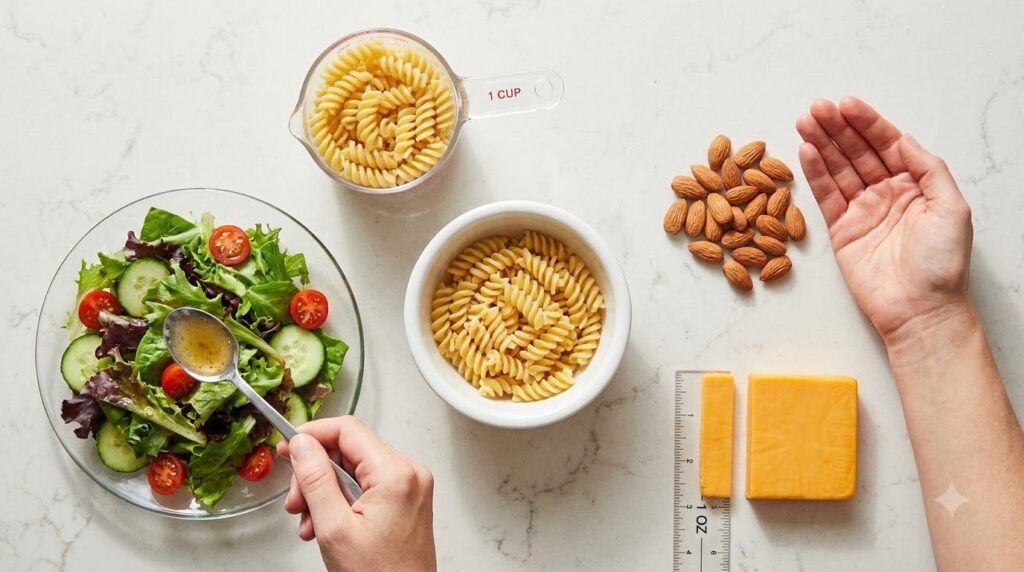
- Pasta: A serving of cooked pasta is often closer to ½ cup, not the large bowl many of us pour. Think of a clenched fist.
- Cereal: A typical serving is about ¾ to 1 cup. Check the nutrition label, as many bowls hold far more.
- Nuts: While healthy, nuts are calorie-dense. A serving is usually about ¼ cup or a small handful (like the palm portion shown in the infographic).
- Cheese: A serving is often one slice (1.5 ounces) or about the size of four dice.
- Salad Dressing: A typical serving is 1-2 tablespoons, not a generous pour over your entire salad.
- Meat: A serving of cooked meat (like a chicken breast) is about 3-4 ounces, or roughly the size of a deck of cards or your palm.
Practical Tips for Mastering Portion Control
- Use Smaller Plates: A larger plate often encourages you to fill it up. Opt for smaller dinner plates to make portions look more substantial.
- Read Nutrition Labels: Serving sizes on packaged foods can be surprising. Pay attention to them to understand what a true portion entails.
- Measure Occasionally: You don’t need to measure everything, every time. But occasionally measuring foods like cereal, pasta, or nuts can help you calibrate your eye.
- Plate Half Veggies First: When dishing up, fill half your plate with non-starchy vegetables first. This naturally leaves less room for calorie-dense foods.
- Eat Slowly and Mindfully: It takes about 20 minutes for your brain to register that your stomach is full. Eating slowly allows your body to send these signals, helping you recognize satiety.
- Pre-Portion Snacks: When snacking on items like nuts, chips, or crackers, portion them into small bags or containers instead of eating straight from the large package.
- Stay Hydrated: Sometimes thirst can be mistaken for hunger. Drink a glass of water before meals or snacks.
FAQs About Portion Control
Q1: Is portion control the same as dieting?
A: While often part of a weight-loss diet, portion control is more about mindful eating and understanding appropriate food amounts for overall health, not necessarily restricting certain foods.
Q2: How do I know if my hand measurements are accurate for me?
A: Hand measurements are general guidelines. If you have specific calorie or macronutrient goals, you might want to measure food accurately for a week or two to see how your hand portions compare to recommended servings for your body.
Q3: Can I still eat out and practice portion control?
A: Absolutely! Ask for half portions, share an entree, or ask for a to-go box at the start of your meal to pack away half for later. Prioritize vegetables and lean protein options.
Q4: What if I’m still hungry after a controlled portion?
A: First, ensure you’ve filled half your plate with non-starchy vegetables. If still hungry, wait 10-15 minutes to see if hunger subsides. If not, opt for another serving of vegetables or a small, lean protein source.
Q5: Does portion control mean I can never have treats?
A: Not at all! Portion control is about balance. Enjoying treats in moderation and within appropriate portion sizes is part of a healthy, sustainable lifestyle.
Q6: How long does it take to get used to portion control?
A: It can take a few weeks to re-calibrate your perception of portion sizes. Consistency is key, and over time, it becomes second nature.
Q7: Should children use the same portion control methods?
A: Children’s portion sizes will naturally be smaller. The ‘healthy plate’ method is still excellent, but the actual quantity will be adjusted based on their age, activity level, and growth stage. Consult a pediatrician for specific guidance for children.
Conclusion
Mastering portion control is a powerful step towards a healthier lifestyle. By using simple visual cues like the healthy plate method and your own hands, you can take charge of your eating habits without feeling overwhelmed. It’s about building awareness, making informed choices, and fostering a mindful relationship with food.
Remember, small, consistent changes lead to lasting results. Start by implementing one or two tips today, and you’ll be well on your way to nourishing your body optimally. Keep exploring our other articles for more tips on healthy eating and delicious recipes!
This content is for educational purposes only and should not be considered medical advice. Consult a qualified healthcare professional for personalized dietary recommendations.