Not all oats are created equal! From hearty steel-cut varieties to quick-cooking instant options, the world of oats offers a surprising amount of diversity. Understanding these differences can transform your breakfast routine, ensuring you pick the perfect type for your taste, time, and nutritional goals.
This guide will walk you through the most common types of oats, comparing their nutrition, texture, cook time, and best uses. By the end, you’ll be able to confidently choose the right oats to make your morning meal both delicious and nourishing!
Understanding Different Oat Types
Oats start as whole oat groats, which are then processed in various ways to create the different types we see on grocery store shelves.
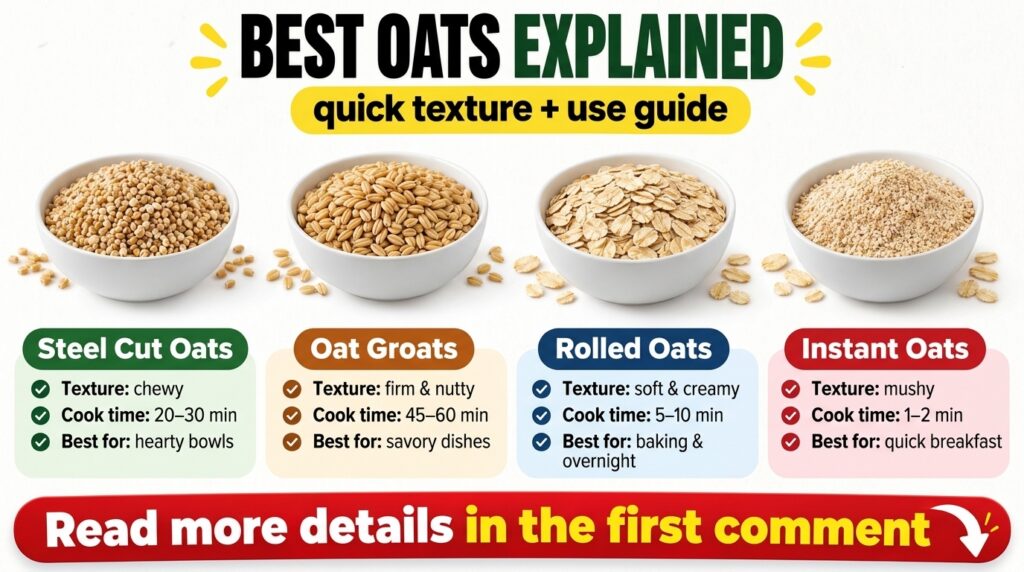
Oat Groats
Oat groats are the least processed form of oats. They are whole oat kernels that have had only their inedible outer husk removed. This makes them incredibly wholesome but also the longest to cook.
- Texture: Chewy and substantial, similar to brown rice.
- Cook Time: 45-60 minutes.
- Best Use: Savory porridges, grain bowls, or as a hearty side dish.
Steel-Cut Oats
Also known as Irish or Scottish oats, steel-cut oats are oat groats that have been cut into two or three smaller pieces with steel blades. This minimal processing helps them retain much of their original fiber and nutrient content.
- Texture: Nutty, chewy, and creamy.
- Cook Time: 20-30 minutes.
- Best Use: Hearty breakfast porridge, overnight oats (with longer soaking), or in baked goods for added texture.
Rolled Oats (Old-Fashioned Oats)
Rolled oats are created by steaming oat groats and then flattening them with large rollers. This process stabilizes their oils, allowing them to cook faster and giving them a classic oat texture.
- Texture: Flatter, softer, and creamier than steel-cut, but still with some chew.
- Cook Time: 5-10 minutes.
- Best Use: Classic oatmeal, overnight oats, granola, cookies, muffins, and as a binding agent in meatloaf or veggie burgers.
Instant Oats (Quick Oats)
Instant oats are the most processed type. They are pre-cooked, dried, and then rolled even thinner and cut into smaller pieces than rolled oats. This extensive processing allows for a very quick cooking time.
- Texture: Soft, mushy, and less chewy than other types.
- Cook Time: 1-2 minutes (often just needs hot water).
- Best Use: Quick breakfast when time is short, in smoothies, or as a thickening agent.
Oat Nutrition Comparison
While all oats are healthy, their processing can slightly affect their nutritional profile, particularly in terms of fiber and glycemic index. Here’s a general comparison for a 1/2 cup (dry) serving:
| Food | Calories | Protein (g) | Carbs (g) | Fat (g) | Fiber (g) | Main Nutrients | Best Benefit |
|---|---|---|---|---|---|---|---|
| Oat Groats | 150-160 | 5-6 | 27-30 | 3 | 4-5 | Manganese, Phosphorus, Magnesium, Iron, Zinc | Highest fiber, lowest glycemic impact, very chewy |
| Steel-Cut Oats | 150-160 | 5-6 | 27-30 | 3 | 4-5 | Manganese, Phosphorus, Magnesium, Iron, Zinc | Chewy texture, good for sustained energy, lower glycemic index |
| Rolled Oats | 150-160 | 5-6 | 27-30 | 3 | 4 | Manganese, Phosphorus, Magnesium, Iron, Zinc | Versatile, good balance of texture and cook time |
| Instant Oats | 150-160 | 4-5 | 28-31 | 2-3 | 3-4 | Manganese, Phosphorus, Magnesium | Fastest cooking, convenient |
Note: Nutritional values are approximate and can vary slightly by brand and preparation.
Calories, Protein, Fat, Carbs, and Fiber
Generally, all types of oats provide similar caloric and macronutrient content per serving. They are all excellent sources of complex carbohydrates, which provide sustained energy.
- Protein: Oats are a good plant-based protein source, supporting muscle health and satiety.
- Fat: Primarily healthy unsaturated fats.
- Fiber: Oats are renowned for their high fiber content, especially soluble fiber called beta-glucan. Beta-glucan is known to help lower cholesterol, stabilize blood sugar, and promote digestive health. Less processed oats (groats, steel-cut) tend to have slightly more intact fiber, which contributes to their slower digestion and lower glycemic index compared to instant oats.
Vitamins & Minerals
All oat types are packed with essential vitamins and minerals, including:
- Manganese: Crucial for bone health and metabolism.
- Phosphorus: Important for bone and teeth formation.
- Magnesium: Plays a role in over 300 bodily functions, including muscle and nerve function.
- Iron: Essential for oxygen transport in the blood.
- Zinc: Supports immune function and wound healing.
- B Vitamins: Contribute to energy metabolism.
Choosing Your Perfect Oat
The

