Don’t Toss That! 9 Surprising Superfoods You’re Throwing Away
Do you ever wonder if you’re truly getting the most out of your fresh produce? We meticulously select ripe fruits and vibrant vegetables, bring them home, wash them, and then… often discard a significant portion before we even start cooking. Imagine if those ‘scraps’ you’re tossing were actually packed with hidden nutritional treasures, just waiting to boost your wellness!
It’s a common habit to peel, trim, and core our way to what we consider the ‘best’ part of our food. But what if we told you that many of these often-discarded bits – from peels to stems and even seeds – are not only edible but also brimming with unique vitamins, minerals, and antioxidants? Get ready to rethink your kitchen waste and unlock a whole new world of natural wellness!
Why This Matters: Uncovering Hidden Nutrition
In our modern world, we’re constantly seeking ways to enhance our health and make conscious choices about what we consume. Yet, an ironic truth is that many of us are inadvertently throwing away some of the most nutrient-dense parts of our food!
This isn’t just about reducing food waste (though that’s a wonderful benefit!). It’s about maximizing the nutritional potential of every grocery dollar spent and discovering innovative ways to incorporate more goodness into our diets. Many traditional cultures have long understood the value of using whole ingredients, a wisdom we’re now rediscovering with a scientific lens. For those who love practical home remedies and natural wellness approaches, integrating these ‘super-scraps’ can be a simple, yet powerful, step towards greater vitality and holistic health.
Main Educational Content: Your 9 Surprising Superfoods
Let’s dive into some of the most overlooked nutritional powerhouses hiding in plain sight in your kitchen!
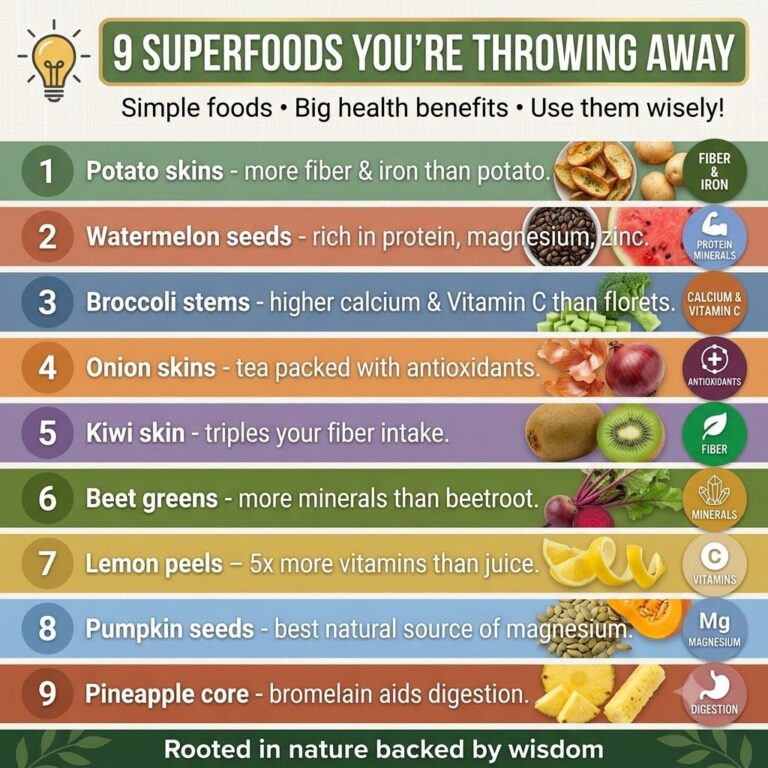
1. Broccoli Stems: Fiber-Rich & Flavorful
Often trimmed and tossed, the sturdy stems of broccoli are just as nutritious as the florets, if not more so in some aspects! They are packed with fiber, Vitamin C, and beneficial compounds like sulforaphane, known for their antioxidant properties.
2. Watermelon Rind: The Hydrating Powerhouse
Beyond the sweet, red flesh, the white-green rind of a watermelon is edible and surprisingly beneficial. It contains citrulline, an amino acid that your body converts into L-arginine, which may support healthy circulation and overall vitality.
3. Citrus Zest & Organic Peel: Aromatic & Antioxidant-Rich
While we often zest citrus for flavor, the entire outer peel (especially from organic fruits) is a goldmine. It’s rich in fiber, Vitamin C, and powerful flavonoids like d-limonene, which some studies suggest have impressive antioxidant and anti-inflammatory properties.
4. Carrot Tops: Green Goodness You Can Eat
Those feathery green tops of carrots are not just for show! They are perfectly edible and boast a good dose of Vitamin K, Vitamin C, and various antioxidants. Their slightly bitter, earthy flavor can add a unique twist to many dishes.
5. Beet Greens: More Nutritious Than the Root?
While the vibrant beetroots get all the attention, their leafy green tops are often discarded, which is a shame! Beet greens are incredibly nutritious, offering more iron, calcium, and Vitamins A and C than the root itself. They also provide valuable antioxidants.
6. Pumpkin Seeds (from the whole pumpkin): Magnesium & Zinc Heroes
After carving a pumpkin, don’t throw out those gooey seeds! Once cleaned and roasted, these seeds become a crunchy, delicious snack. They are an excellent source of magnesium, zinc, and healthy fats, supporting everything from bone health to immune function.
7. Apple Peels: Fiber & Flavonoid Fortification
Many peel their apples, but the skin holds a significant portion of the fruit’s fiber and potent antioxidants, especially quercetin. Eating the peel can help you get more of these beneficial compounds and feel fuller.
8. Potato Skins (Organic & Well-Scrubbed): Potassium Power
If you’re buying organic potatoes, consider keeping the skins on! The skin of a potato contains much of its fiber, along with a high concentration of potassium and Vitamin C. Always scrub potatoes thoroughly before cooking with the skin on.
9. Pineapple Core: Bromelain Benefits
The fibrous core of a pineapple is often discarded because it’s tougher than the flesh. However, it contains a higher concentration of bromelain, an enzyme traditionally used to aid digestion and reduce inflammation. Blend it into smoothies for a nutrient boost!
Practical Guide: How to Incorporate These Superfoods
Ready to put these newfound super-scraps to good use? Here are some simple ideas:
- Broccoli Stems: Peel the tough outer layer, then slice thin for stir-fries, roast them like fries, or shred them into slaw.
- Watermelon Rind: Pickle it, grate it into salads, blend it into smoothies, or even juice it.
- Citrus Zest & Organic Peel: Finely zest into baked goods, dressings, or marinades. For peels, candy them (with caution for sugar intake) or infuse them into olive oil or vinegar. You can also dry and grind them into a powder for seasoning.
- Carrot Tops: Use them to make pesto (like basil pesto, but with carrot tops!), add to salads, soups, or sauté with other greens.
- Beet Greens: Sauté them with garlic and olive oil, add to frittatas, soups, or even blend into green smoothies. Treat them like spinach or chard.
- Pumpkin Seeds: Rinse thoroughly, pat dry, toss with a little oil and salt, then roast in the oven until golden and crunchy.
- Apple Peels: Leave them on for most recipes! You can also dry them to make apple peel tea, or bake them into crispy apple chips.
- Potato Skins: Ensure potatoes are organic and thoroughly scrubbed. Roast with olive oil and seasoning, or enjoy in baked potatoes.
- Pineapple Core: Chop into small pieces and add to smoothies. You can also simmer it in water to make a flavorful, bromelain-rich tea.
Safety & Precautions: Important Considerations
While these parts offer great benefits, it’s crucial to exercise caution:
- Organic is Best: Always opt for organic fruits and vegetables when consuming peels and skins to minimize exposure to pesticides and waxes.
- Thorough Washing: Regardless of organic status, always scrub produce thoroughly under running water, especially parts you intend to eat unpeeled.
- Allergies: If you have known allergies to certain fruits or vegetables, avoid consuming their ‘superfood’ parts as well.
- Potato Skins: Avoid skins that are green or sprouting, as these can contain higher levels of solanine, a toxic compound.
- Apple Seeds: While the flesh around the core is fine, apple seeds contain amygdalin, which can release cyanide when digested. Always remove seeds before consuming apple cores.
- Consult Your Doctor: If you have existing medical conditions, are pregnant or breastfeeding, or are taking medications, consult your healthcare professional before significantly altering your diet or introducing new foods, especially those with concentrated compounds.
Key Takeaways: Rethink Your Kitchen Scraps!
- Many commonly discarded fruit and vegetable parts are packed with valuable nutrients.
- From broccoli stems to watermelon rind, these ‘super-scraps’ offer fiber, vitamins, minerals, and antioxidants.
- Incorporating them into your diet can boost nutrition and reduce food waste.
- Always choose organic when consuming peels and skins, and wash all produce thoroughly.
- Be mindful of specific safety precautions, especially regarding potato skins and apple seeds.
FAQ: Your Questions Answered
Q1: Is it really safe to eat fruit and vegetable peels?
A1: Yes, many peels are perfectly safe and highly nutritious, especially from organic produce. Always wash them thoroughly to remove dirt and potential residues.
Q2: How can I make carrot tops taste better?
A2: Carrot tops have a slightly bitter taste. Blanching them quickly can mellow the bitterness. They are excellent in pesto, adding an earthy, herbaceous note, or sautéed with garlic to balance the flavor.
Q3: What’s the best way to clean pumpkin seeds for roasting?
A3: Scoop them out with the pulp, then rinse them under cold water in a colander, using your hands to separate the seeds from the stringy bits. Pat them thoroughly dry before roasting for the best crispness.
Q4: Can I use non-organic citrus peels for zest?
A4: It’s generally recommended to use organic citrus when zesting or consuming the peel directly, as non-organic citrus often has pesticide residues and wax coatings. If using non-organic, wash extremely well and consider using less of the white pith.
Related Reading: Explore More Natural Wellness Tips
Ready to continue your journey into natural wellness and healthy eating? Check out these related articles:
- Boosting Your Immune System with Everyday Foods
- The Power of Fermented Foods for Gut Health
- Herbal Remedies for Digestive Wellness
- Simple Anti-Inflammatory Recipes for Vibrant Health