Time to put your Old Hollywood knowledge to the ultimate test! This face, often recognizable by just the intensity in his eyes, graced countless silver screens and stages, becoming far more than just a movie star. He became an institution.
His career effortlessly spanned the worlds of Shakespearean theater, prestige cinema, and major Hollywood productions, leaving an indelible mark on acting itself. Could you recognize this legendary star from a mere glimpse?
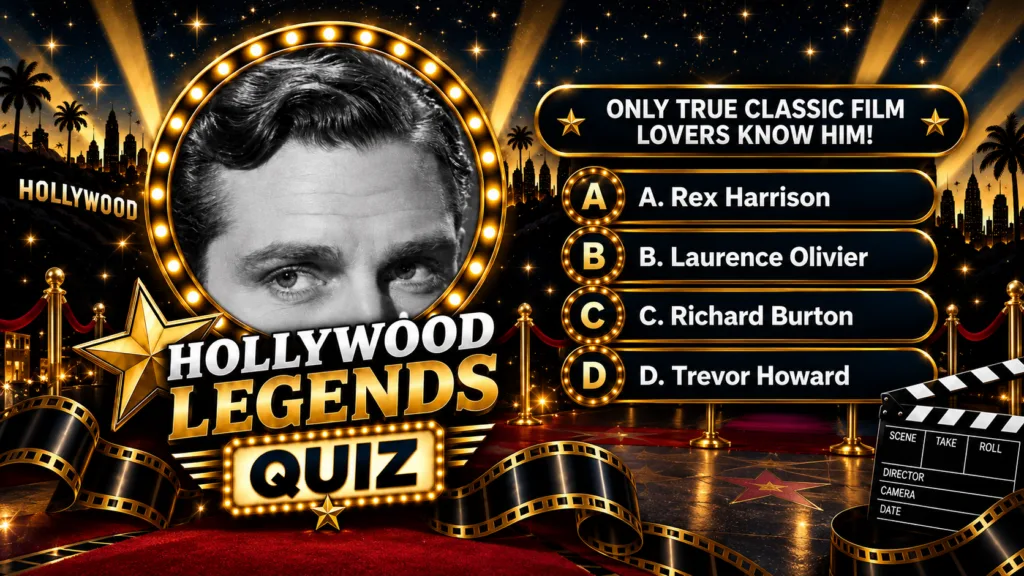
The Answer Is… Laurence Olivier!
If you guessed Laurence Olivier, you are absolutely correct! Born in 1907, Sir Laurence Olivier became one of the most celebrated British actors of the twentieth century, widely regarded as one of the greatest actors in English history.
A Career Spanning Stage and Screen
Olivier’s versatility was legendary. He moved with unparalleled grace between the hallowed halls of the National Theatre, the grand stages of Broadway, and the dazzling sets of Hollywood. His ability to embody a vast array of characters, from the most tragic Shakespearean heroes to complex dramatic figures, set him apart.
- Theatrical Titan: Olivier’s roots were firmly in the theater, where he honed his craft and became a leading figure in British stage productions.
- Shakespearean Master: His deep connection to Shakespeare was profound. He didn’t just act in adaptations; he directed and shaped some of the most influential screen versions of the Bard’s plays.
- Hollywood Star: Despite his commitment to the stage, Olivier found immense success in Hollywood, lending his powerful presence to numerous classic films.
Landmark Film Performances
Olivier’s filmography is a treasure trove of cinematic masterpieces. His performances often defined the characters he portrayed, leaving a lasting impression on audiences and critics alike. Some of his most notable roles include:
- Wuthering Heights (1939): His passionate portrayal of Heathcliff in this classic adaptation cemented his status as a leading man.
- Rebecca (1940): As the enigmatic Maxim de Winter, he delivered a nuanced performance in Alfred Hitchcock’s psychological thriller.
- Hamlet (1948): Perhaps his most iconic film role, Olivier not only starred as the Prince of Denmark but also directed the film. This earned him the Academy Award for Best Actor, and the film itself won Best Picture, making it a landmark Shakespearean adaptation in cinema history.
- Richard III (1955): Another powerful Shakespearean adaptation where Olivier both directed and starred, showcasing his incredible command of complex roles.
The Art of Performance: Stage Technique Meets Cinematic Control
Olivier’s acting style was a remarkable fusion of grandeur and subtlety. He possessed a theatrical intensity that could fill the largest auditoriums, yet he also understood precisely how to scale a performance for the intimacy of the camera. This unique combination of robust stage technique and refined cinematic control made him a model for generations of actors who sought to bridge the gap between different mediums.
His ability to convey deep emotion and complex psychology with just a look, or a slight shift in posture, is what allowed audiences to recognize him, even from a partial view or, as our quiz suggested, from his eyes alone.
Olivier’s Enduring Legacy
Laurence Olivier’s impact on acting is immeasurable. He pushed the boundaries of performance, proving that true artistry could thrive on both stage and screen. His dedication to craft, his masterful interpretations of classic roles, and his sheer magnetic presence continue to inspire actors and enthrall film lovers around the world. He remains a true Hollywood legend, a testament to the golden age of cinema and the timeless power of extraordinary talent.