Are you looking for ways to give your garden a natural boost without relying on chemical products? You’re in luck! Many common household items and easily accessible natural materials can transform into powerful, organic fertilizers, helping your plants thrive. At Garden – L. Quyên, we believe in nurturing your garden the natural way, promoting healthy growth and vibrant blooms.
Let’s dive into the world of natural fertilizers, focusing on a favorite secret weapon: coffee grounds, and exploring other fantastic options you might already have!
Coffee Grounds: Your Garden’s Secret Weapon
That morning brew doesn’t just wake you up; it can also awaken your garden! Coffee grounds are a fantastic natural fertilizer, packed with nutrients that many plants adore.
Benefits of Coffee Grounds for Your Garden:
- Nitrogen Boost: Coffee grounds are rich in nitrogen, a primary nutrient essential for leafy green growth. This makes them perfect for vegetables like lettuce, spinach, and brassicas, as well as many ornamental plants.
- Improved Soil Structure: As organic matter, coffee grounds help improve soil aeration, water retention, and drainage, creating a healthier environment for roots.
- Slight Acidity: While often thought to be very acidic, used coffee grounds are relatively neutral. However, they can still be beneficial for acid-loving plants like blueberries, rhododendrons, azaleas, and some roses, especially when mixed into the soil or compost.
- Pest Deterrent: Some gardeners find that coffee grounds can deter certain pests like slugs and snails due to their texture and smell.
How to Use Coffee Grounds in Your Garden:
- Direct Application: Sprinkle used, dry coffee grounds directly around the base of your plants. Rake them lightly into the topsoil to prevent them from compacting and forming a water-repellent layer.
- Compost Booster: Add coffee grounds to your compost pile. They are considered a ‘green’ material, providing nitrogen and speeding up the decomposition process.
- Liquid Fertilizer: Steep a cup of coffee grounds in a gallon of water for a few hours (or overnight). Strain the mixture and use the liquid to water your plants for a gentle nutrient boost.
Other Natural Fertilizers You Already Own (or Can Easily Find)
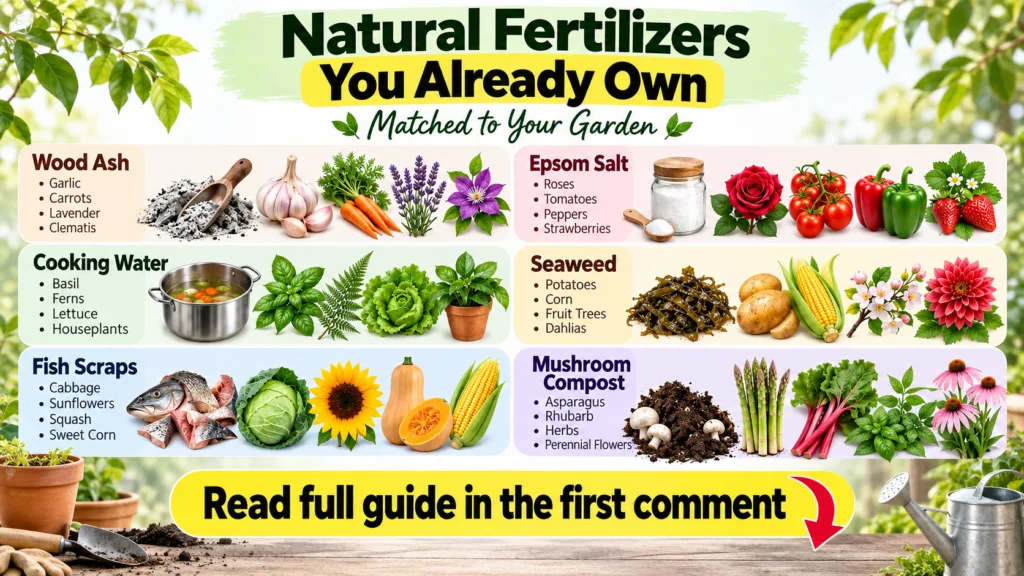
Beyond coffee grounds, your home and local environment offer a treasure trove of plant-loving nutrients. Here are a few more natural fertilizers that can help your garden flourish, inspired by the infographic above:
Wood Ash
If you have a fireplace or fire pit, don’t let that wood ash go to waste! Wood ash is a source of potassium, calcium, and magnesium, essential for flowering plants and root development. It also raises soil pH, so it’s best used on plants that prefer slightly alkaline conditions or in areas with very acidic soil. Avoid using it around acid-loving plants like azaleas and blueberries.
Epsom Salt
Often used for baths, Epsom salt (magnesium sulfate) is a fantastic source of magnesium and sulfur, two micronutrients crucial for plant health. Magnesium helps plants absorb other vital nutrients and is key for chlorophyll production, leading to greener leaves. It’s particularly beneficial for tomatoes, peppers, and roses. Dissolve one tablespoon per gallon of water and apply as a foliar spray or soil drench.
Cooking Water
Next time you boil vegetables, pasta, or eggs, save that water! Once cooled, it contains beneficial trace minerals and starches leached from the food. This nutrient-rich water can be used to water your plants, providing a gentle, all-natural boost. Just make sure it’s completely cooled and unsalted.
Seaweed
For those near the coast, seaweed is an amazing, free fertilizer! It’s packed with trace minerals, growth hormones, and micronutrients that promote strong root development, improve disease resistance, and enhance overall plant vigor. You can rinse fresh seaweed to remove excess salt and then chop it to mix directly into the soil or add it to your compost. Dried seaweed meal is also an excellent option.
Fish Scraps
If you’re a keen angler or enjoy cooking fish, don’t toss those scraps! Fish scraps are a rich source of nitrogen, phosphorus, and trace minerals. They decompose slowly, providing a long-lasting nutrient supply. For best results and to avoid attracting pests, bury fish scraps deeply in your garden beds, especially near heavy feeders like corn or squash, or add them to a well-managed compost pile.
Mushroom Compost
Mushroom compost is a byproduct of mushroom farming and is an excellent soil conditioner and fertilizer. It’s rich in organic matter, providing a slow release of nutrients, improving soil structure, and enhancing beneficial microbial activity. Use it as a top dressing, mix it into new garden beds, or incorporate it into your potting mixes for healthier plants and richer soil.
Tips for Using Natural Fertilizers Effectively
- Start Small: When trying a new natural fertilizer, always start with a smaller amount to see how your plants react.
- Observe Your Plants: Pay attention to your plants’ responses. Healthy growth indicates success, while yellowing or stunted growth might mean you need to adjust your approach.
- Soil Testing: Consider getting a soil test to understand your garden’s specific nutrient deficiencies and pH levels. This will help you choose the most appropriate natural fertilizers.
- Composting is Key: Many natural fertilizers are best incorporated into a compost pile. Composting breaks down materials, making nutrients more readily available to plants and improving soil structure.
Embracing natural fertilizers is a wonderful way to foster a healthy, vibrant garden while being kind to the environment. By utilizing items you already have, you’re not only saving money but also building a more sustainable and thriving garden ecosystem. Happy gardening!