Did you know that the foods you combine on your plate can dramatically influence how many vital nutrients your body actually absorbs? It’s true! Building a truly nutrient-smart plate involves more than just selecting healthy ingredients; it’s about understanding how certain minerals interact with each other, sometimes working in harmony and sometimes in competition.
This ‘Nutrient Showdown’ reveals the fascinating world of mineral absorption and how strategic food pairings can unlock better health. We’ll dive into how you can optimize the uptake of key minerals like Calcium, Iron, Zinc, Copper, and Magnesium, helping you get the most from every bite.
Understanding these interactions is a powerful tool for anyone looking to enhance their well-being, boost energy, and support various bodily functions. Let’s explore how you can make smarter choices at every meal.
The Fascinating World of Mineral Absorption
Our bodies are incredibly complex, and nutrient absorption is a prime example of this intricate balance. Minerals, while essential, don’t always get along. Some can enhance each other’s uptake, while others compete for the same absorption pathways in the digestive system. This means that even if you’re eating a diet rich in a particular mineral, you might not be absorbing as much as you think if it’s paired with an inhibitor.
The goal isn’t to meticulously track every single interaction, but rather to be aware of the most impactful ones. By making simple, intentional changes to your diet, you can significantly improve your mineral status and support your overall health.
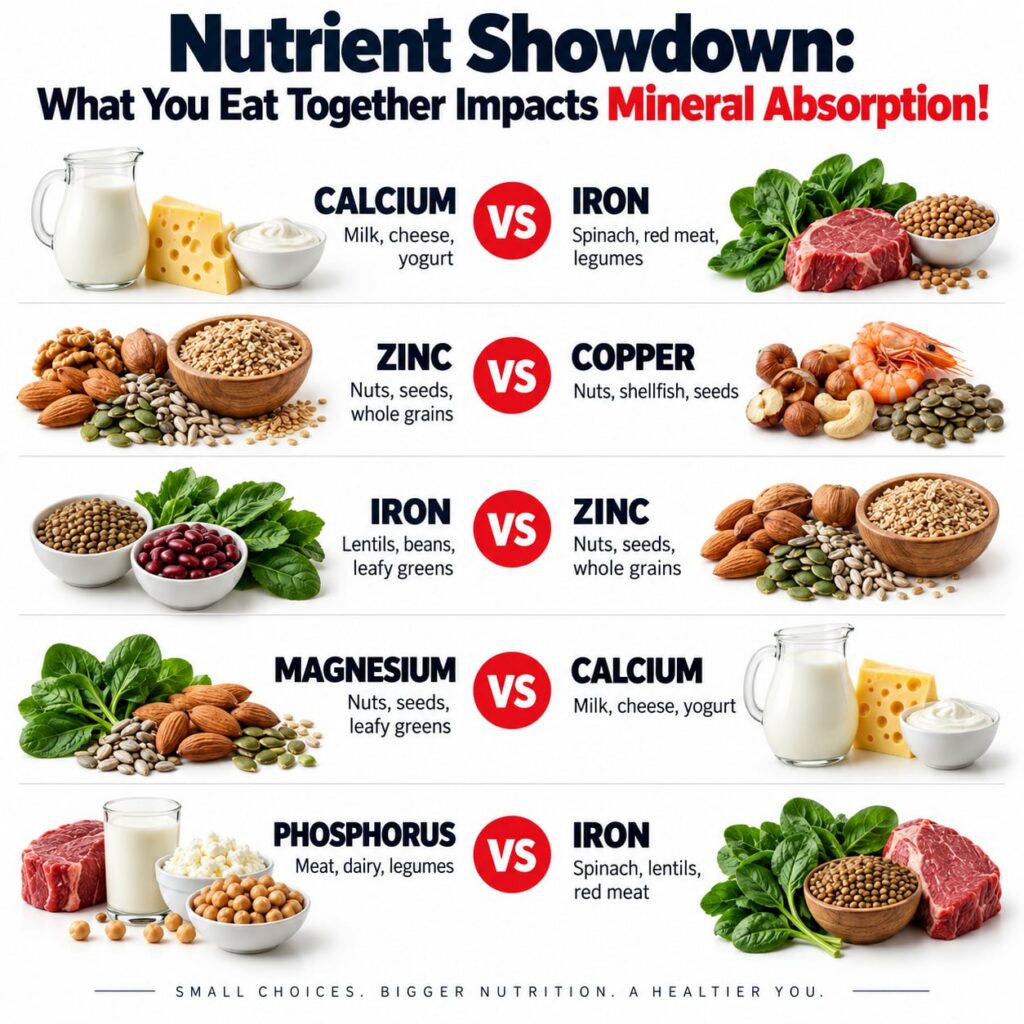
Key Mineral Interactions: Enhance or Inhibit?
Let’s break down how specific food pairings can affect the absorption of five crucial minerals:
Calcium: The Bone Builder
Calcium is vital for strong bones, nerve function, and muscle contraction. Its absorption is a classic example of nutrient interaction.
- Enhancers:
- Vitamin D: Absolutely essential for calcium absorption. Think sunshine or foods like fatty fish (salmon, mackerel), fortified milk, and egg yolks.
- Magnesium: Works synergistically with calcium, though too much of either can create a slight imbalance.
- Inhibitors:
- Oxalates: Found in spinach, rhubarb, beet greens, and cocoa. They bind to calcium, making it less available. (Cooking these foods can reduce oxalates).
- Phytates: Present in whole grains, legumes, and nuts. They can hinder calcium absorption, but soaking, sprouting, or fermenting these foods can help.
- Excessive Phosphorus: While phosphorus is needed for bone health, too much from processed foods can interfere with calcium balance.
- High Sodium: Can lead to increased calcium excretion.
Iron: The Energy Booster
Iron is critical for oxygen transport and energy production. Optimizing iron absorption is key, especially for individuals prone to deficiency.
- Enhancers:
- Vitamin C: This is the superstar for iron absorption! Pair iron-rich foods (like lentils, spinach, red meat) with vitamin C sources (citrus fruits, bell peppers, broccoli).
- Meat, Poultry, Fish: Heme iron from animal sources is more readily absorbed than non-heme iron from plants. Eating meat with plant-based iron can boost the absorption of both.
- Inhibitors:
- Calcium: High doses of calcium (from supplements or dairy) can interfere with iron absorption if consumed at the same time. Try to separate calcium-rich meals from iron-rich ones.
- Phytates: Found in whole grains, legumes, and nuts, they can significantly reduce non-heme iron absorption.
- Tannins: Present in tea and coffee. Drinking these beverages with iron-rich meals can reduce absorption. Opt for water instead during meals.
- Oxalates: Similar to calcium, oxalates in spinach can also hinder iron absorption.
Zinc: The Immune Supporter
Zinc is crucial for immune function, wound healing, and DNA synthesis. Ensuring adequate zinc absorption is vital.
- Enhancers:
- Animal Protein: Zinc from meat, poultry, and seafood is much better absorbed than from plant sources.
- Inhibitors:
- Phytates: A major inhibitor of zinc absorption, especially in plant-based diets high in legumes and whole grains. Soaking and sprouting can help.
- Iron (high doses): Very high doses of iron supplements can compete with zinc for absorption.
- Calcium (high doses): Extremely high calcium intake can also interfere with zinc.
Copper: The Antioxidant Aid
Copper works with iron to form red blood cells and supports a healthy immune system. Copper absorption is often affected by other minerals.
- Inhibitors:
- High Zinc Intake: This is a well-known interaction. Excessive zinc, often from supplements, can significantly impair copper absorption and lead to deficiency.
- High Iron Intake: Very high iron intake can also affect copper levels.
- High Vitamin C Intake: Extremely high doses of vitamin C (e.g., from supplements) can potentially reduce copper availability.
Magnesium: The Relaxation Mineral
Magnesium is involved in over 300 biochemical reactions in the body, from muscle and nerve function to blood glucose control and blood pressure regulation. Ensuring optimal magnesium absorption is important for overall wellness.
- Enhancers:
- Vitamin D: Plays a role in magnesium absorption, similar to its effect on calcium.
- Prebiotics/Fiber: Some types of soluble fiber can enhance magnesium absorption in the gut.
- Inhibitors:
- High Calcium: Very high calcium intake can compete with magnesium for absorption. Maintaining a good calcium-to-magnesium ratio is often recommended.
- Phytates: Found in whole grains and legumes, can bind to magnesium, reducing its bioavailability.
- Oxalates: Present in certain greens and other foods, can also hinder magnesium absorption.
- Alcohol & Caffeine: Excessive consumption can increase magnesium excretion.
Building Your Nutrient-Smart Plate: Practical Tips
Now that you know the major interactions, how can you apply this knowledge to your daily meals? Here are some simple, actionable strategies:
- Pair Vitamin C with Iron: Always add citrus, berries, or bell peppers to your spinach salad or lentil stew.
- Separate Calcium and Iron Supplements: If you take both, space them out by a few hours.
- Soak and Sprout Legumes & Grains: This traditional preparation method reduces phytates, improving the absorption of zinc, iron, and magnesium.
- Limit Tea & Coffee with Meals: Enjoy these beverages between meals rather than with your main source of iron.
- Don’t Overdo Zinc Supplements: Be mindful of high-dose zinc supplements, as they can negatively impact copper levels.
- Ensure Adequate Vitamin D: Support calcium and magnesium absorption through sunlight exposure and vitamin D-rich foods or supplements.
- Balance Your Plate: Aim for a variety of whole foods. A diverse diet naturally provides a wider range of nutrients and often balances out potential inhibitors.
These adjustments can seem small, but over time, they contribute significantly to your mineral status and overall health.
Frequently Asked Questions About Mineral Absorption
Q: Can cooking methods affect mineral absorption?
A: Yes! Cooking can sometimes reduce anti-nutrients like oxalates and phytates, which in turn can enhance mineral absorption. For instance, boiling spinach reduces its oxalate content.
Q: Should I worry about every single mineral interaction?
A: For most healthy individuals consuming a varied diet, it’s not necessary to obsess over every interaction. Focus on the major pairings, like Vitamin C and iron, and avoid excessive supplementation of competing minerals.
Q: Are supplements better for mineral absorption?
A: Whole foods are generally the best source of nutrients, as they come with a complex matrix of co-factors that aid absorption. Supplements can be useful in cases of deficiency, but food pairings still matter, and high doses of single minerals can cause imbalances.
Final Thoughts on Your Nutrient-Smart Plate
Understanding the ‘Nutrient Showdown’ in your body empowers you to make more informed choices about what you eat and how you combine your foods. By being mindful of simple food pairings, you can significantly boost your mineral absorption, supporting everything from your bone health and energy levels to your immune system. Remember, a truly healthy diet isn’t just about what you eat, but how well your body can utilize it. Start building your nutrient-smart plate today!