Welcome, fellow garden lovers! Have you ever excitedly planted seeds, only to stare at empty soil for days, wondering if anything will ever sprout? Or perhaps some plants pop up quickly, while others seem to take an eternity? Understanding seed germination times is one of the most fundamental yet empowering pieces of knowledge for any gardener, from beginner to seasoned pro. It’s like having a secret calendar for your plants, helping you predict and plan for a vibrant, thriving garden!
Today, we’re diving deep into the world of seed germination. We’ll explore what it is, why it’s so important, and how you can master it to ensure your garden reaches its full potential. Get ready to transform your seed-starting game!
What Exactly is Seed Germination?
At its heart, germination is the process by which a seed sprouts and develops into a seedling. It’s the moment life awakens within that tiny, dormant package. For a seed to germinate, it typically needs three key ingredients:
- Water: To soften the seed coat and activate enzymes.
- Oxygen: For respiration, providing energy for growth.
- Temperature: The right warmth (or sometimes coolness) to trigger the metabolic processes.
Without these essential conditions, a seed can remain dormant for a long time, waiting for the perfect moment to spring to life.
Why Knowing Germination Times Matters for Your Garden
Understanding how long it takes for different seeds to germinate is crucial for several reasons:
- Planning and Timing: It allows you to schedule your planting effectively, especially when growing multiple types of plants. You can start slower-germinating seeds earlier indoors to ensure they’re ready for transplanting at the same time as faster-growing varieties.
- Optimizing Space: Knowing when to expect sprouts helps you efficiently use your seed-starting trays or garden beds.
- Troubleshooting: If a seed hasn’t germinated within its expected timeframe, you know there might be an issue – perhaps with watering, temperature, or the seed itself. This knowledge helps you act quickly to adjust conditions or replant.
- Succession Planting: For continuous harvests, especially with vegetables, knowing germination times allows you to stagger plantings for a steady supply throughout the season.
Factors That Influence Seed Germination Success
While germination time is largely determined by the seed’s species, several environmental factors can significantly impact its success and speed:
Temperature
Each type of seed has an optimal temperature range for germination. Too cold, and germination will be slow or fail entirely. Too hot, and the seed might rot or be inhibited. Using heat mats for warmth-loving seeds can make a huge difference.
Moisture
Consistent moisture is key. Seeds need to absorb water to break dormancy, but too much water can lead to rot and lack of oxygen, while too little will dry them out. Keep the soil consistently moist, but not waterlogged.
Light (or Lack Thereof)
Most seeds don’t need light to germinate; some even prefer darkness! However, once they sprout, light becomes critical for healthy seedling development. Always check seed packets for specific light requirements.
Quality of Soil/Seed Starting Mix
A good quality, well-draining seed-starting mix provides the ideal environment. It should be fine-textured, sterile (to prevent disease), and hold moisture well while allowing for good aeration.
Seed Viability and Age
Older seeds may have lower germination rates or take longer to sprout. Always use fresh, high-quality seeds from reputable sources for the best results.
Common Vegetable Germination Times
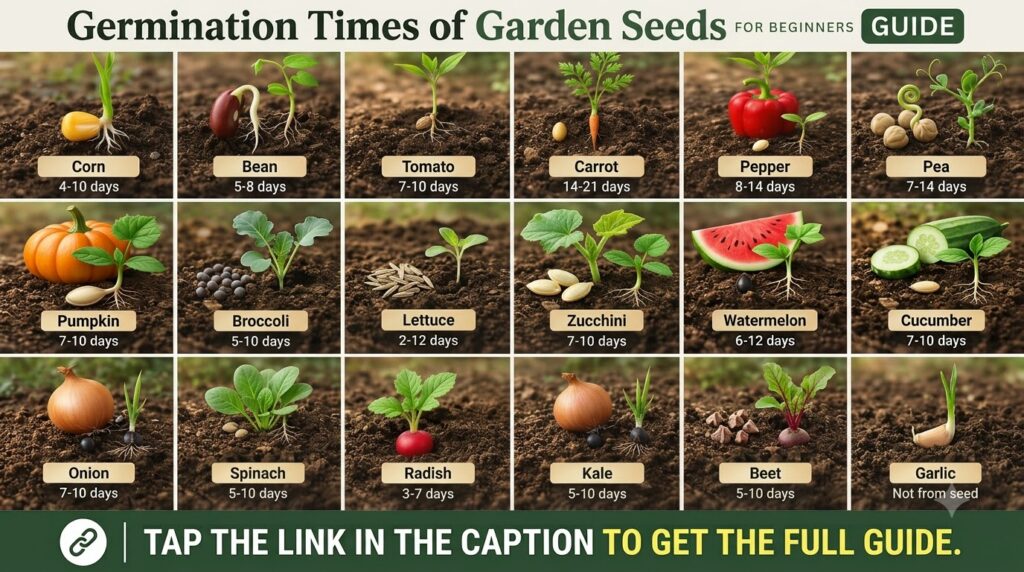
To help you get started, here’s a quick reference for some popular garden vegetables. Remember, these are average times, and actual results can vary:
- Beans: 5-10 days
- Corn: 7-10 days
- Cucumbers: 3-10 days
- Lettuce: 7-14 days
- Peas: 7-14 days
- Radishes: 3-7 days
- Spinach: 7-14 days
- Tomatoes: 5-10 days
- Carrots: 10-21 days
- Peppers: 7-21 days
Always check the specific seed packet for the most accurate information on your particular variety!
Tips for Successful Seed Germination
- Read the Seed Packet: This is your ultimate guide! It provides crucial information on planting depth, spacing, light requirements, and expected germination times.
- Use Fresh Seeds: Older seeds lose viability. If you’re using old seeds, it’s wise to do a germination test first.
- Prepare Your Seed-Starting Mix: Use a sterile, fine-textured mix. Pre-moisten it before planting.
- Maintain Consistent Moisture: Use a spray bottle for gentle watering to avoid disturbing tiny seeds. Cover trays with a dome or plastic wrap to maintain humidity until sprouts appear.
- Provide the Right Temperature: Use a soil thermometer to monitor temperatures. Heat mats can be very beneficial for warmth-loving seeds.
- Ensure Adequate Airflow: Once seeds germinate, remove covers and ensure good air circulation to prevent damping-off disease.
- Give Them Light (Post-Germination): As soon as sprouts emerge, they need bright light to prevent them from becoming leggy. Grow lights are often necessary, especially indoors.
- Don’t Give Up Too Soon: Some seeds just take their sweet time. Be patient and continue to provide optimal conditions.
Ready to Grow?
Mastering seed germination is a rewarding journey that adds a whole new level of satisfaction to your gardening experience. By understanding the needs of your tiny seeds and providing the right conditions, you’re setting the stage for a bountiful harvest and a stunning garden.
So, grab your seed packets, prepare your soil, and get ready to witness the incredible miracle of life unfolding in your very own garden. Happy planting!