Flax seeds and chia seeds are both tiny powerhouses, celebrated in the wellness world for their impressive nutritional profiles. Often lauded as ‘superfoods,’ these small but mighty seeds have found their way into everything from smoothies to baked goods, offering a boost of fiber, healthy fats, and essential minerals.
But with both offering such compelling benefits, how do you choose? Are they interchangeable, or does each have unique strengths that make one a better fit for your specific health goals? This article dives deep into a head-to-head comparison of flax seeds and chia seeds. We’ll explore their nutritional differences, unique benefits, and practical ways to incorporate them into your diet.
By the end, you’ll have a clear understanding of which seed might be the perfect addition to your pantry, helping you make informed choices for a healthier you!
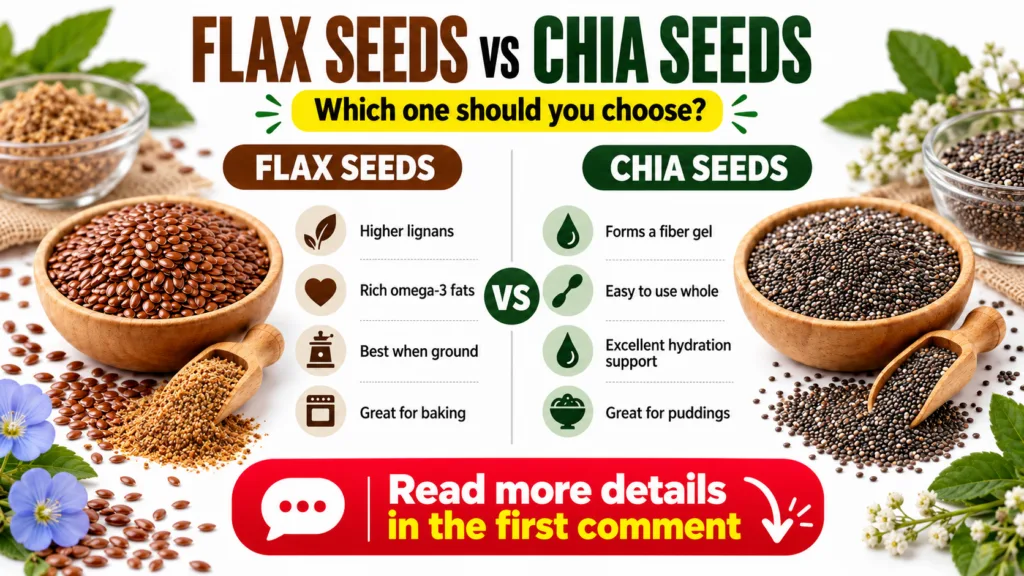
Flax Seeds vs. Chia Seeds: Nutritional Showdown
Let’s start by looking at their core nutritional values to see how these two seeds stack up. While both are highly nutritious, their exact composition varies, leading to different primary benefits.
| Nutrient (per 1 oz / 28g) | Flax Seeds (whole) | Chia Seeds (whole) |
|---|---|---|
| Calories | 150 kcal | 138 kcal |
| Protein | 5.2 g | 4.7 g |
| Carbohydrates | 8.2 g | 11.9 g |
| Fiber | 7.7 g | 9.8 g |
| Fat | 12 g | 8.7 g |
| Omega-3 ALA | 6388 mg | 5060 mg |
| Calcium | 76 mg | 179 mg |
| Iron | 1.7 mg | 2.2 mg |
| Magnesium | 109 mg | 95 mg |
Calories
Both seeds are relatively close in caloric content per ounce, making them similar in terms of energy density. A small serving of either can contribute significant nutrients without adding excessive calories.
Protein
Flax seeds slightly edge out chia seeds in protein content per serving. Both are excellent plant-based protein sources, offering essential amino acids, which are vital for muscle repair and overall body function.
Carbohydrates & Fiber
Chia seeds contain more total carbohydrates, but a significant portion of that is fiber. Both seeds are fantastic sources of dietary fiber. Chia seeds particularly stand out for their high soluble fiber content, which forms a gel-like substance when mixed with liquid, aiding digestion and promoting fullness. Flax seeds also offer a good mix of soluble and insoluble fiber, beneficial for gut health.
Fats & Omega-3 Fatty Acids
This is where flax seeds truly shine. They are one of the richest plant-based sources of alpha-linolenic acid (ALA), a type of omega-3 fatty acid. ALA is important for heart health and reducing inflammation. While chia seeds also contain ALA, flax seeds generally have a higher concentration. It’s important to note that for optimal absorption of flax seeds’ nutrients, they should be consumed ground.
Vitamins & Minerals
Both seeds offer a range of essential minerals. Chia seeds are notably higher in calcium, making them a good option for bone health, especially for those avoiding dairy. They also provide more iron. Flax seeds, on the other hand, contain more magnesium and are a notable source of lignans, which are plant compounds with antioxidant and estrogen-like properties.
Taste & Texture
- Flax Seeds: Have a mild, slightly nutty flavor. When ground, they have a flour-like texture. Whole flax seeds are quite crunchy.
- Chia Seeds: Possess a very mild, almost neutral taste, making them versatile. Their unique property is absorbing liquid and forming a gel-like consistency, which can be delightful or unusual depending on your preference.
Unique Benefits of Each Seed

Flax Seeds: Heart Health & Hormonal Balance
The high content of ALA omega-3s in flax seeds is well-known for its potential benefits for heart health, including supporting healthy cholesterol levels. Additionally, flax seeds are a unique source of lignans. These plant compounds act as antioxidants and may have a role in supporting hormonal balance, making them particularly interesting for women’s health.
Chia Seeds: Digestive Health & Hydration
Chia seeds are champions for digestive health due to their exceptional fiber content, particularly soluble fiber. This fiber helps regulate bowel movements and can contribute to a feeling of fullness, which may aid in weight management. Their ability to absorb liquids and form a gel also makes them excellent for hydration, as they help retain electrolytes and moisture in the body.
Best For: Choosing Your Seed
The

