Fuel Up: High-Protein Fish for a Healthier You!
Are you looking for delicious and healthy ways to boost your protein intake? Fish is a fantastic choice! Beyond just tasting great, many types of fish are packed with high-quality protein and essential nutrients that can support your overall well-being. From muscle building to heart health, incorporating more fish into your diet offers a sea of benefits.
In this article, we’ll dive into a detailed chart of high-protein fish, compare their nutritional profiles, and share practical tips on how to enjoy them regularly. Get ready to discover your new favorite way to fuel your body!
High-Protein Fish Chart
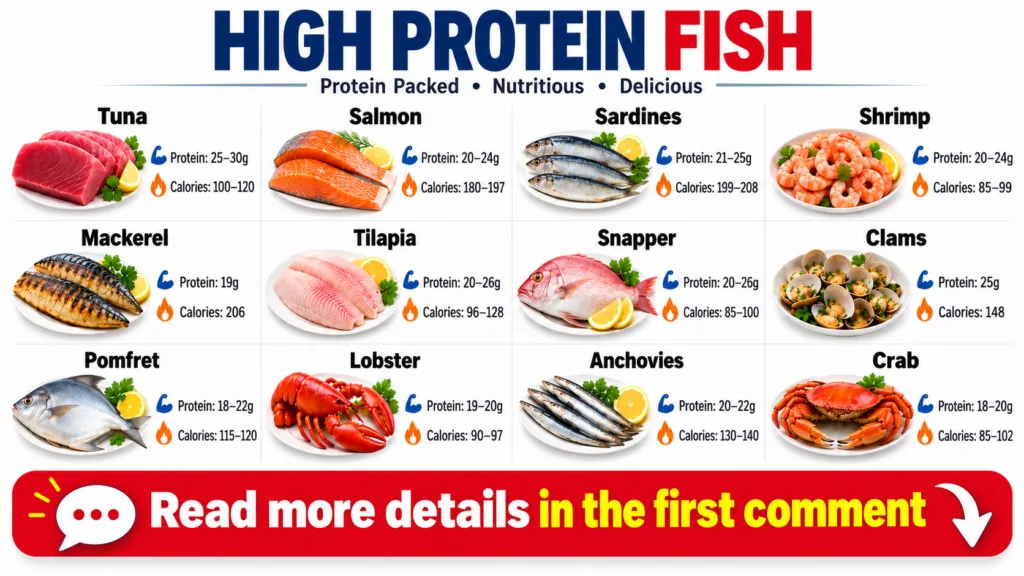
Here’s a look at some of the top high-protein fish options, along with their approximate nutritional values per 3.5-ounce (100g) cooked serving. Values can vary slightly based on cooking method and specific species.
| Food | Calories | Protein (g) | Carbs (g) | Fat (g) | Fiber (g) | Main Nutrients | Best Benefit |
|---|---|---|---|---|---|---|---|
| Salmon (Atlantic) | 206 | 22 | 0 | 13 | 0 | Omega-3s, Vitamin D, B12 | Heart Health, Brain Function |
| Tuna (Light, Canned in Water) | 116 | 25 | 0 | 1 | 0 | Omega-3s, B Vitamins, Selenium | Lean Protein, Muscle Growth |
| Cod | 82 | 18 | 0 | <1 | 0 | B Vitamins, Phosphorus, Selenium | Low Calorie, Digestive Health |
| Tilapia | 128 | 26 | 0 | 3 | 0 | Selenium, B12, Niacin | Lean Protein, Versatile |
| Shrimp | 85 | 20 | <1 | <1 | 0 | Selenium, B12, Iodine | Very Low Calorie, Quick Cook |
| Sardines (Canned in Oil, Drained) | 208 | 25 | 0 | 11 | 0 | Omega-3s, Calcium, Vitamin D | Bone Health, Anti-Inflammatory |
| Mackerel | 189 | 20 | 0 | 12 | 0 | Omega-3s, Vitamin B12, Selenium | Brain Health, Heart Protection |
| Halibut | 111 | 22 | 0 | 2 | 0 | Selenium, Niacin, Phosphorus | Lean Protein, Heart-Healthy |
| Snapper | 109 | 22 | 0 | 2 | 0 | Selenium, Potassium, Vitamin B12 | Immune Support, Mild Flavor |
| Pollock | 92 | 20 | 0 | 1 | 0 | B Vitamins, Phosphorus, Selenium | Lean Protein, Sustainable Choice |

Nutrition Comparison: What Makes These Fish Great?
Protein Powerhouses
As you can see from the chart, most fish provide an excellent source of protein, typically ranging from 18 to 26 grams per 100g serving. This high protein content is crucial for muscle repair, growth, and satiety, helping you feel fuller for longer.
Healthy Fats
Fish like salmon, mackerel, and sardines are rich in omega-3 fatty acids (EPA and DHA). These are essential fats that your body can’t produce on its own. Omega-3s are renowned for their anti-inflammatory properties and their role in supporting heart health, brain function, and eye health.
Vitamin & Mineral Boost
- Vitamin D: Fatty fish like salmon and mackerel are among the few natural food sources of Vitamin D, important for bone health and immune function.
- Vitamin B12: Found abundantly in many fish, B12 is vital for nerve function and red blood cell formation.
- Selenium: An antioxidant mineral that helps protect cells from damage and supports thyroid health.
- Iodine: Particularly in white fish and shellfish like shrimp, iodine is essential for thyroid hormone production.
Serving Suggestions for More Fish
Incorporating more high-protein fish into your diet can be delicious and easy! Here are some ideas:
- Grilled or Baked: Simple and healthy, grilling or baking fish like salmon, cod, or halibut with herbs and lemon brings out their natural flavors.
- Fish Tacos: Flaky white fish like tilapia or cod make excellent fillings for healthy fish tacos with fresh salsa and cabbage slaw.
- Salad Toppers: Canned tuna or salmon are perfect for adding protein to your lunch salads. Freshly cooked shrimp also works wonderfully.
- Stir-fries: Shrimp and thinly sliced fish can be quickly cooked and added to colorful vegetable stir-fries.
- Soups and Stews: Hearty fish stews or light seafood soups are comforting and nutritious, especially with cod or snapper.
- Sandwiches & Wraps: Use canned salmon or tuna for a protein-packed alternative to traditional sandwich fillings.

Who Should Eat More High-Protein Fish?
Almost everyone can benefit from adding more high-protein fish to their diet, but it’s especially beneficial for:
- Active Individuals: The protein supports muscle recovery and growth.
- Those Managing Weight: Fish is often lean and satisfying, helping with satiety.
- People Focused on Heart Health: Omega-3 rich fish are excellent for cardiovascular well-being.
- Individuals Seeking Brain Boost: Omega-3s contribute to cognitive function and memory.
- Anyone Looking for Nutrient-Dense Foods: Fish provides a wide array of essential vitamins and minerals.
Practical Tips for Enjoying Fish
Making fish a regular part of your diet can be simple with these tips:
- Start Simple: If you’re new to cooking fish, begin with mild-flavored options like cod, tilapia, or snapper.
- Experiment with Seasonings: Don’t be afraid to try different herbs, spices, and marinades to find what you love. Lemon, dill, garlic, and paprika are great starting points.
- Buy Fresh (or Flash Frozen): Opt for fresh fish from a reputable source, or choose individually flash-frozen portions for convenience and quality.
- Check for Sustainability: Look for sustainable seafood labels to make environmentally responsible choices.
- Portion Control: A typical serving size for cooked fish is about 3-4 ounces (100-113 grams).
- Avoid Overcooking: Fish cooks quickly. Overcooking can make it dry and less appealing. Cook until it flakes easily with a fork.
FAQs About High-Protein Fish
Q: Is all fish high in protein?
A: Most fish varieties are excellent sources of protein. Fattier fish like salmon and mackerel, and lean fish like cod and tuna, all provide substantial amounts of protein per serving.
Q: How often should I eat fish?
A: The American Heart Association recommends eating fish (particularly fatty fish) at least two times per week for its omega-3 benefits.
Q: What’s the leanest high-protein fish?
A: Cod, haddock, and pollock are among the leanest high-protein fish, offering significant protein with very little fat and calories.
Q: Are canned fish options healthy?
A: Yes, canned fish like tuna, salmon, and sardines are convenient, affordable, and nutritious options. Choose varieties packed in water or olive oil, and consider low-sodium options.
Q: What about mercury in fish?
A: Most common high-protein fish, such as salmon, cod, shrimp, and tilapia, are generally low in mercury and safe to eat regularly. Larger, predatory fish like swordfish and king mackerel tend to have higher mercury levels and should be consumed less frequently, especially by pregnant women and young children.
Q: Can I get enough protein from fish alone?
A: While fish is a great protein source, a balanced diet includes protein from various sources like lean meats, poultry, legumes, nuts, seeds, and dairy to ensure a wide range of nutrients.
Conclusion
High-protein fish are incredible additions to any healthy diet, offering a powerful combination of protein, healthy fats, and essential vitamins and minerals. From the heart-healthy omega-3s in salmon to the lean protein of cod, there’s a fish for every palate and nutritional need. By incorporating these delicious options into your weekly meals, you can fuel your body, support your health, and enjoy flavorful dining experiences.
We encourage you to explore different types of fish and experiment with various cooking methods. Your journey to a healthier, more vibrant you just might start with a plate of delicious seafood!
This content is for educational purposes only and should not be considered medical advice. Consult a qualified healthcare professional for personalized dietary recommendations.