Sculpt Your Glutes: Your Ultimate Guide!
Are you looking to strengthen and firm your glutes? Strong glutes are not just about aesthetics; they play a crucial role in overall body balance, athletic performance, and preventing injuries. This comprehensive guide from Wellness Daily is designed to help you unlock your glute potential with a targeted approach to building strength and improving shape. Consistent effort and proper form are key to achieving amazing results!
Why Strong Glutes Matter for Your Wellness
Your gluteal muscles are among the largest and most powerful in your body, and their strength impacts far more than just how you look. They are essential for a wide range of daily movements and overall physical health. Here’s why focusing on your glutes is a smart move for your well-being:
- Improved Posture: Strong glutes help stabilize your pelvis and lower back, which may contribute to better posture and reduced back pain.
- Enhanced Athletic Performance: Whether you run, jump, or lift, powerful glutes are a primary driver of movement, boosting your performance in various sports and activities.
- Injury Prevention: By providing stability to the hips and knees, well-conditioned glutes may help prevent common injuries, especially in the lower body.
- Increased Metabolism: Building muscle mass, particularly in large muscle groups like the glutes, can help increase your resting metabolic rate, supporting healthy weight management.
- Functional Strength: Everyday activities like climbing stairs, getting up from a chair, or carrying groceries become easier with strong glutes.
Understanding Your Glute Muscles
The gluteal region is comprised of three main muscles, each playing a unique role in hip movement and stability:
- Gluteus Maximus: The largest of the three, responsible for hip extension (e.g., standing up, climbing).
- Gluteus Medius: Located on the outer surface of the pelvis, crucial for hip abduction (moving your leg out to the side) and stabilizing the pelvis during walking.
- Gluteus Minimus: The smallest and deepest, also assists with hip abduction and internal rotation.
A well-rounded glute workout targets all three of these muscles to ensure comprehensive strength and development.
Your Ultimate Glute-Sculpting Workout
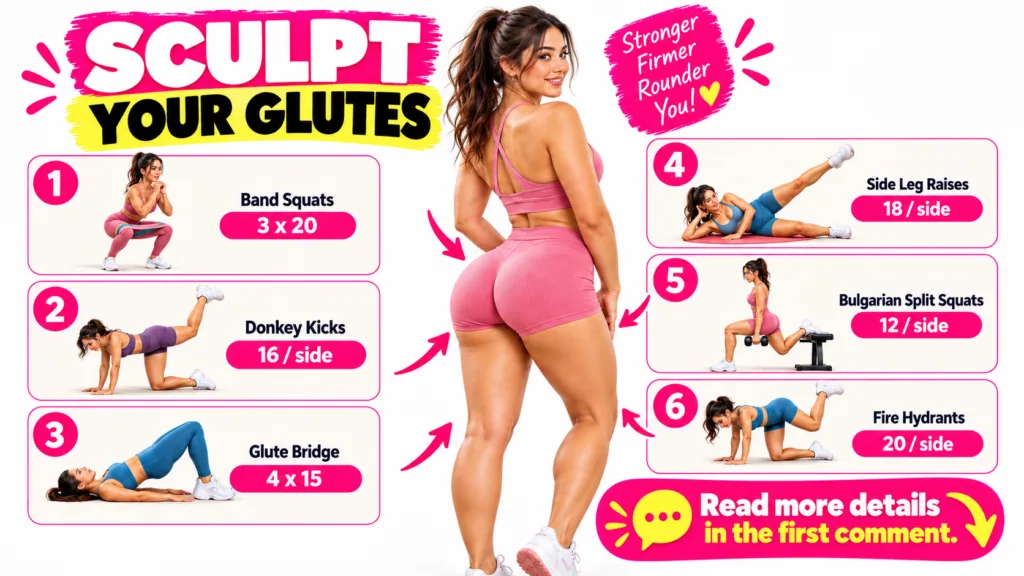
This section outlines six targeted exercises designed to build strength and improve the shape of your glutes. Remember, consistent effort and proper form are paramount for achieving optimal results and preventing injury. Before starting any new exercise routine, it’s always wise to consult with a healthcare professional, especially if you have underlying health conditions.
Aim for 3 sets of 10-15 repetitions for each exercise, or as many as you can comfortably perform with good form. Listen to your body and rest when needed.
1. Squats
How to Perform: Stand with your feet shoulder-width apart, toes pointing slightly outward. Lower your hips as if sitting back into a chair, keeping your chest up and back straight. Descend until your thighs are parallel to the floor, or as deep as comfortable, then push through your heels to return to the starting position.
Benefits: A foundational exercise that effectively targets the gluteus maximus, quadriceps, and hamstrings, promoting overall lower body strength.
2. Glute Bridges
How to Perform: Lie on your back with your knees bent, feet flat on the floor hip-width apart, and arms by your sides. Engage your core and glutes, then lift your hips off the floor until your body forms a straight line from your shoulders to your knees. Squeeze your glutes at the top, then slowly lower back down.
Benefits: Excellent for isolating and activating the gluteus maximus without putting stress on the lower back.
3. Lunges
How to Perform: Step forward with one leg, lowering your hips until both knees are bent at approximately a 90-degree angle. Ensure your front knee is directly above your ankle and your back knee hovers just above the ground. Push off your front foot to return to the starting position, then alternate legs.
Benefits: Works each glute independently, helping to improve balance and address muscle imbalances. Engages the gluteus maximus and quadriceps.
4. Romanian Deadlifts (RDLs)
How to Perform: Stand with your feet hip-width apart, holding a light dumbbell or kettlebell (if available) in front of your thighs. With a slight bend in your knees, hinge at your hips, pushing your glutes back as you lower the weight towards the floor, keeping your back straight. Feel the stretch in your hamstrings and glutes. Return to the starting position by squeezing your glutes and driving your hips forward.
Benefits: Primarily targets the hamstrings and gluteus maximus, building strength in the posterior chain and improving hip hinge mechanics.
5. Donkey Kicks
How to Perform: Start on all fours, hands directly under your shoulders and knees under your hips. Keeping your knee bent at 90 degrees, lift one leg directly behind you, pushing the sole of your foot towards the ceiling. Squeeze your glute at the top, then slowly lower back down without letting your knee touch the floor. Repeat on the other side.
Benefits: Excellent for isolating and activating the gluteus maximus, contributing to a more rounded shape.
6. Side Leg Raises
How to Perform: Lie on your side with your legs stacked, either propped up on your forearm or with your head resting on your arm. Keeping your bottom leg straight, lift your top leg straight up towards the ceiling, leading with your heel. Ensure your hips remain stacked and avoid rotating your body. Slowly lower back down. Repeat on the other side.
Benefits: Specifically targets the gluteus medius and minimus, crucial for hip stability and the outer glute shape.
Important Considerations for Your Workout
- Warm-up: Always begin with 5-10 minutes of light cardio and dynamic stretches (leg swings, hip circles) to prepare your muscles.
- Cool-down: Finish with static stretches, holding each for 20-30 seconds, to improve flexibility and aid recovery.
- Listen to Your Body: If you feel any sharp pain, stop immediately. Mild muscle soreness is normal, but pain is not.
- Progressive Overload: As you get stronger, gradually increase the challenge by adding more repetitions, sets, or incorporating light weights.
- Consistency: Aim to perform this glute workout 2-3 times per week, allowing a day of rest in between sessions for muscle recovery and growth.
Tips for Maximizing Your Results
Beyond the exercises, a holistic approach to your health will further enhance your glute-sculpting journey:
- Prioritize Nutrition: Fuel your body with a balanced diet rich in lean proteins, complex carbohydrates, and healthy fats. Protein, in particular, is essential for muscle repair and growth.
- Ensure Adequate Rest and Recovery: Muscles grow stronger during rest. Aim for 7-9 hours of quality sleep per night and consider active recovery days with light activities like walking or yoga.
- Stay Hydrated: Water is crucial for metabolic functions, nutrient transport, and overall physical performance.
- Maintain Consistency: Results don’t happen overnight. Stick to your workout plan, be patient, and celebrate small victories along the way.
Start Sculpting Today!
Building stronger, firmer glutes is an achievable goal with dedication and the right approach. By incorporating these targeted exercises and embracing a holistic wellness lifestyle, you’re not just shaping your physique; you’re investing in your overall health and well-being. Remember, your journey is unique, and every step you take contributes to a stronger, healthier you!
Disclaimer: The information provided in this article is for educational purposes only and is not intended as a substitute for professional medical advice, diagnosis, or treatment. Always seek the advice of your physician or other qualified health provider with any questions you may have regarding a medical condition or before starting any new fitness or nutrition program.