Ever wondered if you’re truly getting the most out of your bowl of oats? Finding your perfect oat portion size is key to feeling energized and satisfied throughout your day. Oats are a nutritional powerhouse, packed with fiber and essential nutrients that can fuel your body right. But like all good things, portion control matters.
In this guide, we’ll explore the benefits of oats and help you understand how to tailor your serving size to your individual needs. You’ll learn what a healthy portion looks like, why it’s important, and how to enjoy oats in a way that supports your health goals. Let’s make sure every spoonful counts!
The Amazing Benefits of Oats
Oats are more than just a simple breakfast cereal; they’re a versatile superfood offering a wealth of health benefits. They are naturally gluten-free (though cross-contamination can occur if not certified), making them a great option for many.
Rich in Soluble Fiber
One of the standout features of oats is their high content of beta-glucan, a type of soluble fiber. This fiber is known for its ability to:
- Lower cholesterol: Beta-glucan can help reduce LDL (bad) cholesterol levels.
- Regulate blood sugar: It slows down sugar absorption, helping to stabilize blood glucose levels.
- Promote satiety: It creates a feeling of fullness, which can aid in weight management.
Packed with Essential Nutrients
Beyond fiber, oats provide a good source of several important vitamins and minerals:
- Manganese
- Phosphorus
- Magnesium
- Copper
- Iron
- Zinc
- B vitamins (especially thiamine and pantothenic acid)
These nutrients play crucial roles in energy production, bone health, and immune function.
Understanding Your Ideal Oat Portion
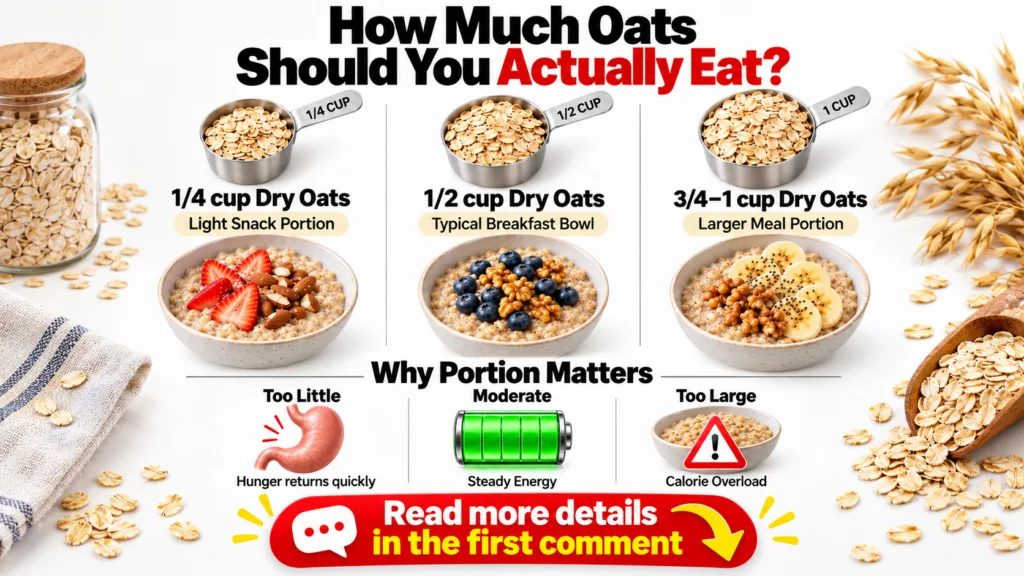
The standard serving size for dry rolled oats is typically around 1/2 cup, which yields about 1 cup of cooked oatmeal. However, your ideal portion can vary based on your individual energy needs, activity level, and health goals.
General Guidelines for Dry Oats:
- Small Portion (1/4 cup dry): Ideal for a light snack, or if you’re combining oats with other high-carb foods. This might be about 75-100 calories.
- Moderate Portion (1/2 cup dry): This is the most common recommendation for a balanced breakfast. It provides sustained energy for most adults, typically around 150-200 calories before adding toppings.
- Larger Portion (1 cup dry): Suitable for individuals with higher energy demands, such as athletes, or as a more substantial meal for very active individuals. This portion can be quite filling and higher in calories.
Remember, these are guidelines for dry oats. Once cooked, oats absorb water and expand significantly.
Why Portion Size Matters
Getting your oat portion just right has a significant impact on how you feel and how your body functions. It’s a balance between getting enough nutrients and avoiding overconsumption.
- Too Little: If your portion is too small for your needs, you might feel hungry soon after eating, leading to snacking on less healthy options or overall fatigue. It won’t provide the sustained energy you need.
- Moderate: A moderate, appropriate portion helps you feel satisfied and energized. It provides enough fiber to keep your digestive system happy and enough complex carbohydrates to fuel your body without a sudden energy crash. This is the sweet spot for balance and sustained vitality.
- Too Large: Consuming too large a portion, especially when adding calorie-dense toppings, can lead to excess calorie intake, which may contribute to weight gain over time. It can also cause digestive discomfort due to the high fiber content.
Think of it like a battery: a moderate charge keeps you going optimally, while too little leaves you drained, and too much might overload the system.
Factors Influencing Your Ideal Portion
Several individual factors can help you determine the best oat portion for you:
- Activity Level: Highly active individuals or athletes will naturally require larger portions to fuel their workouts and recovery.
- Weight Management Goals: If you’re aiming for weight loss, a moderate portion with mindful topping choices is generally recommended. For weight gain, a larger portion with nutrient-dense additions can be beneficial.
- Other Meal Components: Consider what else you’re eating with your oats. If it’s part of a larger meal with protein and healthy fats, a smaller oat portion might suffice.
- Hunger and Fullness Cues: Pay attention to your body. How hungry are you before eating? How satisfied do you feel afterwards? These cues are valuable guides.

Visual Guide to Oat Portions and Toppings
The way you serve and top your oats can drastically change their nutritional profile and how satisfying they are. Think of the oats as your base, and the toppings as the flavor and nutrient boosters.
- Basic Bowls: Start with your chosen dry oat portion (e.g., 1/2 cup). Cook with water or milk.
- Topping Ideas for Moderate Bowls:
- Strawberries & Almonds: Add a handful of sliced fresh strawberries for vitamins and a small amount of almonds for healthy fats and protein.
- Blueberries & Walnuts: A sprinkle of blueberries for antioxidants and a few walnuts for omega-3s.
- Bananas, Walnuts & Chia Seeds: Sliced banana for natural sweetness and potassium, walnuts for healthy fats, and chia seeds for extra fiber and omega-3s.
Be mindful of high-calorie toppings like excessive nuts, seeds, dried fruit, or sweeteners if you’re watching your calorie intake. A little goes a long way!
Practical Tips for Perfect Oat Portions
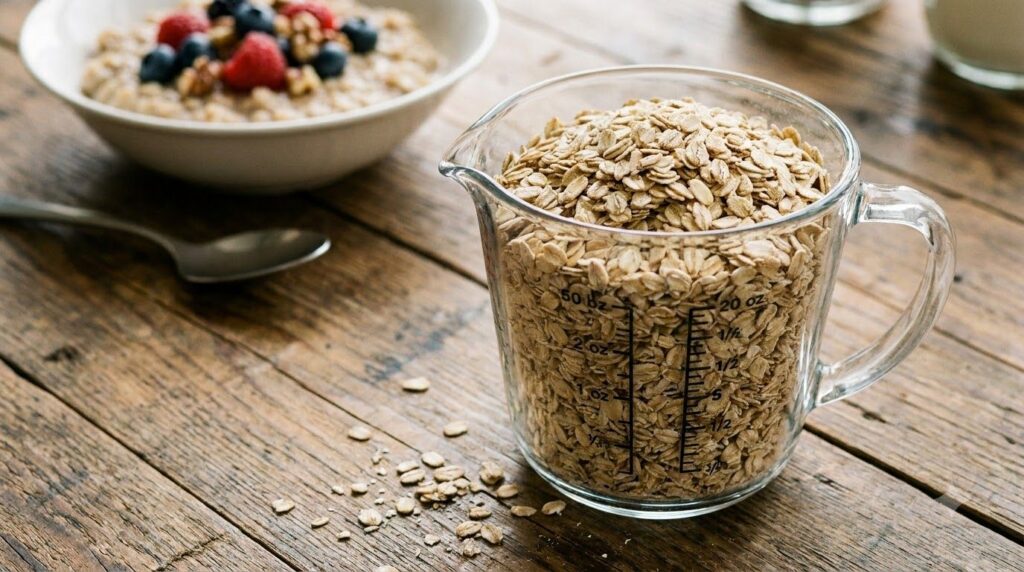
- Use Measuring Cups: Especially when starting out, use standard measuring cups for dry oats to get a consistent serving.
- Listen to Your Body: Pay attention to how different portion sizes make you feel. Do you feel satisfied, or still hungry? Adjust accordingly.
- Balance Your Bowl: Pair your oats with protein (like Greek yogurt, nuts, or a protein powder swirl) and healthy fats (like chia seeds, flaxseeds, or a small amount of nut butter) to enhance satiety and nutrient absorption.
- Meal Prep for Consistency: Prepare individual portions of dry oats in containers or bags for easy grab-and-go breakfasts throughout the week.
- Hydrate: Drink water with your oatmeal. The fiber in oats absorbs water, and proper hydration aids digestion.
FAQs About Oat Portions
What is the recommended serving size for oats?
A typical recommended serving size for dry rolled oats is 1/2 cup, which yields about 1 cup of cooked oatmeal.
Can I eat too many oats?
Yes, while oats are healthy, consuming excessively large portions, especially with many calorie-dense toppings, can lead to excess calorie intake and potential digestive discomfort due to high fiber.
How do I know if my oat portion is too small?
If you feel hungry again within an hour or two of eating your oats, your portion might be too small, or your bowl may need more protein and healthy fats.
Do different types of oats have different serving sizes?
While cooking times vary, the standard dry serving size (1/2 cup) is generally similar for rolled oats, steel-cut oats, and quick oats.
What are some healthy toppings for oats?
Great toppings include fresh berries, sliced banana, a small amount of nuts or seeds (like almonds, walnuts, chia seeds, flaxseeds), a drizzle of honey or maple syrup, or a dash of cinnamon.
Are oats good for weight loss?
Oats can support weight loss due to their high fiber content, which promotes satiety and helps regulate blood sugar. Portion control and mindful toppings are crucial.
Should I measure cooked or dry oats?
It’s generally easier and more accurate to measure dry oats, as they expand considerably when cooked. The nutritional information is typically based on the dry measurement.
Conclusion
Finding your best oat portion is a personalized journey that balances nutritional benefits with your individual energy needs and health goals. By understanding the general guidelines, listening to your body, and being mindful of your toppings, you can create a satisfying and health-boosting meal.
Embrace the versatility of oats and experiment with different portions and toppings to discover what truly fuels you best. Here’s to a healthier, more energized you!
This content is for educational purposes only and should not be considered medical advice. Consult a qualified healthcare professional for personalized dietary recommendations.