Have you ever wondered how your favorite cooking methods truly impact the nutritional value of your food? The journey from raw ingredients to a delicious meal can significantly alter the vitamins, minerals, and other vital compounds present in what you eat. Understanding these changes is key to making informed choices that support your health goals.
In this guide, we’ll dive into the nutritional shifts that occur when popular ingredients like broccoli, chicken, and salmon are subjected to common cooking methods: boiling, steaming, roasting, and frying. By examining the ‘before and after’ of cooking, you’ll gain clarity on how to preserve the goodness in your food and maximize its benefits on your plate.
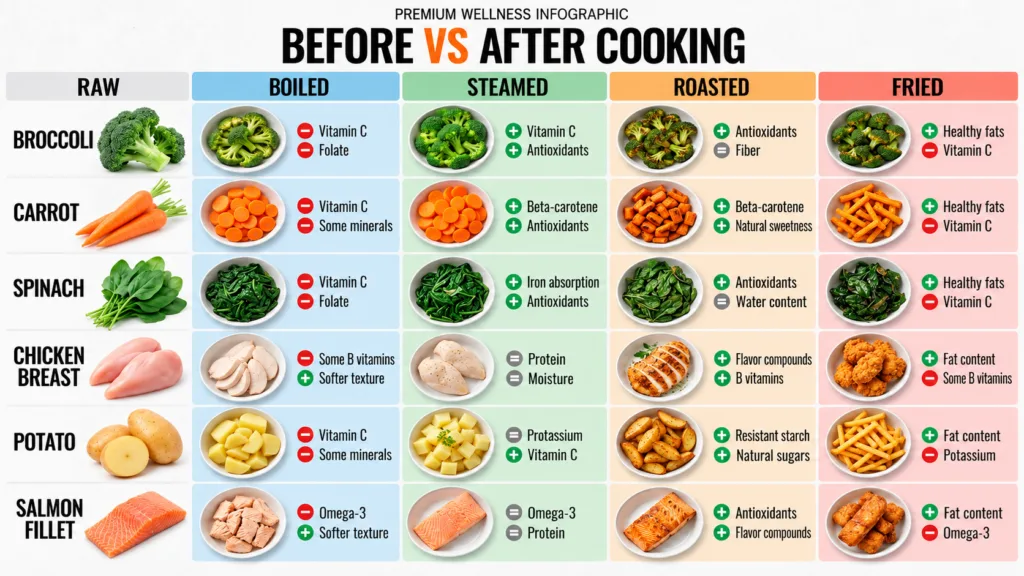
The Impact of Cooking on Key Ingredients
Let’s explore how various cooking techniques transform the nutritional profile of common foods, helping you choose the best preparation methods for your health.
Broccoli: The Nutrient-Rich Floret
Broccoli is renowned for its high vitamin C, vitamin K, and fiber content. However, how you cook it can greatly affect these delicate nutrients.
- Raw: Offers the highest levels of heat-sensitive vitamins, especially vitamin C, and active enzymes.
- Boiled: This method can lead to significant losses of water-soluble vitamins (like Vitamin C and some B vitamins) and antioxidants, as they leach into the cooking water.
- Steamed: Generally considered one of the best ways to cook broccoli, steaming helps retain most of its vitamins, minerals, and phytonutrients by minimizing contact with water.
- Roasted: Roasting can enhance the flavor and texture of broccoli, and while some heat-sensitive vitamins may be reduced, it often preserves fiber and other beneficial compounds better than boiling.
- Fried: Frying can increase the fat content and calorie count of broccoli. High heat and oil can also degrade certain vitamins and antioxidants.
Carrots: A Root Full of Goodness
Carrots are famous for their beta-carotene, a precursor to vitamin A, which is essential for vision and immune function. They also contain fiber and antioxidants.
- Raw: Provides maximum fiber and maintains the crisp texture, with beta-carotene readily available.
- Boiled: Boiling may cause some beta-carotene and other nutrients to leach out, especially if overcooked.
- Steamed: Steaming can make beta-carotene more bioavailable (easier for the body to absorb) while retaining most other nutrients.
- Roasted: Roasting helps to concentrate the natural sugars, enhancing flavor. Beta-carotene content may be slightly improved for absorption.
- Fried: Similar to other vegetables, frying adds fat and calories, and the high heat may diminish some of the beneficial compounds.
Spinach: The Leafy Green Powerhouse
Spinach is packed with vitamins A, C, K, folate, and iron. Its delicate nature makes it particularly susceptible to nutrient changes during cooking.
- Raw: Best for retaining vitamin C and folate, though oxalates (compounds that can interfere with mineral absorption) are higher.
- Boiled: Boiling can significantly reduce water-soluble vitamins like C and folate. However, it can also reduce oxalate levels, potentially increasing mineral absorption.
- Steamed: Steaming is an excellent method for spinach, preserving most of its vitamins and minerals while also reducing oxalates to some extent.
- Roasted: Roasting spinach (often as part of a larger dish) can preserve some nutrients, but excessive heat might degrade delicate vitamins.
- Fried: Frying adds fat and calories, and the intense heat can lead to nutrient degradation.
Chicken Breast: Lean Protein Source
Chicken breast is a staple for many due to its high protein content and relatively low fat. Cooking methods primarily affect its texture, moisture, and potential fat content.
- Raw: Uncooked chicken is not consumed for safety reasons.
- Boiled: Boiling can result in a drier texture if overcooked, but it’s a fat-free cooking method, preserving protein and minerals.
- Steamed: Steaming keeps chicken breast moist and tender, and it’s a great way to cook without adding extra fat, maintaining its lean protein profile.
- Roasted: Roasting yields a flavorful and often crispy exterior. It retains protein and most minerals, and minimal fat is typically added.
- Fried: Frying, especially deep-frying, adds significant fat and calories. While protein content remains, the overall health profile changes due to fat absorption.
Potatoes: The Versatile Tuber
Potatoes offer carbohydrates, vitamin C, potassium, and fiber (especially with the skin on). Their starch structure changes considerably with heat.
- Raw: Not typically consumed raw due to starch content and solanine.
- Boiled: Boiling makes potatoes tender and can slightly reduce vitamin C content, particularly if the water is discarded. The starch becomes easily digestible.
- Steamed: Steaming preserves more of the potato’s vitamins and minerals compared to boiling, as the nutrients don’t leach into water.
- Roasted: Roasting gives potatoes a desirable crispy exterior and fluffy interior. It retains most of their nutritional value, with the added benefit of flavor development.
- Fried: Frying potatoes, such as in french fries, drastically increases fat and calorie content and can lead to the formation of unhealthy compounds at high temperatures.
Salmon Fillet: Omega-3 Rich Fish
Salmon is prized for its omega-3 fatty acids, high-quality protein, and vitamins D and B12. Cooking needs to be mindful of preserving its delicate fats.
- Raw: Raw salmon (as in sushi) retains all its omega-3s and vitamins.
- Boiled: Boiling salmon can result in a dry texture and may cause some loss of water-soluble vitamins. It’s not a common or recommended method for salmon.
- Steamed: Steaming is an excellent choice for salmon, keeping it moist and preserving its delicate omega-3 fatty acids, protein, and vitamins.
- Roasted: Roasting brings out salmon’s rich flavor and texture. It effectively retains omega-3s, protein, and most other nutrients.
- Fried: Frying salmon can add unhealthy fats depending on the oil used and can potentially degrade some of the beneficial omega-3s at very high temperatures.
Making Informed Choices About Your Cooking
Understanding how cooking methods affect nutrients empowers you to make healthier decisions. Here are some key takeaways:
- Prioritize Steaming: For vegetables, steaming often provides the best nutrient retention, especially for water-soluble vitamins.
- Mind Your Water: If boiling vegetables, use minimal water and consider using the nutrient-rich cooking liquid in soups or sauces.
- Healthy Fats Matter: When roasting or light frying, choose healthy oils (like olive or avocado oil) and use them sparingly.
- Avoid Overcooking: Regardless of the method, overcooking can degrade nutrients, especially heat-sensitive vitamins and delicate fats.
- Variety is Key: Incorporate a mix of raw, lightly cooked, and varied cooking methods to get a broad spectrum of nutrients from your diet.
By being mindful of these principles, you can ensure that your meals are not only delicious but also packed with the essential nutrients your body needs to thrive.
Final Thoughts
The journey from raw ingredients to cooked cuisine is a fascinating interplay of heat, chemistry, and nutrition. As we’ve explored, each cooking method uniquely influences the nutrient profile of our food, turning simple ingredients into meals that can either boost or diminish their inherent goodness. Embracing cooking methods like steaming and roasting, while being judicious with boiling and frying, can significantly elevate the nutritional quality of your plate.
Ultimately, making informed decisions about how you prepare your food is a powerful step towards a healthier lifestyle. By understanding the ‘before and after’ of cooking, you can ensure that every meal you create is not just satisfying, but also a valuable contribution to your overall well-being.
Medical Disclaimer
This article is intended for informational purposes only and does not constitute medical advice. Always consult with a qualified healthcare professional before making any decisions related to your health or diet.