Welcome back, fellow garden lovers! Have you ever wondered if you’re truly getting the most out of your garden efforts? Sometimes, the smallest details can make the biggest difference. Today, we’re diving deep into a topic that can revolutionize your garden’s health and productivity: choosing the RIGHT mulch!
Mulch might seem simple, but using the wrong type or applying it incorrectly can hinder your plants’ growth, attract pests, or even damage your soil. On the flip side, the right mulch acts like a protective blanket, offering incredible benefits to your plants and the overall ecosystem of your garden.
Why Mulch Matters for a Thriving Garden
Before we explore the ‘rights’ and ‘wrongs’, let’s quickly recap why mulch is a gardener’s best friend:
- Moisture Retention: Mulch significantly reduces water evaporation from the soil, meaning you water less often.
- Weed Suppression: A good layer of mulch blocks sunlight, preventing weeds from sprouting and competing with your plants for nutrients.
- Temperature Regulation: It insulates the soil, keeping it cooler in summer and warmer in winter, protecting roots from extreme temperatures.
- Soil Health Improvement: Organic mulches break down over time, enriching the soil with valuable nutrients and improving its structure.
- Pest Control: Certain mulches can deter common garden pests.
- Erosion Prevention: Mulch protects topsoil from being washed away by rain or blown away by wind.
Ready to see how to harness these benefits effectively? Let’s get started!
The ‘Wrong’ Mulches (And Why to Avoid Them)
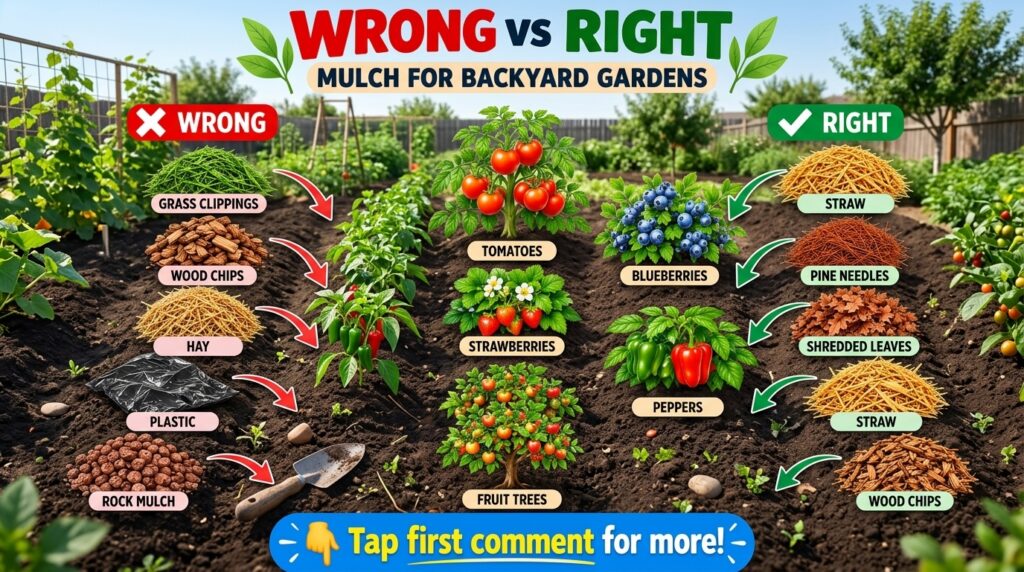
It’s easy to grab whatever is available, but some materials are simply not suited for your garden beds. Here are a few ‘wrong’ choices and why:
- Fresh Wood Chips (especially for nitrogen-hungry plants): While wood chips are generally good, fresh ones can ‘steal’ nitrogen from the soil as they decompose, starving your plants. It’s best to compost them first or use aged wood chips.
- Colored Rubber Mulch: This synthetic option doesn’t break down to enrich the soil, can heat up excessively, and may contain chemicals that are not beneficial for edible plants.
- Too Much Mulch (Volcano Mulching): Piling mulch high against plant stems or tree trunks (often called ‘volcano mulching’) can suffocate the plant, promote rot, and create a haven for pests.
- Weed-Infested Hay/Straw: If your hay or straw comes with weed seeds, you’re essentially planting more weeds in your garden!
- Fine Wood Dust/Sawdust: Very fine materials can compact easily, creating a barrier that prevents water and air from reaching the roots.
The ‘Right’ Mulches for Specific Plants
Different plants have different needs, and the best mulch choice can vary. Let’s look at some common garden favorites:
For Tomatoes: Straw or Composted Organic Material
Tomatoes thrive with a light, airy mulch that helps prevent soil-borne diseases. Straw (not hay, which can contain weed seeds) is excellent. It keeps the soil moist, deters slugs, and its light color helps reflect heat. Composted leaves or aged wood chips also work wonderfully, enriching the soil as they break down.
For Blueberries: Pine Needles or Acidic Composts
Blueberries are acid-loving plants, so mulches that help maintain a lower pH are ideal. Pine needles are a classic choice, slowly acidifying the soil and offering excellent moisture retention. You can also use aged oak leaf mold or specialized acidic composts.
For Strawberries: Straw or Pine Needles
Similar to tomatoes, strawberries benefit greatly from straw to keep their fruit clean and off the soil, reducing rot and pest issues. Pine needles are also a good option, especially if your soil leans alkaline, helping to provide a slightly acidic environment that strawberries enjoy.
For Peppers: Black Plastic or Dark Organic Mulch
Peppers love warmth! Black plastic mulch can be very effective in heating the soil, encouraging faster growth and earlier fruit production. If you prefer organic options, a dark-colored compost or aged wood mulch will also absorb more heat than lighter alternatives, while still providing all the other benefits.
For Fruit Trees: Aged Wood Chips or Composted Material
Around fruit trees, a generous layer of aged wood chips or well-rotted compost is excellent. It suppresses weeds that compete for nutrients, retains moisture for healthy root development, and slowly releases nutrients back into the soil, supporting the tree’s long-term health and fruit production. Remember to keep the mulch a few inches away from the trunk to prevent rot.
Tips for Applying Mulch Correctly
Even with the right mulch, application is key:
- Clean the Area: Before applying mulch, remove any existing weeds.
- Water First: Ensure the soil is adequately moist before mulching to lock in that hydration.
- Proper Depth: Aim for a 2-4 inch layer for most beds. Around trees, a 3-4 inch layer is usually sufficient.
- Keep it Away from Stems/Trunks: Always leave a small ring (1-2 inches) around plant stems and 4-6 inches around tree trunks free of mulch to prevent moisture buildup and disease.
- Replenish Annually: Organic mulches break down, so replenish them as needed, usually once a year in spring or fall.
By understanding the nuances of mulch, you can significantly boost your garden’s health, vitality, and beauty. It’s a simple yet powerful tool in every gardener’s arsenal!
What are your favorite mulching tips or experiences? Share them in the comments below – we’d love to learn from you!