Most people know taro as a delicious, starchy root, a staple in many cuisines worldwide. But what many overlook are the potent, practical healing remedies hidden within its vibrant purple flesh. Beyond its role in savory dishes or sweet desserts, the humble taro root holds a trove of traditional wisdom and surprising health secrets for topical applications. Have you ever considered the hidden power in your everyday root vegetables?
This guide will show you how to prepare and use taro root for common skin discomforts, offering a natural approach that’s both accessible and effective when used correctly.
What is Taro Root?
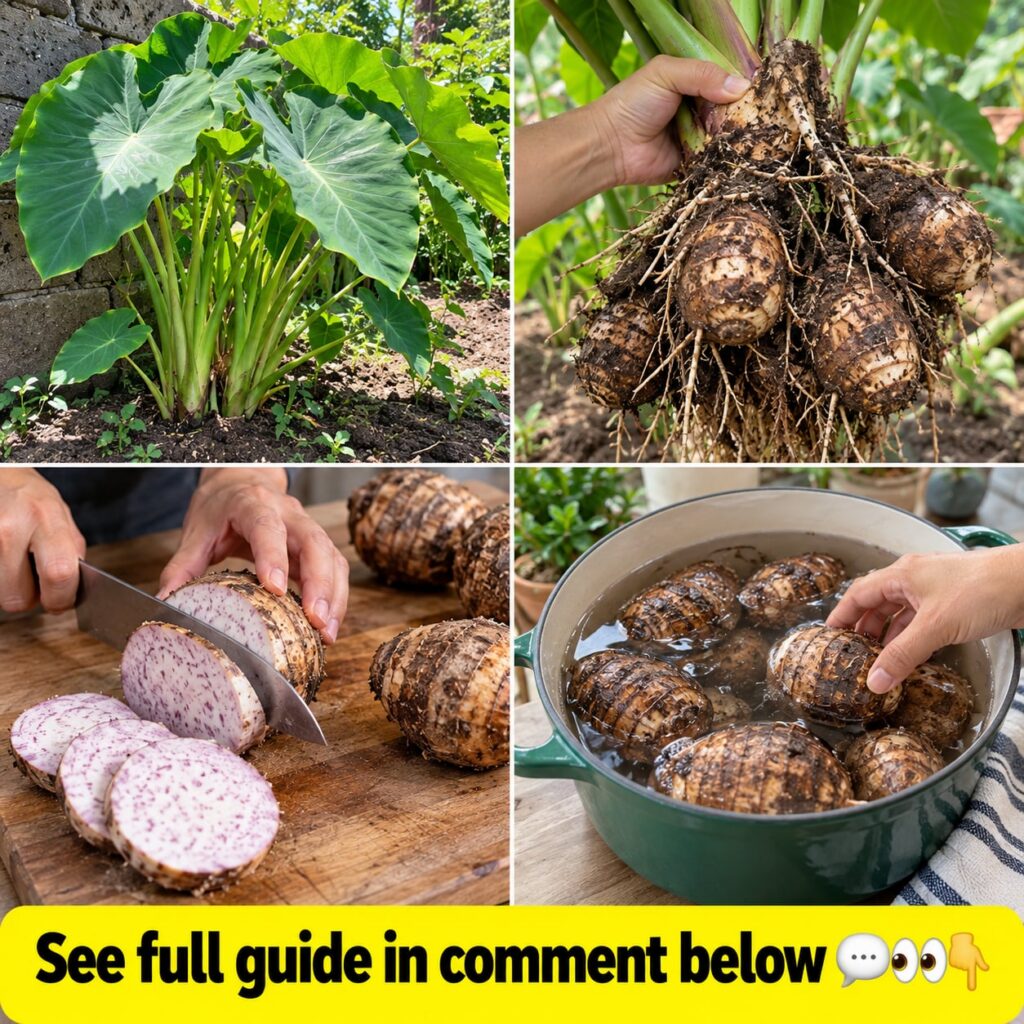
Taro (Colocasia esculenta), also known as ‘dasheen’ or ‘eddo,’ is a root vegetable cultivated for thousands of years in tropical and subtropical regions. It’s identifiable by its brown, fibrous skin and often white or strikingly purple, starchy interior. While the leaves are also edible (and delicious when cooked properly), our focus today is on the corm—the underground stem or ‘root’—which is packed with nutrients and has been traditionally used in various folk remedies, particularly for external applications.
The Taro Root Paste Remedy for Skin Irritation
One of the most notable traditional uses of taro root is in a topical paste or poultice for soothing various skin irritations, minor swellings, and insect bites. The starchy texture and natural compounds are believed to offer a calming effect. However, it’s crucial to understand proper preparation to avoid potential irritation from calcium oxalate crystals naturally present in raw taro.
Ingredients
- 1 small-to-medium fresh taro root (approximately 4-6 inches long)
- 1-2 teaspoons of water, aloe vera gel, or a few drops of apple cider vinegar (optional, to help bind and mitigate irritation)
Approximate Measurements
For a single application, one small taro root should yield enough paste. The exact amount of liquid additive depends on the consistency you desire and the juiciness of the grated taro.
Formula / Recipe: Taro Soothing Skin Paste
- Wash the taro root thoroughly under cool running water.
- Using a vegetable peeler or a small knife, carefully remove the outer brown skin. Be cautious, as some people experience skin irritation from handling raw taro due to its oxalate content. You might want to wear gloves.
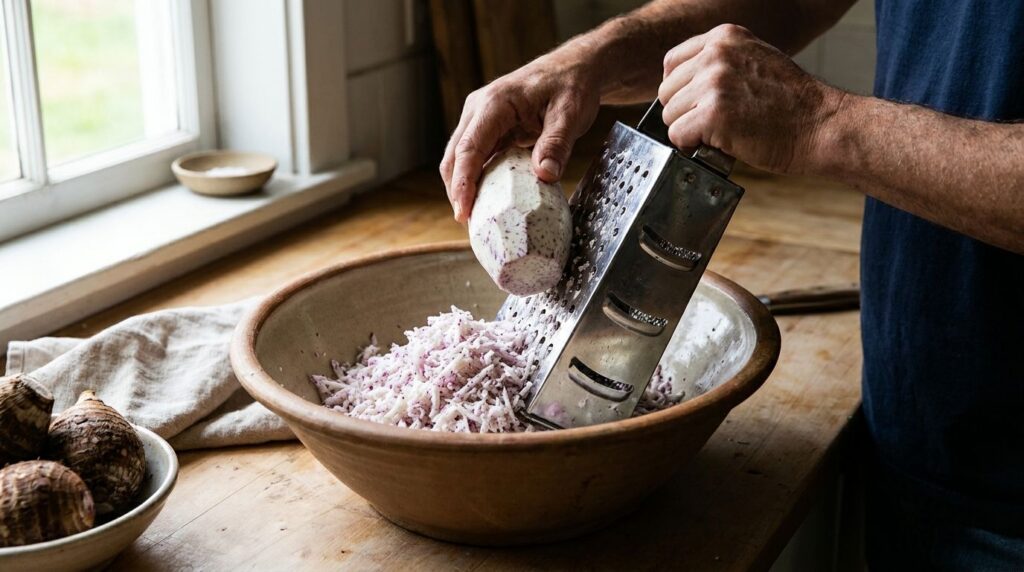
- Grate the peeled taro root finely using a small-holed grater.
- Transfer the grated taro to a small non-metallic bowl.
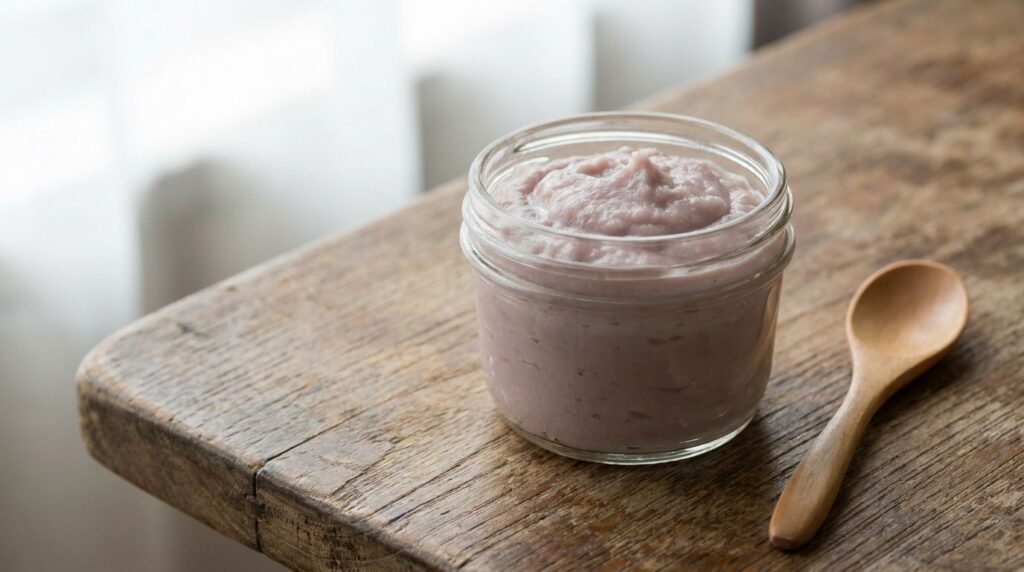
- Add 1-2 teaspoons of water, aloe vera gel, or apple cider vinegar. Mix well until you achieve a thick, spreadable paste consistency. The liquid helps create a smoother paste and, in the case of vinegar or aloe, can help neutralize some of the irritating oxalates.
Step-by-Step Method
- Prepare the Taro: Follow the formula above to create your taro root paste.
- Patch Test: Before applying to a larger area, always perform a patch test on a small, inconspicuous part of your skin. Apply a tiny amount of the paste, leave it for 15-20 minutes, then rinse. If no irritation occurs, proceed with caution.
- Apply: Gently apply a thin layer of the paste directly onto the affected skin area (e.g., insect bite, minor swelling, or irritated patch).
- Cover (Optional): You can cover the area with a small piece of gauze or a clean cloth to keep the paste in place, but ensure it’s not airtight.
- Leave On: Leave the paste on for 20-30 minutes. Some people can tolerate it longer, but start with shorter durations.
- Rinse: Carefully rinse the area with cool water and gently pat dry.
How to Use
This taro root paste is designed for external use only. Apply it to areas of minor inflammation, skin irritation, or insect bites. It’s not suitable for open wounds, broken skin, or sensitive facial areas without extreme caution and prior consultation.
How Often to Use
For best results, apply the taro paste once or twice daily, as needed, for a maximum of 2-3 days. Discontinue use immediately if any increased redness, itching, or discomfort occurs.
How to Buy / How to Choose Ingredients
Selecting the right taro root is key to an effective remedy:
- Firmness: Choose taro roots that are firm to the touch, with no soft spots or mold.
- Skin: Look for dry, relatively smooth skin. Avoid taro with excessive moisture, cracks, or sprouts.
- Size: Smaller to medium-sized taro roots often have a better texture and are easier to work with.
- Origin: If possible, buy organic taro to ensure it hasn’t been treated with pesticides that could irritate the skin.
Storage
Fresh, unpeeled taro root should be stored in a cool, dry, well-ventilated place, away from direct sunlight, similar to potatoes. It can last for several weeks. Once peeled or grated, taro root oxidizes quickly. The paste should be used immediately after preparation for maximum efficacy and to avoid discoloration. Do not store leftover paste.
You may also like: DIY Turmeric Face Mask for Radiant Skin
Practical Tips
- Gloves are Your Friend: Always wear gloves when peeling and grating raw taro to protect your hands from potential irritation.
- Consistency Matters: Aim for a paste that is thick enough to stay on the skin but not so dry it crumbles. Adjust liquid sparingly.
- Rinse Thoroughly: Ensure all traces of the paste are removed from your skin after use to prevent prolonged exposure.
- Add a Soothing Agent: For extra soothing, consider mixing a small amount of pure aloe vera gel into your taro paste.
Common Mistakes
- Skipping the Patch Test: This is the most crucial step. Raw taro contains calcium oxalate crystals that can cause irritation for sensitive individuals.
- Using on Broken Skin: Never apply taro paste to open wounds, cuts, or severely broken skin.
- Internal Consumption of Raw Taro: Raw taro is toxic and must never be eaten. The paste is for external use only.
- Ignoring Discomfort: If you feel any significant itching, burning, or increased redness, remove the paste immediately.
- Storing Leftover Paste: Prepared taro paste quickly loses its potency and can become a breeding ground for bacteria. Always make a fresh batch.
Cautions / Who Should Avoid It
While generally safe for topical use with proper precautions, taro paste is not for everyone:
- Pregnant or Breastfeeding Individuals: Consult a healthcare professional before using any new remedies.
- Individuals with Very Sensitive Skin: Even with a patch test, proceed with extreme caution.
- Those with Known Allergies: If you have allergies to other root vegetables or plants in the Araceae family, avoid taro.
- Children: Use on children should be done under strict adult supervision and after consulting a pediatrician.
- Open Wounds or Severe Skin Conditions: Never apply to compromised skin.
Quick Summary
Taro root offers a simple, natural remedy for minor skin irritations and swellings when prepared as a topical paste. Always peel and grate fresh taro, ensuring immediate use. Remember to perform a patch test, wear gloves during preparation, and strictly avoid internal consumption of raw taro. Discard any unused paste and discontinue use if irritation occurs.
Read more: Benefits of Aloe Vera for Skin and Hair
FAQ
Can I use dried taro root for this remedy?
No, this remedy specifically calls for fresh taro root, as its natural moisture and active compounds are essential for forming the paste and delivering the desired effect.
How long does the taro paste last once made?
The taro paste should be used immediately after preparation. It oxidizes quickly and loses potency, and storing it can lead to bacterial growth.
Can I refrigerate fresh taro root?
Yes, unpeeled, whole taro root can be stored in the refrigerator’s crisper drawer for a few weeks, but a cool, dry pantry is often ideal for longer storage.
What part of the taro plant is best for this paste?
The corm (the root portion) is the part used for this topical paste remedy.
Can I use taro leaves for a similar remedy?
Taro leaves also contain oxalates and must be thoroughly cooked before consumption. While they have traditional uses, this specific paste remedy is based on the corm.
What if I experience itching or burning after applying the paste?
If you experience any significant itching, burning, or discomfort, immediately rinse the area thoroughly with cool water and discontinue use.
Is taro root safe for consumption?
Yes, but only when properly cooked. Raw taro root is toxic and should never be consumed.
Conclusion
The humble taro root is more than just a culinary delight; it’s a surprising source for a practical, natural skin remedy. By understanding its properties and following careful preparation steps, you can harness its traditional benefits for soothing minor skin irritations. Remember, safety and proper application are paramount to making the most of this ancient root. Always prioritize a patch test and listen to your body’s response for a truly effective experience.
Continue with: How to Make a Ginger Compress for Muscle Relief