When you’re aiming for a healthier lifestyle, every food choice counts. Fruits are nature’s candy, packed with vitamins, minerals, and fiber. But have you ever considered the calorie difference between a handful of dried fruit and a generous bowl of fresh fruit?
It’s a common misconception that all fruit delivers the same nutritional punch and calorie count per serving. In reality, the way fruit is prepared can significantly impact its calorie density. Understanding this difference is key to making informed decisions that support your health goals.
In this article, we’ll dive into the world of dried versus fresh fruit, comparing their nutritional profiles, calorie counts, and best uses. You’ll learn how to enjoy both in a way that truly empowers your food choices!
Nutrition Comparison: Dried vs. Fresh Fruit
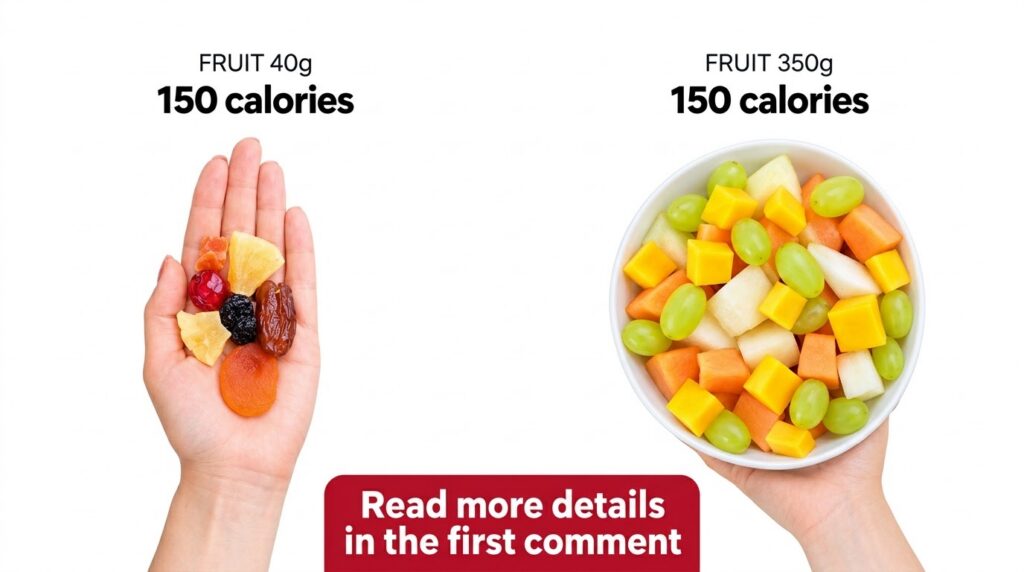
Let’s break down the nutritional facts. For a clearer picture, we’ll compare an approximate 150-calorie serving of both dried and fresh fruit, using common examples like raisins (dried grapes) and fresh grapes.
| Nutrient (Approx. per 150 Calories) | Dried Fruit (e.g., Raisins ~50g) | Fresh Fruit (e.g., Grapes ~217g) |
|---|---|---|
| Calories | 150 | 150 |
| Protein | 1.5 g | 1.5 g |
| Carbs | 39 g | 39 g |
| Fat | 0.2 g | 0.4 g |
| Fiber | 2 g | 1.9 g |
| Main Nutrients | Potassium, Iron, Vitamin K | Vitamin C, Vitamin K, Potassium |

Calories
This is where the biggest difference lies. Dried fruit has had most of its water removed, concentrating its sugars and, consequently, its calories. This means a much smaller portion of dried fruit packs the same caloric punch as a significantly larger portion of fresh fruit.
Protein
Both fresh and dried fruits are not primary sources of protein, offering only trace amounts. For significant protein, you’ll want to pair your fruit with other foods like nuts, yogurt, or lean proteins.
Fat
Fruits, in general, are naturally low in fat. Whether fresh or dried, they contribute very little to your daily fat intake, making them a healthy snack option for most diets.
Carbohydrates
Fruits are primarily a source of carbohydrates, mainly in the form of natural sugars. When fruit is dried, the water content decreases, making the carbohydrate and sugar content much more concentrated by weight. This is why a small amount of dried fruit can contain a substantial amount of sugar compared to the same weight of fresh fruit.
Fiber
Both fresh and dried fruits are good sources of dietary fiber, which is crucial for digestive health and can help you feel full. However, some types of dried fruit may lose a small amount of fiber during processing, while others retain it well. Because dried fruit is more concentrated, a small amount can still provide a decent fiber boost.
Vitamins & Minerals
Fresh fruit generally retains more heat-sensitive vitamins, like Vitamin C, which can be diminished during the drying process. However, many minerals, like potassium and iron, are well-preserved and even concentrated in dried fruit. So, while you might lose some Vitamin C, you gain a concentrated source of certain minerals.
Taste & Texture
Fresh fruit offers a juicy, crisp, and often tangy experience, perfect for quenching thirst and enjoying a lighter snack. Dried fruit, on the other hand, provides a chewy, sweeter, and more intensely flavored bite, often used for baking, trail mix, or as a dense energy source.
Best For
- Fresh Fruit: Excellent for hydration, snacking on its own, adding to salads, or as a low-calorie, high-volume option to feel full. Great for daily consumption.
- Dried Fruit: Ideal for quick energy boosts (like before or during exercise), travel snacks, baking, adding to oatmeal or yogurt, or when fresh fruit isn’t available. Its portability is a major advantage.
Making Smart Choices

Portion Control is Key
Due to its concentrated nature, it’s easy to overeat dried fruit, leading to a higher calorie and sugar intake than intended. Always check serving sizes, and consider pairing it with a source of protein or healthy fats to slow sugar absorption.
Read Labels Carefully
Some dried fruits contain added sugars or preservatives. Opt for varieties that list only the fruit as an ingredient to avoid unnecessary additives.
Balance Your Intake
There’s a place for both fresh and dried fruit in a healthy diet. Enjoy fresh fruit daily for hydration and a wide range of vitamins. Use dried fruit sparingly as a concentrated energy source or a convenient snack when fresh options aren’t practical.
Stay Hydrated
Since dried fruit lacks water, ensure you’re drinking plenty of water when consuming it, especially if you’re eating a larger portion. This aids digestion and helps with satiety.
FAQs About Dried vs. Fresh Fruit
Here are some common questions about incorporating both types of fruit into your diet:
Is dried fruit bad for you?
No, dried fruit is not inherently bad for you. It’s a concentrated source of nutrients and energy. The key is moderation due to its higher sugar and calorie density. It can be a healthy part of a balanced diet when consumed in appropriate portions.
How much dried fruit can I eat in a day?
A typical serving of dried fruit is about a quarter cup or a small handful (around 1.5 ounces or 40 grams). It’s best to check the nutrition label for specific calorie and sugar content, and adjust based on your individual dietary needs and activity level.
Can dried fruit help with weight loss?
While fiber in dried fruit can promote satiety, its high calorie density means it can easily contribute to exceeding your daily calorie goals if portions aren’t carefully managed. Fresh fruit, with its higher water content, is generally more filling for fewer calories, which may be more beneficial for weight loss efforts.
Which is better for athletes: dried or fresh fruit?
Both have benefits for athletes. Fresh fruit can be great for hydration and nutrient replenishment post-workout. Dried fruit provides a quick, concentrated source of carbohydrates for energy before or during prolonged exercise, making it very convenient for athletes on the go.
Does drying fruit remove all its vitamins?
No, drying doesn’t remove all vitamins. While some heat-sensitive vitamins, like Vitamin C, may be reduced during the drying process, many other vitamins (like Vitamin A precursors) and minerals (like potassium, iron, and magnesium) are well-preserved and even concentrated.
Are all dried fruits the same nutritionally?
No, nutritional content varies widely depending on the type of fruit and how it’s processed. For example, some dried fruits may have added sugars, while others are unsweetened. Always check the ingredient list for hidden sugars or preservatives.
Is fruit juice considered similar to dried fruit?
No, fruit juice is different. While both are concentrated forms of fruit, juice typically lacks the fiber found in both fresh and dried whole fruits. This means juice can lead to quicker sugar spikes and offer less satiety.
Should I soak dried fruit before eating it?
Soaking dried fruit can rehydrate it, making it plumper and easier to chew. It can also make it easier to digest for some people. While not necessary, it’s a good practice, especially if you find dried fruit too tough or concentrated.
Conclusion
Both dried and fresh fruits are nutritious additions to your diet, each offering unique benefits. Fresh fruit provides hydration and volume with fewer calories, while dried fruit offers concentrated energy and convenience. The key to enjoying both lies in understanding their differences and practicing mindful portion control.
By being aware of the calorie density and nutritional nuances, you can skillfully incorporate both forms of fruit into your healthy eating plan. Make informed choices, listen to your body, and savor the natural goodness of fruits in all their forms!
This content is for educational purposes only and should not be considered medical advice. Consult a qualified healthcare professional for personalized dietary recommendations.
Internal Link Suggestions:
- High Protein Breakfast Ideas
- Healthy Smoothie Recipes
- Best Foods for Gut Health
- Smart Grocery Shopping Tips
- Anti-Inflammatory Foods

