Unlocking Your Garden’s Potential: 7 Essential Soil Amendments for Thriving Plants
Ever wondered what makes a garden truly flourish? It’s more than just sunlight and water; it’s about creating a vibrant, living ecosystem right beneath your feet! Here at Remedy – T.Nhàn, we believe in nurturing health from the ground up, and that includes the ground where your food grows. A healthy garden starts with healthy soil, which acts as the foundation for nutrient-rich produce and robust plants.
Think of your soil as the pantry for your plants. The richer and more diverse that pantry is, the better nourished your plants will be. Today, we’re diving into the ‘secret recipe’ for truly healthy garden soil: essential soil amendments. These aren’t just fertilizers; they’re ingredients that improve soil structure, boost microbial life, and provide a steady supply of nutrients, helping your garden reach its full potential naturally.
What Are Soil Amendments?
Soil amendments are materials added to soil to improve its physical or chemical properties, thereby enhancing soil health and fertility. Unlike fertilizers, which primarily provide plant nutrients, amendments focus on improving the soil’s structure, water retention, drainage, and overall biological activity. They build a resilient environment where your plants can thrive, leading to healthier, more vigorous growth.
The 7 Essential Soil Amendments You Need to Know
Let’s explore some of the best natural amendments to create a thriving soil ecosystem:
1. Compost
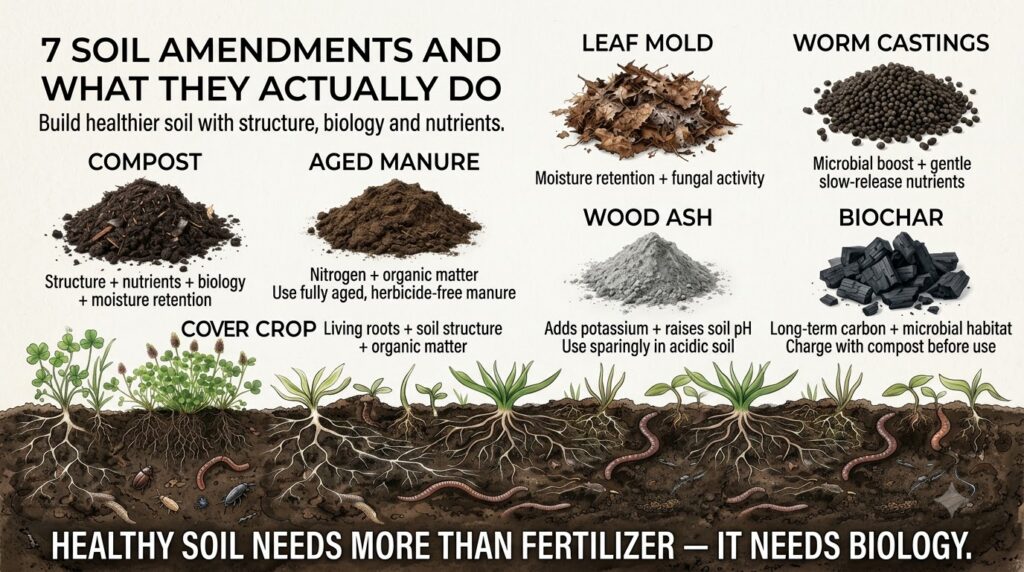
Compost is often called “black gold” by gardeners, and for good reason! It’s decomposed organic matter – a rich, dark, crumbly material made from kitchen scraps, yard waste, and other organic materials. Compost improves soil structure, enhances water retention in sandy soils, improves drainage in clay soils, and introduces a diverse community of beneficial microbes. It’s a gentle, slow-release nutrient source that feeds your soil and your plants.
2. Aged Manure
Manure from herbivores (like cows, horses, and chickens) is an excellent soil amendment, but it’s crucial to use it “aged” or “composted.” Fresh manure can be too strong and harm plants, but aged manure is a fantastic source of organic matter and a balanced mix of nutrients. It helps build soil structure, boosts microbial activity, and provides slow-release nitrogen, phosphorus, and potassium.
3. Leaf Mold
Leaf mold is simply decomposed leaves. It’s incredibly easy to make – just collect fallen leaves, pile them up, and let nature do its work! Over time, leaves break down into a dark, rich, spongy material that is superb for improving soil structure, especially in heavy clay soils or sandy soils lacking organic matter. Leaf mold also excels at water retention and provides a habitat for beneficial soil organisms.
4. Worm Castings
Nature’s tiny engineers, earthworms, produce one of the best soil amendments available: worm castings. These are essentially worm manure – a highly concentrated form of nutrient-rich organic matter. Worm castings improve soil aeration, drainage, and water-holding capacity, all while providing a readily available source of nutrients that plants can easily absorb. They also introduce beneficial microbes that suppress plant diseases.
5. Cover Crop
While not an “amendment” in the traditional sense of adding material, planting cover crops is a powerful way to amend and improve your soil. These are plants like clover, vetch, rye, or buckwheat grown specifically to protect and enrich the soil rather than for harvest. When tilled into the soil, they add organic matter, fix nitrogen (legumes), prevent erosion, suppress weeds, and improve soil structure. It’s like giving your garden a green blanket and a nutrient boost!
6. Wood Ash
If you have a wood-burning fireplace, wood ash can be a useful, albeit sparingly used, soil amendment. It’s rich in potassium, calcium, and magnesium, and can help raise soil pH, making it useful for acidic soils. However, use it cautiously, as too much can make soil too alkaline and harm plants. Always get a soil test to determine if your soil needs the pH adjustment or nutrients that wood ash provides.
7. Biochar
Biochar is a charcoal-like substance made from burning biomass (like wood, crop residues) in a low-oxygen environment. It’s gaining popularity for its ability to improve soil health over the long term. Biochar enhances water and nutrient retention, provides a home for beneficial microbes, and can help sequester carbon in the soil. It’s a stable form of carbon that can remain in the soil for hundreds, even thousands, of years, offering lasting benefits.
Cultivating Your Living Soil Ecosystem
Incorporating these amendments into your garden is a rewarding journey. Start by understanding your soil – a simple soil test can reveal a lot. Then, choose the amendments that best suit your garden’s needs. Remember, a healthy garden is a reflection of healthy soil, teeming with life and rich in the elements plants need to thrive. By focusing on building up your soil, you’re not just growing produce; you’re cultivating a resilient, vibrant ecosystem that gives back year after year.
Embrace these natural methods, and watch your garden flourish with vibrant, healthy plants and delicious, nutrient-dense harvests!